Everyday blends of nuts, seeds, and fruits simple, satisfying, and ready to enjoy anywhere.

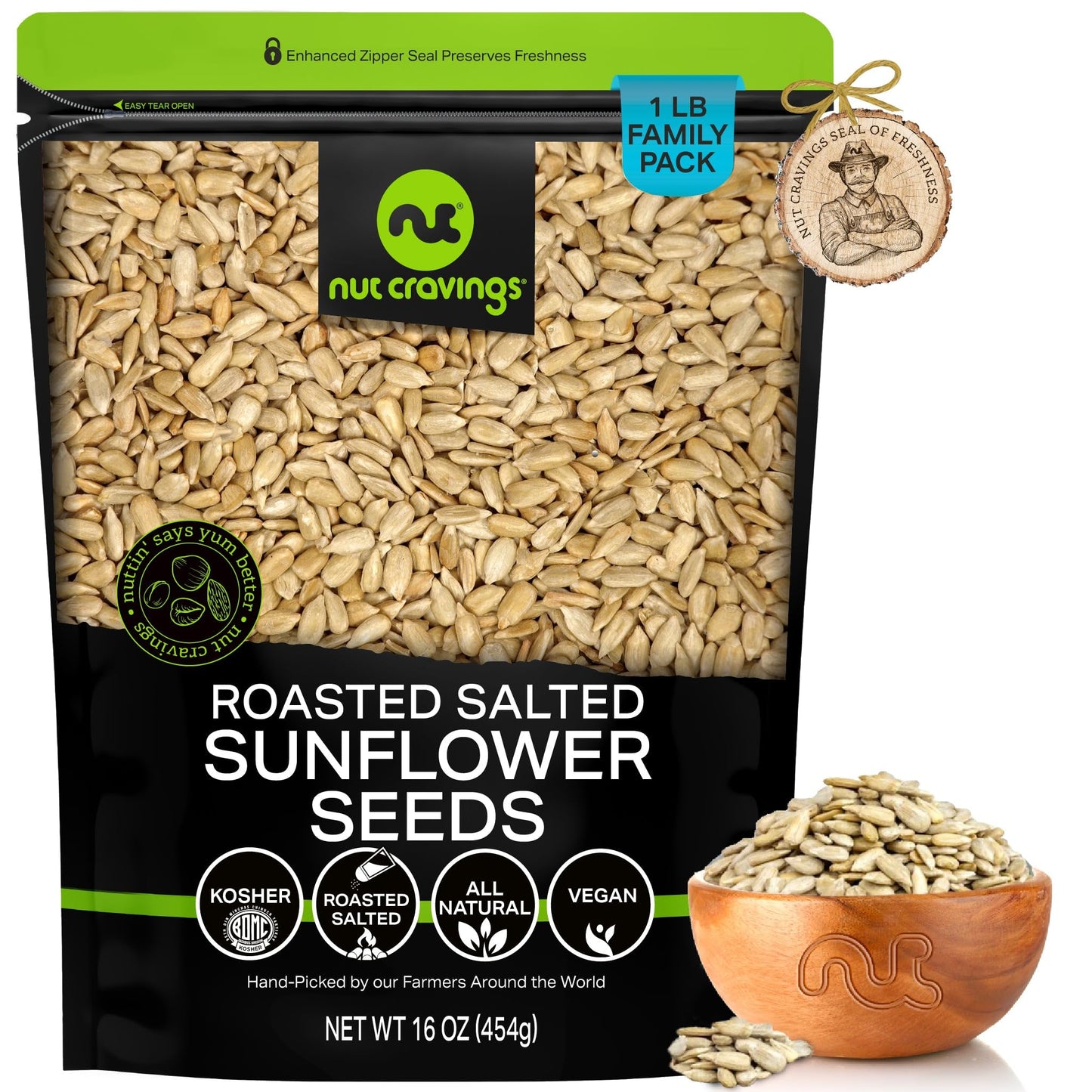
Roasted Salted Sunflower Seeds, No Shell, Hulled Kernels
Roasted salted sunflower seeds without the shell are a completely different product from the in-shell seeds sold at gas stations and sporting goods stores. These are hulled kernels: shells fully removed, lightly salted, oven-roasted, and ready to eat straight from the bag or fold into recipes without any cracking involved. Packed fresh at our Monroe, New York facility in a resealable stand-up bag. Kosher Certified. Vegan. Available in sizes from 4 oz through 5 lb.
Sunflower Seeds Without Shell vs In-Shell: What's the Real Difference?
In-shell sunflower seeds are the baseball-stadium format. You crack the shell with your teeth, eat the kernel inside, and spit the hull out. The salt is on the shell, not the kernel. It's a ritual snack, not a cooking ingredient.
Hulled sunflower seed kernels (this product) are the opposite. The outer shell is removed at processing. What's left is the soft-to-medium textured kernel, already roasted and lightly salted, ready to eat by the handful or measured directly into a recipe.
When a granola recipe calls for sunflower seeds, it means hulled kernels. When a trail mix calls for sunflower seeds, it means hulled kernels. In-shell seeds don't belong in baked goods, salads, or grain bowls. Hulled kernels work across all of those applications without any preparation required.
What Nutrients Do Roasted Sunflower Seeds Naturally Provide?
Per one ounce (approximately 28 grams):
Hulled sunflower seeds naturally provide 6 grams of protein, 14 grams of fat (mostly polyunsaturated), 3 grams of dietary fiber, and approximately 3 grams of net carbohydrates. They are a natural source of vitamin E, selenium, magnesium, copper, phosphorus, and folate.
The fat profile is worth noting for recipe use. Sunflower seeds are higher in polyunsaturated fat than almonds or cashews, which means they go rancid faster than lower-fat seeds. Fresh-packing at our Monroe, NY facility and the resealable closure address this directly.
At approximately 3 grams of net carbs per ounce, these fit comfortably within low-carb and keto-friendly diets.
How to Use Hulled Sunflower Seeds in Cooking and Baking
Straight snacking: Lightly salted hulled kernels work as a ready-to-eat snack with a clean, mildly savory crunch. Lower calorie-per-ounce than most tree nuts, which makes them easy to snack on without heavy portion tracking.
Trail mix and granola: A reliable bulk component for homemade trail mix. Cost-effective per ounce compared to almonds or cashews, and they distribute evenly through a mix without clumping. Fold into granola after baking to prevent over-toasting.
Salad topping: Toasted hulled sunflower seeds add crunch to green salads, grain bowls, and roasted vegetable dishes. A practical alternative for nut-free table settings where tree nut allergies are a concern.
Baking: Fold into bread dough, seeded crackers, muffins, and oat-based bars. Sunflower kernels hold up well during oven baking without turning bitter.
Sunflower seed butter: Blend roasted hulled kernels in a food processor for six to eight minutes with a pinch of salt. The result is a smooth, creamy spread that works as a nut-free alternative to almond or peanut butter.
Nut-free school and camp snacking: These kernels contain no tree nuts or peanuts. They're manufactured in a shared facility, so they confirm allergen documentation for severe allergy cases, but they're commonly used as the nut-free substitute for classroom and camp snack programs where tree nut policies apply.
Why Buy Roasted Sunflower Seeds from Nut Cravings
Hulled, oven-roasted, lightly salted with no artificial additives or preservatives. Kosher Certified, vegan, and packed fresh in Monroe, New York in a resealable bag that keeps the crunch consistent between uses. Available in 4 oz through 5 lb. Free shipping on every order. Backed by our 100% Crackproof Guarantee.
Browse our full seeds collection, explore our raw pumpkin seeds for an unsalted companion seed for trail mix builds, or visit the complete nuts and seeds range for other snacking and baking options.
Health Benefits of Roasted Sunflower Seeds
Vitamin E: Why Sunflower Seeds Lead Every Common Snack Food ▾
- One ounce of roasted sunflower seeds provides approximately 7.4 milligrams of vitamin E (alpha-tocopherol), equal to approximately 49 percent of the adult daily value. This is the highest vitamin E concentration of any common snacking food. Sunflower seeds are the most efficient whole-food vehicle for vitamin E available in the snack category, outpacing almonds, hazelnuts, and every other nut and seed at equivalent serving sizes.
- Vitamin E is the body's primary fat-soluble antioxidant. It concentrates in cell membranes, where it specifically quenches free radicals generated by metabolic activity and UV radiation before they can oxidize the membrane lipids that structural damage to cells originates from. The Recent Progress in Nutrition review (2023) identifies sunflower seeds as demonstrating anti-inflammatory properties that prevent the development of inflammatory diseases linked to free radical damage, including rheumatoid arthritis, asthma, cancer, and osteoarthritis.
- Dietary alpha-tocopherol from whole foods is accompanied by other tocotrienol and tocopherol forms with distinct protective roles. The gamma-tocopherol naturally present in sunflower seeds has specific activity against nitrogen-based free radicals that alpha-tocopherol alone does not address. Eating sunflower seeds delivers a spectrum of vitamin E compounds that supplements typically do not replicate.
- Vitamin E works synergistically with selenium. Selenium activates glutathione peroxidase (which neutralizes peroxides in the cytoplasm), and vitamin E protects cell membranes from the lipid peroxidation those peroxides would otherwise cause. The Recent Progress in Nutrition review (2023) specifically states that selenium works with vitamin E to protect cells from damage that may lead to cancer, heart disease, and other health problems. Sunflower seeds are one of the few single foods that deliver meaningful amounts of both compounds simultaneously.
Selenium: Thyroid Support, Antioxidant Defense, and Immune Function ▾
- One ounce of roasted sunflower seeds provides approximately 16.5 to 18 micrograms of selenium, equal to approximately 30 percent of the adult daily value of 55 micrograms. Unlike Brazil nuts where a full ounce exceeds the NIH's 400-microgram tolerable upper intake level, sunflower seeds at 30 percent DV per ounce can be eaten in one to two ounce daily servings without any selenium accumulation concern.
- A 2025 update from the NIH Selenium Fact Sheet, cited by Wellfit Insider (2025), confirms that selenium plays a crucial role in converting thyroid hormones into their active form (T3), directly influencing metabolism, energy production, and body temperature regulation. Without adequate selenium, this T4-to-T3 conversion slows even when thyroid T4 production is normal, contributing to fatigue and metabolic sluggishness independent of thyroid gland function.
- WebMD (October 2024) confirms that selenium in sunflower seeds plays a role in reducing inflammation, fighting infection, and boosting immunity alongside zinc. The combination of selenium-activated GPx antioxidant enzymes and vitamin E cell membrane protection creates the same two-component antioxidant system that underpins much of the clinical research on both nutrients, delivered from a single whole food.
- WebMD (October 2024) specifically notes that selenium in sunflower seeds can increase blood flow and deliver more oxygen to the body, complementing the energy-supporting role of thiamine (B1) also present in sunflower seeds. One ounce provides approximately 32 percent of daily thiamine, the B vitamin that converts food to cellular energy through the enzymatic steps of glucose metabolism.
Heart Health: Linoleic Acid, Phytosterols, and Blood Pressure Research ▾
- Over 90 percent of the fat in sunflower seeds is unsaturated. The dominant fat is linoleic acid, an omega-6 polyunsaturated fatty acid. Healthline (November 2024) explains that the body uses linoleic acid to make a hormone-like compound that relaxes blood vessels, promoting lower blood pressure, and that linoleic acid also helps lower cholesterol by reducing intestinal cholesterol absorption.
- A 2014 study from Harvard University found that including sunflower seeds in the diet reduces the risk of heart problems and helps with high cholesterol and blood pressure levels. A 2006 study from Columbia University found that consuming sunflower seeds four to five times per week significantly lowers serum inflammation markers and reduces the risk of chronic diseases including type 2 diabetes. Both studies reflect the cardiovascular benefit of regular sunflower seed consumption across different populations.
- Bioactive peptides in sunflower seeds may help blood vessels relax by blocking an enzyme that causes vasoconstriction, according to Healthline (November 2024). Combined with magnesium-driven arterial relaxation and linoleic acid-driven prostaglandin production, sunflower seeds have three distinct, well-documented blood pressure reduction mechanisms operating simultaneously from a single food.
- Vitamin E in sunflower seeds helps lower C-reactive protein (CRP), the primary clinical marker of systemic inflammation associated with cardiovascular risk, according to Healthline (November 2024). Lower CRP from dietary vitamin E is independently associated with reduced heart attack and stroke risk across large prospective studies.
Magnesium: Blood Pressure, Muscle Function, and Migraine Prevention ▾
- One ounce provides approximately 37 milligrams of magnesium (9 percent DV). The Recent Progress in Nutrition review (2023) specifically identifies magnesium in sunflower seeds as preventing calcium from seeping into nerve cells and blood vessels, calming arterial smooth muscle, and supporting blood pressure management through this calcium antagonist mechanism.
- Multiple studies have shown magnesium's role in reducing asthma severity, lowering high blood pressure, preventing migraine headaches, and reducing the risk of heart attack and stroke, as cited in the Recent Progress in Nutrition review (2023). For migraine sufferers, magnesium deficiency is one of the more consistently documented dietary factors associated with migraine frequency. Dietary magnesium from whole foods including sunflower seeds is a practical approach to maintaining the baseline magnesium status that supports normal vascular and neural tone.
- For muscle function, magnesium is required for the complete cycle of calcium-triggered contraction followed by calcium-dissipation-driven relaxation. Insufficient magnesium produces dysregulated muscle tension, contributing to cramps, spasms, and impaired recovery from exercise. Athletes, physically active people, and anyone who sweats regularly are at increased risk of magnesium depletion, making sunflower seeds a practical daily replenishment option.
Copper: Iron Metabolism, Collagen Synthesis, and Antioxidant Enzymes ▾
- One ounce provides approximately 0.37 milligrams of copper (41 percent DV). This makes sunflower seeds an exceptional copper source, comparable to cashews and Brazil nuts per ounce. Copper deficiency is underappreciated in nutritional medicine because standard blood panels do not routinely measure it, but its functional consequences including functional iron deficiency anemia and weakened connective tissue are real.
- The Recent Progress in Nutrition review (2023) specifically notes that copper in sunflower seeds plays a vital role in the cross-linking of collagen and elastin, providing strength and flexibility to bones and joints, and that copper helps red blood cells carry oxygen, produces energy in cells, and forms part of antioxidant enzymes protecting the body from oxidative stress.
- Ceruloplasmin, the primary copper-dependent enzyme, is required to mobilize iron from liver storage and load it onto transferrin for red blood cell production. Without adequate copper, functional iron deficiency develops in the bloodstream even when liver iron stores are adequate. Sunflower seeds provide both iron (approximately 11 percent DV per ounce) and the copper needed to use it effectively, making them one of the more synergistic mineral combinations in any single snack food.
Anti-Inflammatory Effects: Vitamin E, Linoleic Acid, and Phenolic Compounds ▾
- A 2006 Columbia University study found that consuming sunflower seeds four to five times per week significantly lowered serum inflammation markers in participants and reduced the risk of chronic diseases including type 2 diabetes. A 2024 analysis published in Frontiers in Nutrition found that sunflower seed compounds have neuroprotective effects, enhancing memory and reducing oxidative stress in brain cells.
- Vitamin E is the primary anti-inflammatory driver in sunflower seeds at the cellular level. Alpha-tocopherol inhibits the activity of protein kinase C, an enzyme involved in inflammatory signaling cascades, and modulates the expression of genes producing pro-inflammatory cytokines. WebMD (October 2024) confirms that vitamin E in sunflower seeds helps lower C-reactive protein, the blood marker most directly associated with systemic inflammation.
- Phenolic acids, including chlorogenic acid and caffeic acid, in sunflower seeds function as direct antioxidants and modulate inflammatory gene expression through NF-kB inhibition, the same pathway targeted by many pharmaceutical anti-inflammatory compounds. Combined with vitamin E membrane protection and selenium-activated GPx enzymatic defense, sunflower seeds create a layered anti-inflammatory system from a single food source.
Blood Sugar and Metabolic Health: Low Glycemic Load and Keto Compatibility ▾
- Hulled roasted sunflower seeds have approximately 3.4 grams of net carbohydrates per ounce (approximately 6.5 grams total carbs minus 3.1 grams fiber), making them one of the most keto-compatible seeds available. Dr. Berg's Nutrition Hub (March 2026) and Perfect Keto (May 2025) both confirm sunflower seeds are keto-approved in dry-roasted, unsweetened form with no added sugars or starches.
- PharmEasy (March 2026) confirms sunflower seeds are useful for people with type 2 diabetes. Evidence reviewed by Perfect Keto and Seeds Are Healthy (March 2026) notes that sunflower seed extract has been shown to lower blood glucose in research models. The high fat and fiber content slows gastric emptying, moderating glucose absorption and producing a flat, sustained blood glucose response.
- Chlorogenic acid in sunflower seeds inhibits glucose-6-phosphatase, an enzyme involved in hepatic glucose production that reduces the liver's glucose output into the bloodstream. Dr. Berg's Nutrition Hub (March 2026) cites a study finding that sunflower seeds promote balanced blood sugar levels, increase fat-burning, and benefit weight loss and weight maintenance.
Gut Health: Fiber, Prebiotics, and Digestive Support ▾
- One ounce provides approximately 3.1 grams of dietary fiber (11 percent DV). The fiber includes both soluble fiber (xylans and xyloglucans, per the Recent Progress in Nutrition review 2023) functioning as prebiotic, and insoluble fiber adding stool bulk and stimulating peristalsis for regular bowel movements.
- Dr. Berg's Nutrition Hub (March 2026) identifies sunflower seed fiber as prebiotic, with gut bacteria breaking down dietary fiber to produce butyric acid, the short-chain fatty acid that serves as the primary energy source for gut microbes. Adequate butyrate production supports the integrity of the gut barrier and reduces intestinal inflammation, both of which are associated with better immune function and lower risk of systemic inflammatory conditions.
- Current research overturns the older advice to avoid seeds with diverticulitis. Dr. Berg's Nutrition Hub (March 2026) confirms sunflower seeds are safe for people with diverticulitis and that their anti-inflammatory fatty acids may actually lower the risk of an inflamed colon. Sunflower seeds as part of a gut-healthy, fiber-rich diet are now considered appropriate and potentially protective for people with diverticular disease.
Bone Health: Magnesium, Copper, Zinc, and Phosphorus Together ▾
- Sunflower seeds contribute to bone health through four minerals with distinct but complementary mechanisms: magnesium (9 percent DV per ounce) as a structural hydroxyapatite component and osteoblast activity regulator; copper (41 percent DV) for lysyl oxidase-driven collagen cross-linking in bone matrix; zinc (13 percent DV) for bone formation and collagen synthesis enzymes; and phosphorus (16 percent DV) as the second primary mineral in hydroxyapatite crystals alongside calcium.
- Wellfit Insider specifically notes that sunflower seeds supply magnesium, copper, and zinc as key minerals required for strong bones, collagen formation, and joint integrity, and that copper and zinc aid collagen synthesis and connective tissue repair, with regular intake helping reduce the risk of osteoporosis and arthritis.
- The Recent Progress in Nutrition review highlights copper's role in cross-linking collagen and elastin in sunflower seeds, providing strength and flexibility to bones and joints. Without adequate copper-dependent lysyl oxidase activity, bone collagen weakens structurally even when calcium, magnesium, and phosphorus intake are all sufficient. Sunflower seeds are one of the few snack foods that provide all four bone-relevant minerals in a single serving.
Nut-Free and Allergy-Friendly: The Snack That Works Where Nuts Cannot ▾
- Sunflower seeds are not tree nuts and do not contain tree nut allergens. They are botanically seeds of the sunflower plant (Helianthus annuus) with no biological, allergen, or cross-reactivity relationship with tree nuts (almonds, cashews, walnuts, pecans, pistachios, Brazil nuts) or peanuts. For individuals with diagnosed tree nut or peanut allergies, sunflower seeds are the most practical high-nutrient alternative that fills the same snack and culinary roles without the allergen risk.
- For school nut-free policies, the hulled kernel format is ideal: no shells to crack, no debris, no tree nut ingredients. The nutritional profile (6g protein, 3.1g fiber, 49 percent vitamin E, 9 percent magnesium per ounce) is comparable to or exceeds many tree nuts for the nutrients that matter most in a growing child's diet. Sunflower seed butter is also a practical school lunch substitute for peanut butter in nut-free environments.
- These sunflower seeds are processed in a facility that handles tree nuts. For individuals with severe anaphylactic-level tree nut allergies where cross-contact from shared equipment is a clinical concern, this should be factored into the purchase decision. For nut-free policy compliance where no tree nut ingredients are the standard (rather than anaphylaxis management), these seeds work reliably because no tree nut ingredients are present in the product itself.
Nutrition Facts and What They Actually Mean
Per one ounce (28g), approximately 3 tablespoons of hulled kernels. Values from USDA FoodData Central. Every number explained in plain language with honest context on what makes sunflower seeds nutritionally exceptional.
| Nutrient | Per 1 oz | %DV |
|---|---|---|
| Calories | 165 | 8% |
| Total Fat | 14g | 18% |
| Saturated Fat | 1.3g | 7% |
| Monounsaturated Fat | 2.7g | -- |
| Polyunsaturated Fat (Linoleic Acid) | 9.2g | -- |
| Cholesterol | 0mg | 0% |
| Sodium (from light salt) | ~105mg | 5% |
| Total Carbohydrates | 6.5g | 2% |
| Dietary Fiber | 3.1g | 11% |
| Net Carbohydrates | ~3.4g | -- |
| Total Sugars | 0.8g | -- |
| Added Sugars | 0g | 0% |
| Protein | 6g | 12% |
| Selenium | 16.5mcg | 30% |
| Copper | 0.37mg | 41% |
| Magnesium | 37mg | 9% |
| Phosphorus | 194mg | 16% |
| Folate (B9) | 65mcg | 16% |
| Iron | 2.0mg | 11% |
| Niacin (B3) | 2.3mg | 14% |
| Vitamin B6 | 0.18mg | 11% |
| Manganese | 0.55mg | 24% |
| Potassium | 156mg | 3% |
Frequently Asked Questions
We’re More Than Just Snacks
Everyday blends of nuts, seeds, and fruits simple, satisfying, and ready to enjoy anywhere.
Beautiful assortments made to delight perfect for birthdays, holidays, & heartfelt thank yous.
Pure and certified organic — clean, natural ingredients for mindful snacking.
Limited-edition assortments inspired by every season and celebration.
Chocolates, brittles, and confections that turn any snack break into a special moment.
Protein-packed combinations of nuts, seeds, and fruits crafted for energy and wellness.
Thoughtful boxes filled with joy and flavor — send care to friends, family, or colleagues.
Elegant, customizable boxes designed to impress teams, clients, and partners.