Everyday blends of nuts, seeds, and fruits simple, satisfying, and ready to enjoy anywhere.

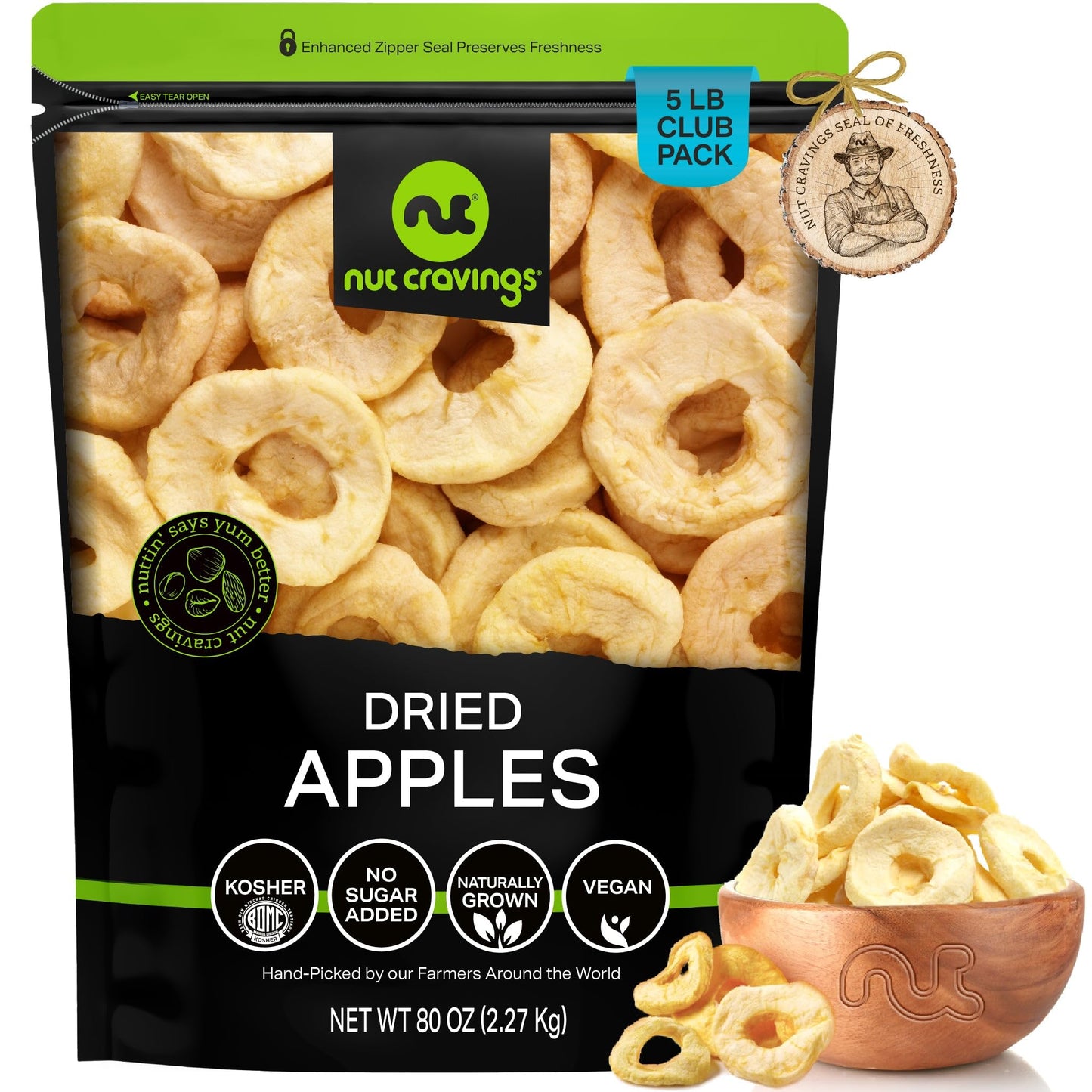
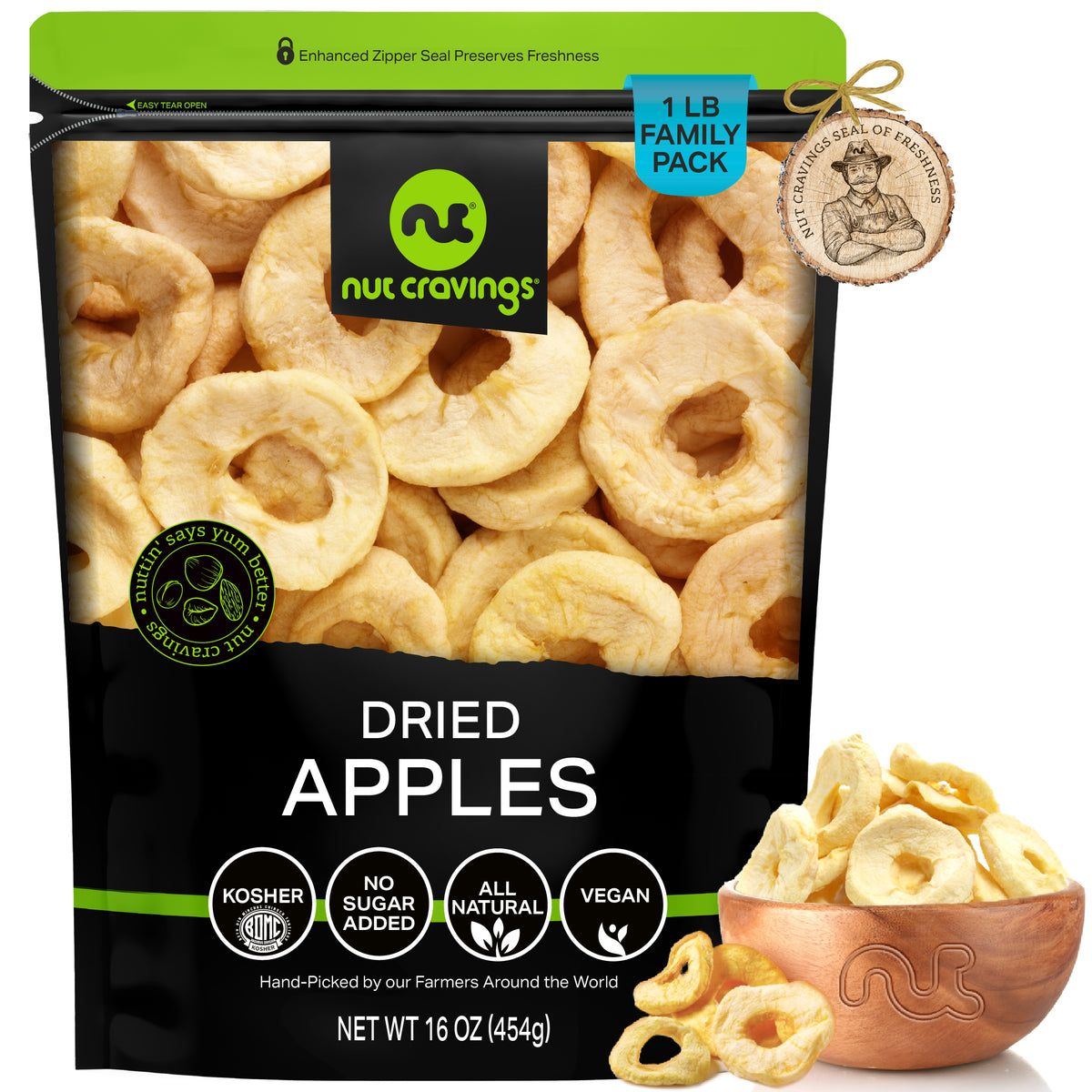
Dried Apple Rings, No Sugar Added, Unsulphured, Chewy
Dried apple rings concentrate the flavor of a fresh apple roughly six times without adding sugar, sweeteners, or sulfur dioxide preservatives. The texture is chewy, not crispy. These are not apple chips. They're soft, pliable rings that hold up in baking, rehydrate cleanly for fillings and compotes, and snack well straight from the bag without the brittle crunch that freeze-dried or chip-style products deliver. Vegan, Kosher Certified, and packed fresh at our Monroe, New York facility in a resealable bag with no added sugar in any form.
Why Do These Dried Apple Rings Look Darker Than Store-Bought?
That's the most common question buyers ask, and the answer is simple. The color difference is the sulfur dioxide.
Commercial dried apples from grocery shelves, brands like Sunsweet, Mariani, and most store-brand apple rings, are treated with sulfur dioxide during drying. This preservative maintains the bright white-yellow color that signals "fresh" to shoppers. It's effective preservation, but it causes headaches, skin reactions, and asthma attacks in sulfite-sensitive individuals. Roughly 1 percent of the general population is sulfite-sensitive, and up to 5 percent of asthmatics react to sulfite in food.
These apple rings are unsulphured. No sulfur dioxide is added at any stage. Without that preservative, dried apple flesh naturally turns beige to tan during dehydration. That's the honest color of a dried apple, and it comes with a cleaner, more concentrated apple flavor than sulphured versions typically deliver. The darker color is not a defect.
What Nutrients Do Dried Apple Rings Retain After Drying?
Per one ounce serving, approximately four to five rings: 80 calories, 2 to 3 grams of dietary fiber, and 19 grams of carbohydrates, all from natural fruit sugars with no added sugar. Potassium and vitamin C each contribute about 5 percent of the daily value per serving.
The vitamin C figure matters more than it seems. Sulphured drying strips most of the vitamin C from apple flesh. Unsulphured drying preserves a meaningful portion. Quercetin and other apple polyphenols are also retained through air-drying without chemical treatment. At 80 calories per ounce, dried apple rings are lower in calories than raisins (around 85 calories) and significantly lower than dried mango (around 110 calories), because fresh apples have less concentrated natural sugar to begin with.
What Are Dried Apple Rings Used For Beyond Snacking?
The chewy texture is what gives them their culinary range.
For baking, chop the rings into quarter pieces and fold into muffin batter, spice cake, or oatmeal cookies. Rehydrate in warm water for 10 minutes first to prevent the dried fruit from pulling moisture from the baked good. For apple compote, simmer rings with water, cinnamon, and cloves until softened and serve warm over oatmeal, yogurt, or vanilla ice cream. For granola, fold chopped rings in after baking.
For classic Appalachian fried apple pies, dried apple rings are the correct ingredient. Fresh apples make the filling too wet for hand pies. The dried rings rehydrated in spiced sugar syrup produce a properly concentrated, jammy filling that holds inside the pastry. On cheese boards, dried apple rings pair particularly well with sharp cheddar, aged gouda, and strong blue cheese, where the natural fruit acidity balances the fat and salt of the cheese.
Why Buy Dried Apple Rings from Nut Cravings
Unsulphured processing. No added sugar. Kosher Certified (TBD / Beth Din Minchas Chinuch Tartikov), vegan, naturally gluten-free, and packed fresh in Monroe, New York in a resealable bag that keeps moisture out between uses. Available in sizes from 6 oz through 5 lb, with free shipping on every order and no minimum. Every purchase is covered by our 100% Crackproof Guarantee.
Browse our full dried fruits collection for complementary options, pair with dried mango or dried cranberries for trail mix builds, or explore our complete nuts and seeds range for snack pairing options.
Health Benefits of Dried Apple Rings
Pectin Fiber: The Soluble Fiber That Sets Apples Apart ▾
- Pectin is the soluble fiber that gives apples much of their distinctive nutritional profile. It is concentrated in apple flesh and skin and survives the dehydration process almost entirely intact. One ounce of dried apple rings provides 2 to 3 grams of dietary fiber, with pectin accounting for a significant portion. Dehydration concentrates fiber: dried apples contain approximately 8.7 grams of fiber per 100 grams, compared to 2.4 grams per 100 grams in fresh apples.
- Pectin is classified as a prebiotic soluble fiber because it is fermented by beneficial bacteria in the colon, producing short-chain fatty acids (SCFAs) including butyrate, propionate, and acetate. These SCFAs serve as the primary fuel source for colonocytes (colon lining cells), support the integrity of the gut barrier, and play a role in reducing inflammation throughout the body. Harvard's T.H. Chan School of Public Health identifies SCFA production from pectin fermentation as one of the mechanisms linking apple consumption to reduced risk of chronic diseases including certain cancers and bowel disorders.
- A systematic scoping review of human intervention studies on pectin published in Nutrition Research Reviews (June 2025) confirmed that pectin consumption produces meaningful improvements in cholesterol levels, glycemic response, and gut microbiome composition across diverse study populations. The review analyzed all available controlled human trials and identified apple pectin specifically as one of the best-documented forms for gut health outcomes.
- Pectin also helps prevent constipation through a separate mechanism from its prebiotic effect. It absorbs water in the small intestine and forms a gel-like substance that softens stool, adds bulk, and slows transit just enough to allow more complete absorption of nutrients before content reaches the colon. This dual action prebiotic fermentation in the colon plus softening in the small intestine makes pectin one of the more complete dietary fiber types available from a single whole food.
Quercetin: The Anti-Inflammatory Polyphenol in Apple Skin ▾
- Quercetin is a flavonoid polyphenol present primarily in apple skin at concentrations of 4 to 13 milligrams per 100 grams depending on variety and growing conditions. It is one of the most bioactive polyphenols in the human diet and has been studied for antioxidant, anti-inflammatory, antiviral, and potential anticancer effects. Healthline (medically reviewed January 2025) identifies quercetin as a key reason apples consistently appear in research on chronic disease prevention.
- Quercetin works as a direct free radical scavenger and also modulates inflammatory signaling pathways at the molecular level, specifically inhibiting NF-kB, the transcription factor that activates genes producing pro-inflammatory cytokines. This dual antioxidant and anti-inflammatory activity makes quercetin relevant to a wide range of chronic conditions where oxidative stress and low-grade inflammation are contributing factors, including cardiovascular disease, type 2 diabetes, and cognitive aging.
- A 2024 review published in Frontiers in Nutrition found that diets high in flavonoids, particularly from apples and berries, were linked to improved cardiovascular resilience and may support healthy aging. The Cleveland Clinic's registered dietitian Julia Zumpano, RD, has specifically cited quercetin from apples as demonstrating reduction in inflammation, blood pressure, allergy symptoms, and the incidence of certain diseases in the research literature.
- Quercetin survives the air-drying process used to make unsulphured dried apple rings. Sulphured drying, by contrast, involves sulfur dioxide treatment that accelerates quercetin degradation alongside vitamin C loss. This is one of the specific nutritional reasons unsulphured dried apples carry a better polyphenol profile than their sulphured counterparts despite the less appealing color. The beige-to-tan color of these rings is the visual indicator that quercetin and polyphenol content is intact.
Heart Health: Fiber, Polyphenols, and Cholesterol Research ▾
- Apples have one of the most extensively documented relationships to cardiovascular health of any fruit in the research literature. The mechanism runs through two parallel pathways: pectin fiber directly lowering LDL cholesterol, and quercetin and other polyphenols reducing oxidative damage to arterial walls and LDL particles. Harvard's T.H. Chan School of Public Health identifies apple pectin as having a "modest effect on lowering LDL" based on a review of clinical trials, with diets high in soluble fiber (5 to 10 grams daily) reducing LDL cholesterol by approximately 5 percent.
- Pectin lowers LDL cholesterol through the same mechanism as other soluble fibers: it binds bile acids in the small intestine and prevents their reabsorption. The liver must then use circulating cholesterol to produce replacement bile acids, which reduces circulating LDL over time. This mechanism is well-established enough that it underpins the FDA's fiber-related cardiovascular health claim for foods high in soluble fiber.
- A review of five clinical trials, analyzed by researchers and cited in multiple nutritional reviews, noted improvements in cardiovascular parameters including decreased triglycerides and LDL cholesterol with intakes of whole fresh apples or dried apples though not with apple juice alone. The distinction matters: the fiber and polyphenols are in the whole fruit, not the extracted juice. Dried apple rings, as a whole-fruit product, retain the clinically relevant components.
- A 2024 clinical trial published in Food and Function found that anthocyanin-rich apple varieties improved endothelial function, a key marker of vascular health and a predictor of cardiovascular events. A 2025 research analysis in IJFMR confirmed that pectin has detoxification properties through binding of harmful metals including lead and mercury, further reducing systemic toxic burden on the cardiovascular system beyond its cholesterol-lowering effects.
Gut Health: Pectin as Prebiotic and Digestive Support ▾
- Pectin is a prebiotic fiber, meaning it selectively feeds beneficial bacteria in the colon rather than being absorbed in the small intestine. The bacteria that ferment pectin most efficiently include Bifidobacterium and Lactobacillus species, both of which are associated with improved immune function, reduced gut inflammation, vitamin K and B12 synthesis, and protection against pathogenic bacteria. Research published in myBioma (March 2026) confirmed that apple phenolic compounds and pectin work synergistically to modulate gut microbiome composition in ways that support overall digestive health.
- A paper published in the journal Molecules (January 2024) specifically studied phenolic compounds from apples and their effects in the digestive system. The researchers found that apple polyphenols survive partially through the small intestine and reach the colon, where they are metabolized by gut bacteria into bioavailable compounds with anti-inflammatory effects on the gut lining. This means dried apple rings contribute to gut health through both the physical pectin fiber and the polyphenol compounds traveling together through the digestive tract.
- Pectin fermentation in the colon produces butyrate, the short-chain fatty acid that serves as the primary fuel for colonocytes (colon wall cells). Adequate butyrate production supports the integrity of the gut barrier, the mucosal lining that prevents bacteria and undigested food particles from crossing into the bloodstream. A compromised gut barrier, sometimes called intestinal permeability or "leaky gut," is associated with systemic inflammation and has been implicated in conditions ranging from irritable bowel syndrome to autoimmune disorders. Pectin-rich foods support the butyrate production that maintains this barrier.
- For people managing constipation, apple pectin provides both soluble fiber bulk that softens stool and the osmotic effect of its gel-forming properties in the intestinal lumen. Dried apple rings, eaten as a regular snack, contribute meaningful soluble fiber in a portable, shelf-stable format. Rehydrating a few rings in warm water before eating increases the water uptake further, which is particularly relevant for people managing chronic constipation where hydration of intestinal contents is part of the therapeutic approach.
Blood Sugar Regulation: Low Glycemic Load and Insulin Response ▾
- Fresh apples have a glycemic index of approximately 36 to 38, which is in the low range. This low GI persists in dried apples despite their concentrated sugar content because pectin fiber slows the absorption of fructose and glucose in the small intestine, producing a more gradual and moderate blood glucose response than the raw sugar content would suggest. Healthline (January 2025) specifically identifies apple fiber as moderating blood sugar levels and being a reason apples are generally considered a blood-sugar-friendly fruit despite their sweetness.
- The pectin in dried apple rings delays gastric emptying, the rate at which food moves from the stomach into the small intestine. This delay reduces the speed of carbohydrate absorption and blunts the post-meal blood glucose and insulin spike. For people managing type 2 diabetes or prediabetes, the combination of low glycemic index and fiber-slowed gastric emptying makes dried apples a more manageable dried fruit option than many alternatives, though portion size still matters meaningfully given the concentrated carbohydrate content.
- Quercetin from apple skin has demonstrated specific effects on blood sugar regulation in research models. It inhibits alpha-glucosidase and alpha-amylase, the digestive enzymes that break down complex carbohydrates into glucose in the small intestine. By partially inhibiting these enzymes, quercetin slows glucose release from carbohydrate digestion, which contributes further to the blunted glycemic response apples produce relative to their sugar content.
- The honest context for people with diabetes: dried apples still contain 19 grams of carbohydrates per ounce, all from natural fruit sugars, with 2 to 3 grams of fiber bringing net carbs to approximately 16 to 17 grams. This is a meaningful carbohydrate load and one serving of dried apple rings should be accounted for in a diabetic meal plan. The benefit is the moderated absorption rate and lower glycemic response compared to equivalent carbohydrate amounts from other sources, not the absence of carbohydrates.
Why Unsulphured Drying Preserves More Nutrition ▾
- Sulfur dioxide (SO2) is a chemical preservative used in most commercially available dried apples to maintain bright color and extend shelf life by inhibiting oxidative browning. It is legally permitted in US food production and is generally recognized as safe by the FDA at permitted levels. However, the same oxidation-inhibiting mechanism that prevents color change also accelerates the degradation of vitamin C (ascorbic acid), certain B vitamins, and a portion of the flavonoid polyphenols including quercetin that make apple skin nutritionally valuable.
- Unsulphured air-drying preserves quercetin and polyphenol content more completely because the natural oxidative process is allowed to proceed at its own pace without chemical intervention. The resulting fruit has a darker color from the Maillard reaction and enzymatic browning, but retains more of its original phytochemical content. This trade-off is nutritionally significant: the polyphenols and vitamin C preserved in unsulphured dried apples are among the most active health-relevant components in the fruit.
- Sulfite sensitivity affects an estimated 1 in 100 people in the general population, with higher prevalence (approaching 5 percent) among people with asthma. Reactions to sulfite-containing foods range from mild (hives, nasal congestion) to severe (asthma exacerbation requiring emergency treatment). The FDA requires sulfite disclosure on food labels precisely because of this sensitivity profile. Unsulphured dried apple rings are safe for people with sulfite sensitivity who cannot eat conventionally dried apples.
- The honest trade-off: unsulphured dried apples have a shorter visual shelf life in terms of color they will continue to darken slightly over time in the bag even when stored correctly, while sulphured apples maintain their bright appearance indefinitely. The darker color in unsulphured apples is purely cosmetic and does not indicate spoilage, reduced quality, or reduced nutrition. The flavor of unsulphured dried apples is generally described as richer and more concentrated by buyers who have eaten both versions.
Potassium: Blood Pressure and Cardiovascular Support ▾
- Dried apple rings provide approximately 5 percent of the adult daily value for potassium per ounce, concentrated from the fresh apple's natural potassium content during dehydration. Potassium is the body's primary intracellular electrolyte and plays a direct role in blood pressure regulation by counteracting the effects of dietary sodium on arterial walls. Higher dietary potassium intake is consistently associated with lower blood pressure and reduced risk of stroke in large prospective epidemiological studies.
- Research cited by Nuts.com and multiple nutritional sources indicates that consuming 3,500 milligrams of potassium daily may help reduce high blood pressure. Dried apple rings contribute to this target as part of a varied diet rich in fruits, vegetables, legumes, and nuts all of which are potassium-dense whole foods. The American Heart Association identifies potassium from whole food sources as preferable to potassium supplements for cardiovascular benefit.
- Potassium also supports normal muscle function, including cardiac muscle function. It works alongside magnesium to regulate the electrical impulses that govern heartbeat rhythm. Adequate potassium intake is associated with reduced risk of cardiac arrhythmias in population studies. Dried apple rings, eaten regularly as part of a fruit-inclusive diet, contribute to the background potassium level that cardiovascular health depends on.
Weight Management: Fiber, Satiety, and Low Calorie Density ▾
- At 80 calories per ounce with 2 to 3 grams of fiber, dried apple rings are one of the lower-calorie dried fruits available in the US market. Fresh apples have long been noted for their high satiety-to-calorie ratio, and that property carries partially into the dried form through the retained fiber content. Pectin in particular has been shown to increase feelings of fullness by slowing gastric emptying and triggering satiety hormones in the gut, which reduces overall caloric intake at subsequent meals.
- The chewy texture of dried apple rings contributes to satiety through a mechanical eating mechanism. Chewy foods require more oral processing time than soft or liquid foods, which allows satiety signals from the gut to reach the brain before the eating process is complete. Research on food texture consistently shows that harder, chewier foods produce earlier satiety onset at equivalent calorie loads compared to soft or processed textures. Dried apple rings are one of the few dried fruits that genuinely require sustained chewing, which helps moderate portion sizes naturally.
- The honest context on calories for weight management: while 80 calories per ounce is low for a dried fruit, dried apples are still calorie-dense relative to fresh apples (approximately 15 calories per ounce for fresh). Portion control matters. One ounce of dried apple rings (4 to 5 rings) replaces the fiber and polyphenol value of approximately six ounces of fresh apple. For people who want apple nutrition in a shelf-stable, portable format without eating fresh fruit daily, dried apple rings are an efficient vehicle but pre-portioning is worthwhile given how easy it is to overeat any dried fruit.
Bone Health: Polyphenols and Mineral Support in Dried Apple ▾
- Apples contain boron, a trace mineral not widely tracked in standard nutrition databases but increasingly recognized for its role in bone health. Boron supports the activity of osteoblasts (bone-forming cells), improves the body's use of calcium and magnesium in bone mineralization, and has been shown in research to reduce urinary calcium excretion, which means more calcium stays in bone rather than being lost through the kidneys. Dried fruits are among the more concentrated dietary sources of boron available in the US food supply.
- The polyphenols in apple rings, particularly quercetin and chlorogenic acid, have been studied for direct effects on bone cell activity. Research has shown that quercetin stimulates osteoblast differentiation (the process by which stem cells become bone-forming cells) and inhibits osteoclast activity (the process by which bone is broken down for mineral resorption). This polyphenol-mediated effect on bone remodeling is independent of calcium and vitamin D intake and represents a complementary bone health mechanism.
- Potassium in dried apple rings contributes to bone health indirectly through its role in acid-base balance. Potassium-rich diets produce more alkaline urine, which reduces the amount of calcium the kidneys extract from bone to buffer dietary acid load. A consistently acidic dietary environment common in diets high in processed foods and low in fruits and vegetables is associated with higher rates of bone mineral loss. Potassium-rich whole foods like dried apple rings are part of the dietary alkaline load that protects bone calcium balance over time.
- Vitamin C in dried apple rings supports bone health through its role in collagen synthesis. Collagen is the structural protein scaffold onto which hydroxyapatite (bone mineral crystals) are deposited. Without adequate vitamin C, collagen synthesis is impaired and bone matrix weakens regardless of calcium intake. Dried apple rings provide a small but real contribution to daily vitamin C from a whole-food source that also delivers fiber, polyphenols, and potassium simultaneously.
Nutrition Facts and What They Actually Mean
Per one ounce (28g), approximately 4 to 5 rings. Values from USDA FoodData Central (FDC #168141, dried apple, unsulphured). Every number explained in plain language including honest context on what dehydration concentrates, what it reduces, and what matters most for your daily health.
| Nutrient | Per 1 oz | %DV |
|---|---|---|
| Calories | 78 to 80 | 4% |
| Total Fat | 0.1g | 0% |
| Saturated Fat | 0g | 0% |
| Trans Fat | 0g | 0% |
| Cholesterol | 0mg | 0% |
| Sodium | 14mg | 1% |
| Total Carbohydrates | 21g | 8% |
| Dietary Fiber | 2.4g | 9% |
| Net Carbohydrates | 18.6g | -- |
| Total Sugars | 16g | -- |
| Added Sugars | 0g | 0% |
| Protein | 0.3g | 1% |
| Vitamin C | ~1.5mg | ~2% |
| Potassium | ~135mg | 3% |
| Iron | 0.4mg | 2% |
| Calcium | ~6mg | 0% |
| Magnesium | ~4mg | 1% |
| Boron | Present | -- |
Frequently Asked Questions
We’re More Than Just Snacks
Everyday blends of nuts, seeds, and fruits simple, satisfying, and ready to enjoy anywhere.
Beautiful assortments made to delight perfect for birthdays, holidays, & heartfelt thank yous.
Pure and certified organic — clean, natural ingredients for mindful snacking.
Limited-edition assortments inspired by every season and celebration.
Chocolates, brittles, and confections that turn any snack break into a special moment.
Protein-packed combinations of nuts, seeds, and fruits crafted for energy and wellness.
Thoughtful boxes filled with joy and flavor — send care to friends, family, or colleagues.
Elegant, customizable boxes designed to impress teams, clients, and partners.