


Everyday blends of nuts, seeds, and fruits simple, satisfying, and ready to enjoy anywhere.
Dried Blueberries — Lightly Sweetened - 0.375 lb (6 oz)
Regular price
$12.97
Sale price
$12.97
Regular price
List Price:
Quantity
Couldn't load pickup availability
Dried Blueberries — Lightly Sweetened
- Spend $35 free shipping locked
- Spend $60 5% off locked
- Spend $100 10% off locked
Free Shipping Over $35
Packed Fresh USA
100% Satisfaction Guarantee


You may also like
-
Raw Almonds, Sliced (Natural)
Regular price From $15.97Sale price From $15.97 Regular price List Price: -
Mixed Nuts Gift Basket in Reusable Wooden Tray + Green Ribbon (12 Assortments)
Regular price $39.97SaleSale price $39.97 Regular price List Price:$54.98 -
Happy Birthday Treats, Dried Fruit & Mixed Nuts Gift Basket with Bday Ribbon in Reusable Wooden Tray (12 Assortments)
Regular price $39.88Sale price $39.88 Regular price List Price: -
Birthday Snack Box — Care Package with 45 Sweet Treats + Happy Birthday Card
Regular price From $29.38Sale price From $29.38 Regular price List Price: -
Organic Roasted Brazil Nuts — Unsalted
Regular price From $13.97Sale price From $13.97 Regular price List Price: -
Mixed Nuts Gift Basket (1 LB) in Black Gold Box (7 Assortments)
Regular price $29.97Sale price $29.97 Regular price List Price:
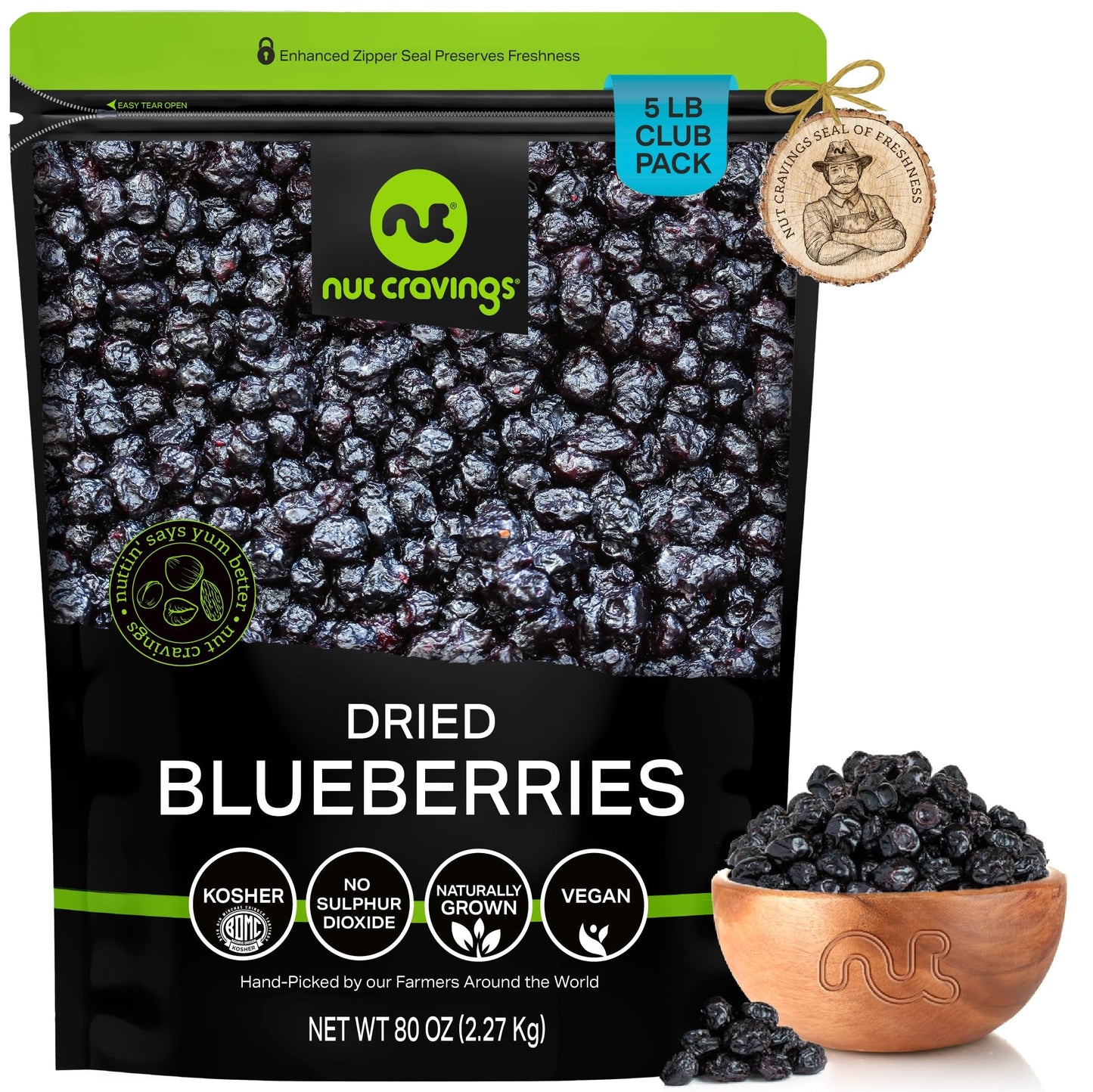
Nut Cravings dried blueberries are whole, lightly sweetened, naturally grown, and vegan, packed fresh at our Monroe, New York facility in a resealable bulk bag with no sulphur dioxide at any stage of processing. Every one-ounce serving delivers 100 calories, 2 grams of dietary fiber, and 8% DV iron, with the actual blueberry flavor surviving the drying process rather than getting buried under sweetener. Lighter on sugar than most mass-market dried blueberries. Whole berries, not chopped. Four sizes from 6 oz to 5 lb. Free shipping on orders over $35. Browse the complete dried fruits collection for cranberries, mango, apricots, dates, and more alongside these dried blueberries, and the full trail mixes collection for ready-made blends that pair naturally with dried blueberries.
Why Lightly Sweetened Produces a Better Dried Blueberry
Fresh blueberries have a natural sweet-tart balance that works on their own. When water content drops to 15 to 18 percent during dehydration, acids concentrate faster than natural sugars register on the palate. Unsweetened dried blueberries taste sharply astringent, not pleasantly tart. A sweetening step is necessary to produce a dried blueberry worth eating. The variable across products is how much sweetener is used. Most mass-market dried blueberries apply enough sugar to completely mask the underlying blueberry flavor, producing a berry that tastes like a sweet snack with a blueberry label. These Nut Cravings dried blueberries use cane sugar at a lighter level, keeping the blueberry character in front of the sweetener rather than behind it. The result is a dried blueberry that still tastes like blueberry.
Nutrition Facts Per One Ounce (28g)
- Calories: 100
- Total Fat: 3g (4% DV)
- Saturated Fat: 0.5g (3% DV)
- Trans Fat: 0g
- Cholesterol: 0mg
- Sodium: 0mg
- Total Carbohydrate: 24g (9% DV)
- Dietary Fiber: 2g (7% DV)
- Total Sugars: 21g (includes 11g added sugars)
- Protein: 0g
- Calcium: 60mg (4% DV)
- Iron: 1.4mg (8% DV)
- Potassium: 190mg (4% DV)
Good For You
- No Sulphur Dioxide: no sulfite preservative added at any stage of processing or packing
- Naturally Grown: blueberries sourced from naturally grown crops
- Vegan: no animal-derived ingredients in any size
The 8% DV iron and 4% DV potassium per serving make these dried blueberries a useful portable mineral source. The anthocyanin polyphenols that give blueberries their characteristic deep color are retained in the dried berry and represent the primary reason blueberries appear consistently in nutritional research on cognitive and cardiovascular health.
How to Use Dried Blueberries
In Oatmeal and Hot Cereals
Fold dried blueberries into steel-cut or rolled oats during the last two to three minutes of cooking. They rehydrate gently in the hot cooking liquid and provide concentrated blueberry flavor without turning the entire pot blue the way fresh berries do. A more reliable and consistent oatmeal addition than fresh blueberries across any season.
In Granola
Add dried blueberries to homemade granola after baking, not before. Adding before baking over-toasts the berries and dulls the color. Folding in after the granola cools preserves both the texture and the deep blueberry color in the finished mix.
In Baking
Soak dried blueberries in warm water or orange juice for five minutes before folding into batter. This prevents dry berries from pulling moisture from the dough during baking. Dried blueberries are often the better baking choice than fresh because they do not bleed juice into the batter during mixing, which prevents the gray-blue discoloration that fresh blueberries sometimes cause in muffins and scones. Applications include blueberry muffins, scones, quick breads, coffee cake, pancakes, and waffles.
In Trail Mix and Overnight Oats
Dried blueberries pair naturally with almonds, walnuts, and dark chocolate chips in homemade trail mix. In overnight oats, dried blueberries rehydrate perfectly by morning when combined with oats and milk the night before, delivering whole berry texture and flavor without any advance preparation.
On Yogurt Bowls and Salads
Scatter over Greek yogurt, acai bowls, and smoothie bowls for a concentrated blueberry addition. On spinach salads with goat cheese, walnuts, and balsamic, dried blueberries provide the same sweet-tart fruit contrast as fresh in a format that does not release juice onto the greens.
On Cheese Boards
Dried blueberries alongside aged cheddar, brie, and blue cheese provide the concentrated sweet-tart fruit element that elevates a cheese board from a simple presentation to a balanced one. The deep color also adds visual contrast against pale cheeses and light crackers.
Choosing the Right Size
- 6 oz: First-time buyers and light regular use at $2.16 per ounce
- 1 lb: The practical everyday size at $1.81 per ounce for regular snacking and baking
- 3 lb: High-volume buyers and established daily users at $0.77 per ounce
- 5 lb: Maximum per-ounce savings at $0.70 per ounce for bulk buyers and food service
For 3 lb and 5 lb sizes, portion into smaller airtight containers on arrival and refrigerate or freeze what will not be used within three to four months.
Storage
Seal the resealable bag firmly after every use.
- Room temperature, away from heat and light: 6 to 12 months of peak freshness
- Refrigerated in the sealed bag or airtight container: up to 18 months
- Frozen in an airtight container: up to 24 months
White granular crystals on the surface of stored dried blueberries are natural sugar crystallization, not mold. The berries are safe to eat. A brief warm water rinse dissolves surface crystals if desired.
Dried Blueberries Guarantee
Every Nut Cravings order is backed by a 100% satisfaction guarantee. If these dried blueberries arrive below the freshness standard you expect, contact our team at 877-471-4870 or care@nutcravings.com within seven days and we will resolve it promptly. Browse the complete dried fruits collection for cranberries, apricots, kiwi, mango, dates, apple rings, and more, or explore the full trail mixes collection for ready-made blends from Nut Cravings.
Customer Reviews
Frequently Asked Questions
We’re More Than Just Snacks
Nuts

Dry Fruits
Everyday blends of nuts, seeds, and fruits simple, satisfying, and ready to enjoy anywhere.

Gifts
Beautiful assortments made to delight perfect for birthdays, holidays, & heartfelt thank yous.

Organic
Pure and certified organic — clean, natural ingredients for mindful snacking.

Seasonal Gifts
Limited-edition assortments inspired by every season and celebration.

Chocolate & Treats
Chocolates, brittles, and confections that turn any snack break into a special moment.

Mixed Nuts & Bar Mix
Protein-packed combinations of nuts, seeds, and fruits crafted for energy and wellness.

Care Packages
Thoughtful boxes filled with joy and flavor — send care to friends, family, or colleagues.

Corporate Gifting
Elegant, customizable boxes designed to impress teams, clients, and partners.