

Pistachio Nutrition Facts and Health Benefits | Nut Cravings
Pistachios have a few nutritional characteristics no other nut shares. They are the only tree nut with meaningful lutein and zeaxanthin for eye health, the only tree nut formally documented as a complete protein source by WHO/FAO standards, and the only nut with a randomized controlled trial showing measurable improvement in retinal protection. Here is the full breakdown, honest on both the evidence and the limitations.
One ounce of pistachios (49 kernels) gives you 5.7g protein, 3g fiber, 28% daily B6, the highest potassium of any nut, and a unique combination of lutein plus zeaxanthin. They are the only tree nut with a DIAAS of 86, qualifying as complete protein. A 2024 Tufts University RCT found 2oz daily for 12 weeks significantly increased macular pigment in the retina. Two trials in prediabetics found meaningful HbA1c and insulin resistance improvements from daily pistachio consumption.
What Makes Pistachios Nutritionally Unique Among Nuts
Most nuts have one or two distinctive nutritional characteristics. Pistachios have three that no other nut shares, and two of them are backed by recently published clinical trials.
First, pistachios are the only nut that contains significant amounts of lutein and zeaxanthin, the carotenoid pigments that accumulate in the retina and protect it from light-induced damage and age-related macular degeneration. They contain approximately 13 times more lutein and zeaxanthin than the next highest nut. Second, pistachios are the only tree nut formally documented as a complete protein source, providing all nine essential amino acids in quantities sufficient to qualify as good quality protein under WHO and FAO standards. Third, they are the lowest-calorie major nut on a per-piece basis, at 49 kernels per ounce compared to 23 almonds or 14 walnut halves, which has real implications for satiety and portion management.
These three characteristics are not marketing claims. They are backed by peer-reviewed research published in major nutrition journals in 2020, 2023, and 2024.
Complete Pistachio Nutrition Facts Per Ounce (USDA)
One ounce is approximately 49 shelled pistachio kernels, or 28 grams.
| Nutrient | Per 1 oz (28g, ~49 kernels) | % Daily Value | Note |
|---|---|---|---|
| Calories | 159 kcal | 8% | Lowest calorie major nut |
| Total fat | 12.9g | 17% | 90% unsaturated |
| Monounsaturated fat | 6.8g | n/a | Oleic acid, heart-healthy |
| Polyunsaturated fat | 3.9g | n/a | Linoleic acid and ALA |
| Saturated fat | 1.6g | 8% | Low |
| Protein | 5.7g | 11% | Complete protein, DIAAS 86 |
| Total carbs | 7.8g | 3% | Moderate; higher than most nuts |
| Net carbs | 4.8g | n/a | Fiber reduces effective carb impact |
| Fiber | 3.0g | 11% | Prebiotic; feeds beneficial gut bacteria |
| Vitamin B6 | 0.48mg | 28% | Highest B6 of any nut; neurotransmitters, immune |
| Thiamine (B1) | 0.19mg | 16% | Energy metabolism, nerve function |
| Potassium | 291mg | 6% | Highest potassium of any tree nut |
| Phosphorus | 137mg | 11% | Bone, energy (ATP) |
| Copper | 0.39mg | 43% | Iron transport, antioxidant enzymes |
| Manganese | 0.33mg | 14% | Enzyme cofactor, antioxidant |
| Magnesium | 30mg | 7% | 300+ enzyme reactions |
| Iron | 1.1mg | 6% | Red blood cell formation |
| Zinc | 0.62mg | 6% | Immune function |
| Lutein + Zeaxanthin | ~330 mcg | n/a | Only nut with measurable amounts; 13x next highest nut |
| Gamma-tocopherol (Vit E) | 6.2mg | n/a | Highest gamma-tocopherol of any nut |
| Phytosterols | 61mg | n/a | Cholesterol absorption reduction |
A few numbers stand out. Pistachios have the highest vitamin B6 content of any nut by a substantial margin at 28 percent DV per ounce. They have the highest potassium of any tree nut. And they are the only nut source of lutein and zeaxanthin in quantities that show up meaningfully in blood and retinal tissue after regular consumption.
The 2024 Tufts University Eye Health Trial: What It Found
The most compelling pistachio research published in recent years appeared in The Journal of Nutrition in October 2024. Researchers Tammy Scott and Elizabeth Johnson from the Friedman School of Nutrition Science and Policy at Tufts University ran a single-blind randomized controlled trial specifically to test whether pistachios could improve a measurable indicator of retinal eye health.
The trial enrolled 36 healthy middle-aged to older adults who had habitually low lutein and zeaxanthin intake and low baseline macular pigment. Participants were randomly assigned to eat 2 ounces (57 grams) of pistachios daily as part of their usual diet, or to continue their usual diet without pistachios, for 12 weeks. Macular pigment optical density (MPOD) and serum lutein concentrations were measured at baseline, 6 weeks, and 12 weeks.
MPOD increased significantly in the pistachio group by week 6 and this increase was maintained through week 12. MPOD did not significantly change in the control group throughout the study. Serum lutein concentrations also increased significantly in the pistachio group at week 12 and were unchanged in the control group.
Why MPOD matters: macular pigment sits in the central area of the retina and functions as a natural filter of short-wavelength (blue) light, reducing photoxic damage to photoreceptor cells. Higher MPOD is consistently associated with lower risk of age-related macular degeneration (AMD), which the CDC estimates affects approximately 18 percent of people in their 70s and is the leading cause of irreversible vision loss in older Americans. The researchers noted that pistachios are the only nut that contains significant lutein, making them uniquely positioned for this role.
Lead researcher Tammy Scott stated that pistachios were chosen for the study specifically because they are the only nut that contains significant amounts of lutein, and that healthy fats in pistachios aid absorption of this fat-soluble carotenoid. The study was funded by American Pistachio Growers, with the funders having no role in the study design or interpretation.
Pistachios and Blood Sugar: Two Trials in Prediabetes
Pistachios have been studied more extensively in the context of blood sugar management than most nuts, and the evidence base is unusually consistent.
This Spanish randomized crossover trial recruited 54 prediabetic subjects who consumed either a pistachio-supplemented diet (57 grams per day, isocaloric with the control) or a control diet for 4 months each, separated by a washout period. The pistachio diet contained 50 percent carbohydrates and 35 percent fat versus 55 percent carbs and 30 percent fat in the control.
Results were clear and consistent. Fasting glucose, insulin, and HOMA-IR (the primary measure of insulin resistance) all decreased significantly after the pistachio diet compared to the control. Additional cardiometabolic risk markers including fibrinogen, oxidized LDL, and platelet factor 4 also decreased significantly on the pistachio diet. Glucagon-like peptide-1 (GLP-1), the gut hormone associated with satiety and blood sugar regulation, increased. The researchers concluded that chronic pistachio consumption is emerging as a useful nutritional strategy for the prediabetic state.
Penn State researchers tested whether timing-specific pistachio consumption (as a nighttime snack, after dinner and before bed) could improve glycemic control in prediabetes compared to standard dietary guidance for 1 to 2 carbohydrate exchanges. 66 adults with prediabetes (fasting glucose 100 to 125 mg/dL) completed this 2-period crossover trial.
The primary outcome, fasting plasma glucose, showed no significant difference between conditions. However, HbA1c (the 3-month average blood sugar measure that matters more for long-term diabetes risk assessment) was significantly lower after the pistachio condition compared to usual care. The pistachio group also showed improved overall diet quality scores, particularly for plant protein and fatty acid ratios. Triglycerides and the total to HDL cholesterol ratio increased on the usual care (carbohydrate) condition but were unaffected by pistachios. Researchers noted this is meaningful because nighttime carbohydrates commonly worsen lipid profiles in this population.
Why Pistachios Are the Only Tree Nut Classified as Complete Protein
Most plant proteins are incomplete, meaning they are low in one or more essential amino acids. Soy and quinoa are the well-known exceptions. Among nuts, pistachios now join that list with documented evidence.
What the DIAAS score of 86 means
The Digestible Indispensable Amino Acid Score (DIAAS) is the current gold standard for measuring protein quality. It accounts for both amino acid content and actual digestibility. A score above 75 qualifies as "good quality protein" under WHO and FAO guidelines. A score above 100 is considered excellent.
A controlled feeding study in growing pigs (the preferred biological model for estimating human protein digestion) found raw pistachios have a DIAAS of 86 and roasted pistachios score 83. Both exceed the 75 threshold for good quality protein. A separate rat feeding study found PDCAAS values of 73 to 94 percent depending on preparation method. The first-limiting amino acid in pistachios is lysine, which means people who eat pistachios alongside foods rich in lysine (legumes, dairy, eggs) maximize the protein benefit.
Protein context for daily eating
5.7 grams of complete protein per ounce, at 159 calories, makes pistachios one of the more calorie-efficient plant protein sources available. For context, an ounce of cooked chicken provides 8 to 9 grams at around 50 calories, so pistachios are not competing with animal protein on efficiency. But for a snack format that also provides fiber, lutein, B6, and potassium, the protein quality story is genuinely strong relative to other plant snacks.
This matters specifically for plant-based eaters and for people trying to increase protein snacking without going to protein bars, which typically contain significantly more processed ingredients at a higher price point per gram of protein.
The Pistachio Effect: Why the In-Shell Format Matters for Portion Control
There is a documented behavioral phenomenon around in-shell pistachio consumption that most nutrition articles ignore but is worth understanding. Research has shown that cracking pistachios out of the shell slows the rate of eating enough to measurably reduce total calorie intake in controlled settings.
The visual cue effect
A study at Eastern Illinois University found that participants who ate in-shell pistachios consumed 41 percent fewer calories than those who ate pre-shelled pistachios, even when calorie information was available to both groups. The empty shells left visible on the table functioned as a visual cue that signaled prior consumption, prompting participants to stop eating sooner. When shells were removed before they could accumulate, this cue disappeared and consumption increased.
Why 49 kernels per ounce changes the eating experience
One ounce of pistachios provides 49 individual pieces. One ounce of almonds provides 23. This means you get more than twice as many pieces per serving with pistachios. The act of cracking each nut, the time it takes, the tactile engagement, and the larger visual volume of a pistachio serving collectively produce a slower, more deliberate eating experience than reaching into a bag of pre-shelled almonds. For people managing calorie intake, this is a real and practical advantage, not a marketing angle.
The lowest-calorie major nut per piece
At 159 calories per ounce, pistachios also have a slight calorie advantage over most other nuts (almonds 164, walnuts 185, cashews 157, macadamias 204). The difference is modest, but combined with the portion control effect of in-shell consumption, it produces a measurably lower caloric intake per eating session in research settings.
California vs Turkish Pistachios: What is Actually Different
Nut Cravings carries both California and Turkish Antep pistachios. They are the same species (Pistacia vera) but differ in several practical ways that matter when you are choosing between them.
Size and appearance
California pistachios are typically larger and rounder. Turkish Antep pistachios are smaller and more elongated, with a more intense, concentrated flavor. California pistachios are naturally colored in shades of ivory, tan, and green depending on the kernel. Antep pistachios from Turkey's Gaziantep province are considered by many buyers to be the closest commercially available pistachio to the prized Iranian Akbari variety in flavor intensity.
Flavor profile
California pistachios have a milder, buttery, sweet-savory flavor. Turkish Antep pistachios have a stronger, more complex, slightly earthier flavor with higher pistachio oil intensity. For people who love pistachios and want the most pronounced flavor experience, Antep is the better choice. For people who prefer a more approachable, less assertive nut or who are serving pistachios to a mixed crowd, California is the better default.
Nutritional difference
The core nutritional profile of pistachios is the same across origin. Protein, fiber, B6, potassium, and the lutein/zeaxanthin content do not differ materially between California and Turkish pistachios. The choice between them is primarily about flavor preference and intended use, not nutrition.
How to Eat Pistachios Daily for Health Benefits
The clinical research uses one to two ounces daily. Consistency matters more than precision on amount or timing.
As a daily afternoon snack
One ounce of in-shell pistachios in the mid-afternoon provides 5.7 grams of protein, 3 grams of fiber, and the slow-cracking ritual that naturally limits overconsumption. The fiber and protein combination reduces the blood sugar drop that typically causes the 3 PM energy dip, and the lutein content accumulates in the retina over weeks of consistent consumption. This is one of the few daily habits where the nutritional benefit compounds meaningfully with consistent daily use.
As a nighttime snack in place of carbohydrates
The 2024 Penn State trial specifically tested pistachios as a nighttime snack replacing 15 to 30 grams of carbohydrate. If you currently eat crackers, chips, or bread as a late evening snack, replacing that with one ounce of pistachios improves the HbA1c trajectory over weeks while providing better protein and fat for overnight muscle maintenance. The trial found this substitution also improved overall diet quality scores significantly.
On salads and grain bowls
Roughly chopped pistachios on a grain bowl with roasted vegetables, a tahini dressing, and some leafy greens is one of the most practical ways to get the daily ounce without thinking about it as a "health habit." Pistachios work especially well with grains because the lysine in legumes and the complete amino acid profile in pistachios together form a very robust plant protein combination that covers each other's limitations.
Related reading: Pistachio Health Benefits: DIAAS 86, Tufts Eye RCT, and More
Your Pistachio Nutrition Questions Answered
Yes. Pistachios deliver complete protein (DIAAS 86), the highest B6 of any nut (28% DV per oz), the most potassium of any tree nut, and unique lutein and zeaxanthin that no other nut provides in measurable amounts. A 2024 Tufts RCT found they significantly improve retinal macular pigment. Two trials in prediabetics found meaningful improvements in HbA1c and insulin resistance. At 159 calories per ounce and 49 pieces per serving, they are also the most portion-control friendly major nut.
One to two ounces daily is the range used in clinical research. One ounce is 49 kernels or about 28 grams. The 2024 Tufts eye health trial and the Penn State nighttime snack trial both used 57 grams (2 oz) daily. One ounce daily is a practical starting point that provides meaningful nutritional benefit without excessive calories. The in-shell format naturally limits overconsumption through the cracking ritual, which slows eating pace.
Yes, and this is now backed by a randomized controlled trial. Pistachios are the only nut with significant lutein and zeaxanthin, containing about 13 times more than the next highest nut. The 2024 Tufts University RCT published in the Journal of Nutrition found that 2 ounces daily for 12 weeks significantly increased macular pigment optical density (MPOD) in healthy middle-aged to older adults, beginning at week 6. Higher MPOD is directly associated with reduced risk of age-related macular degeneration, the leading cause of irreversible blindness in older adults in the United States.
Yes, with strong clinical evidence in prediabetes. The 2014 Spanish Diabetes Care trial found that 57 grams of pistachios daily for 4 months significantly reduced fasting glucose, insulin, and insulin resistance (HOMA-IR) in prediabetic subjects. A 2024 Penn State trial found that 57 grams nightly for 12 weeks reduced HbA1c more than carbohydrate snack guidance and protected against triglyceride and cholesterol deterioration. Pistachios have a low glycemic index because fiber, protein, and fat all slow glucose absorption after eating.
Same species, different flavor and size profile. California pistachios are larger, milder, and more approachable. Turkish Antep pistachios from the Gaziantep region are smaller, more intensely flavored, and closer in profile to the highly prized Iranian pistachios. Nutritionally, both provide the same core profile: complete protein, B6, lutein/zeaxanthin, potassium, and fiber. The choice between them is primarily about flavor preference rather than nutritional difference.
Yes. Pistachios are the only tree nut formally documented as containing all nine essential amino acids in amounts sufficient to qualify as good quality protein by WHO and FAO standards. A 2020 feeding trial found a DIAAS of 86 for raw pistachios and 83 for roasted, both exceeding the 75 threshold for good quality protein. The first-limiting amino acid is lysine. For people on plant-based diets, pistachios are a meaningfully better protein option than other nuts because of both the quantity (5.7g per oz) and the quality (complete amino acid profile).
California Jumbos and Turkish Antep, Packed Fresh, Not Warehouse-Aged
Pistachio flavor degrades faster than most buyers expect once the shell is removed. Fresh pistachios snap crisply, taste rich and slightly sweet, and have a clean finish. Pistachios that have been sitting in a warehouse for months taste muted, sometimes slightly stale or rancid. We pack in Monroe, NY from current-season California and Turkish stock and ship directly.
Packed fresh in Monroe, NY from current-season California stock
California accounts for roughly 98 percent of US pistachio production, and the harvest season runs September through November. Pistachios shipped directly from a packer working with fresh California stock taste noticeably different from pistachios that traveled through a distributor and sat on warehouse shelves for months. We pack in Monroe, NY and ship directly. The lutein and zeaxanthin that the 2024 Tufts trial measured are in fresh nuts, not in degraded product.
OU Kosher certified across both California and Turkish varieties
Both pistachio formats carry OU Kosher certification through third-party facility inspection and ongoing auditing. For buyers who need certified kosher it is a hard requirement met. For everyone else, external verification is a meaningful quality signal, particularly for imported Turkish pistachios where supply chain integrity matters more.
Resealable bags that keep the flavor through the bag's life
Pistachio oils oxidize on contact with air. An opened bag without a proper resealable closure starts showing flavor degradation within a few days in warm conditions. Our zipper-seal bags close properly after every opening. For a product you eat one ounce at a time daily over two to three weeks from the same bag, this preserves both flavor quality and the nutritional profile you are buying the nuts for.
Two origins for two distinct flavor experiences
California jumbos for a larger, milder pistachio experience. Turkish Antep for an intense, concentrated pistachio flavor closer to the prized Iranian varieties. Most nut retailers carry only one type. We carry both because flavor preference matters and the best pistachio for someone who grew up eating Turkish varieties is different from the best pistachio for someone who prefers California supermarket-style nuts.
Free shipping on orders $35 and up
A one-pound bag of pistachios hits the free shipping threshold. For buyers who maintain the 1 to 2 ounce daily habit documented in clinical research, restocking every three to four weeks without a per-order shipping charge makes meaningful financial sense over a year.
Featured on Good Morning America
Nut Cravings has been featured on Good Morning America, providing an independent editorial quality signal for first-time buyers. Combined with OU Kosher certification and direct-from-packer freshness, that is three external quality markers new buyers can verify independently.
Shop Pistachios at Nut Cravings
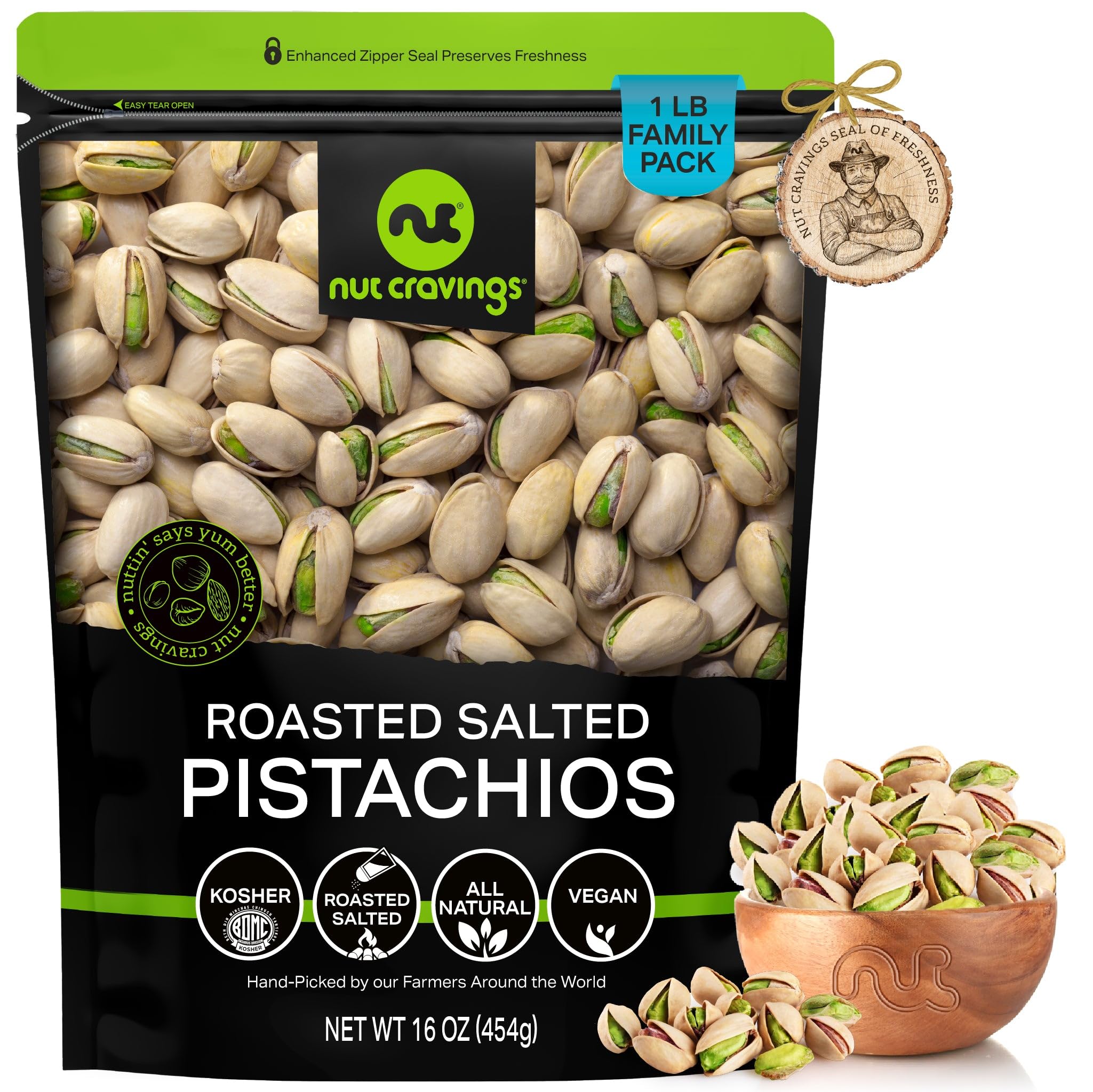
California jumbo and Turkish Antep. Packed fresh in Monroe, NY. OU Kosher certified. Free shipping on orders $35+.
Shop Pistachios
See all-
Roasted Pistachios, California — Salted
Regular price From $20.97Sale price From $20.97 Regular price List Price: -
Roasted Pistachios, Turkish Antep — Lightly Salted
Regular price From $24.97Sale price From $24.97 Regular price List Price: -
Roasted Pumpkin Seeds (Pepitas) — Salted
Regular price From $6.97Sale price From $6.97 Regular price List Price: -
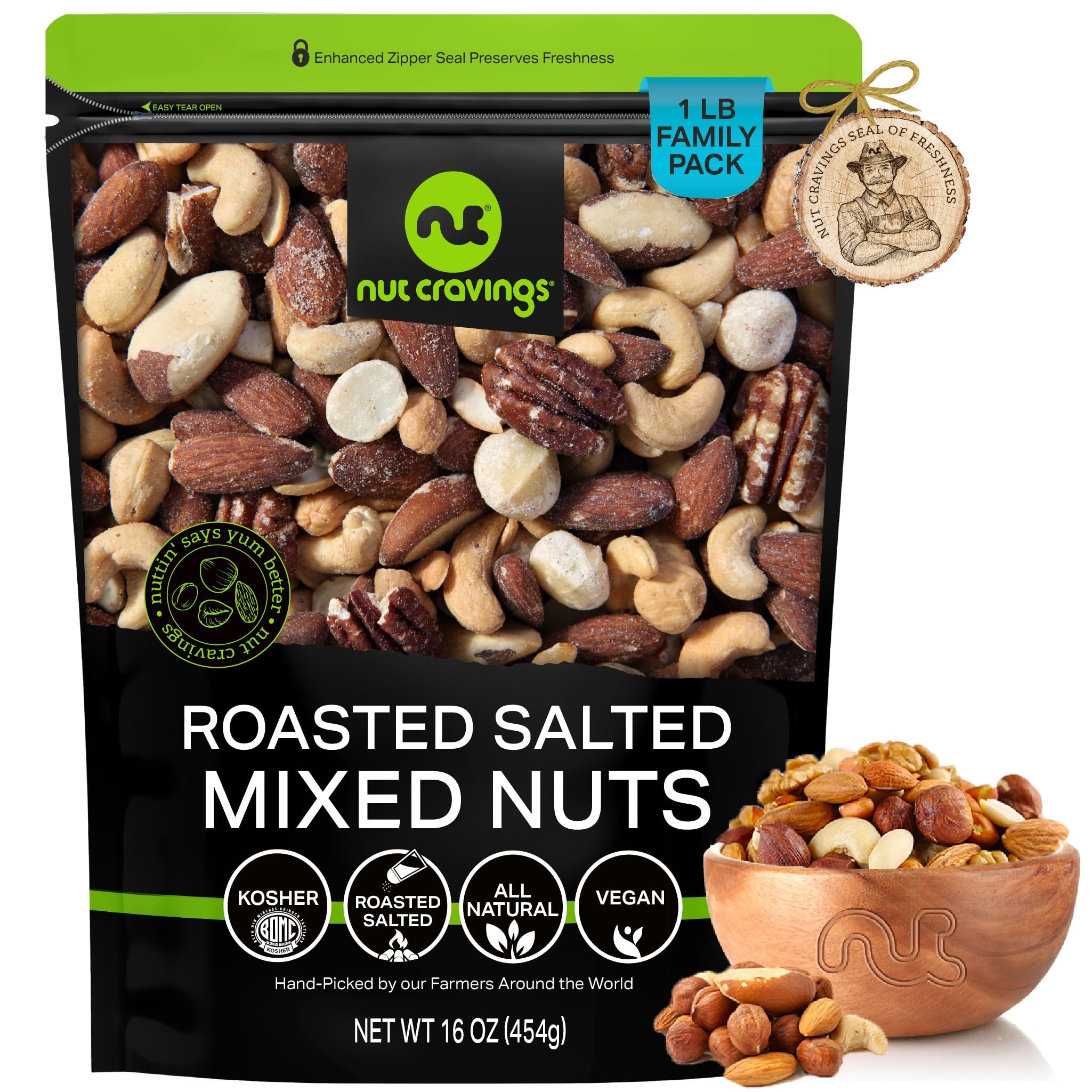
Mixed Nuts Gift Basket in Reusable Wooden Tray + Green Ribbon (12 Assortments)
Regular price $39.97Sale price $39.97 Regular price List Price:


