


Everyday blends of nuts, seeds, and fruits simple, satisfying, and ready to enjoy anywhere.
Roasted Pumpkin Seeds (Pepitas) — Unsalted - 1 lb (16 oz)
Regular price
$13.97
Sale price
$13.97
Regular price
List Price:
Quantity
Couldn't load pickup availability
Free Shipping Over $25
Packed Fresh USA
100% Satisfaction Guarantee



You may also like
-
Raw Almonds — In Shell
Regular price From $12.97Sale price From $12.97 Regular price List Price: -
Mixed Nuts Gift Basket in Reusable Wooden Tray + Green Ribbon (12 Assortments)
Regular price $39.88Sale price $39.88 Regular price List Price: -
Happy Birthday Treats, Nuts Gift Basket with Bday Ribbon in Reusable Wooden Tray (12 Assortments)
Regular price $39.88Sale price $39.88 Regular price List Price: -
Birthday Snack Box — Care Package with 45 Sweet Treats + Happy Birthday Card
Regular price From $29.38Sale price From $29.38 Regular price List Price: -
Raw Brazil Nuts — In Shell
Regular price From $19.97Sale price From $19.97 Regular price List Price: -
Get Well Soon, Mixed Nuts Gift Basket with Get Well Soon Ribbon (7 Assortments)
Regular price $29.38Sale price $29.38 Regular price List Price:
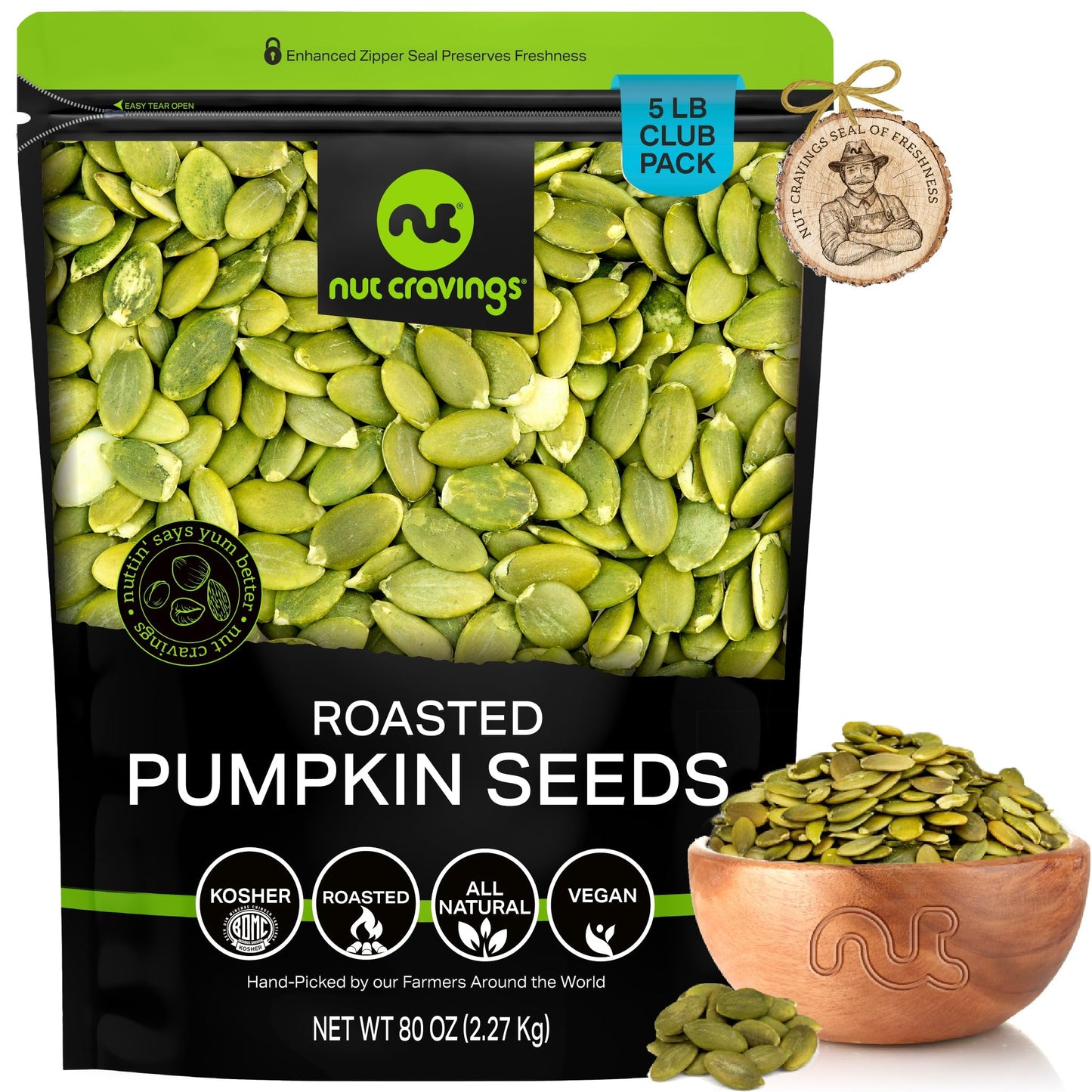
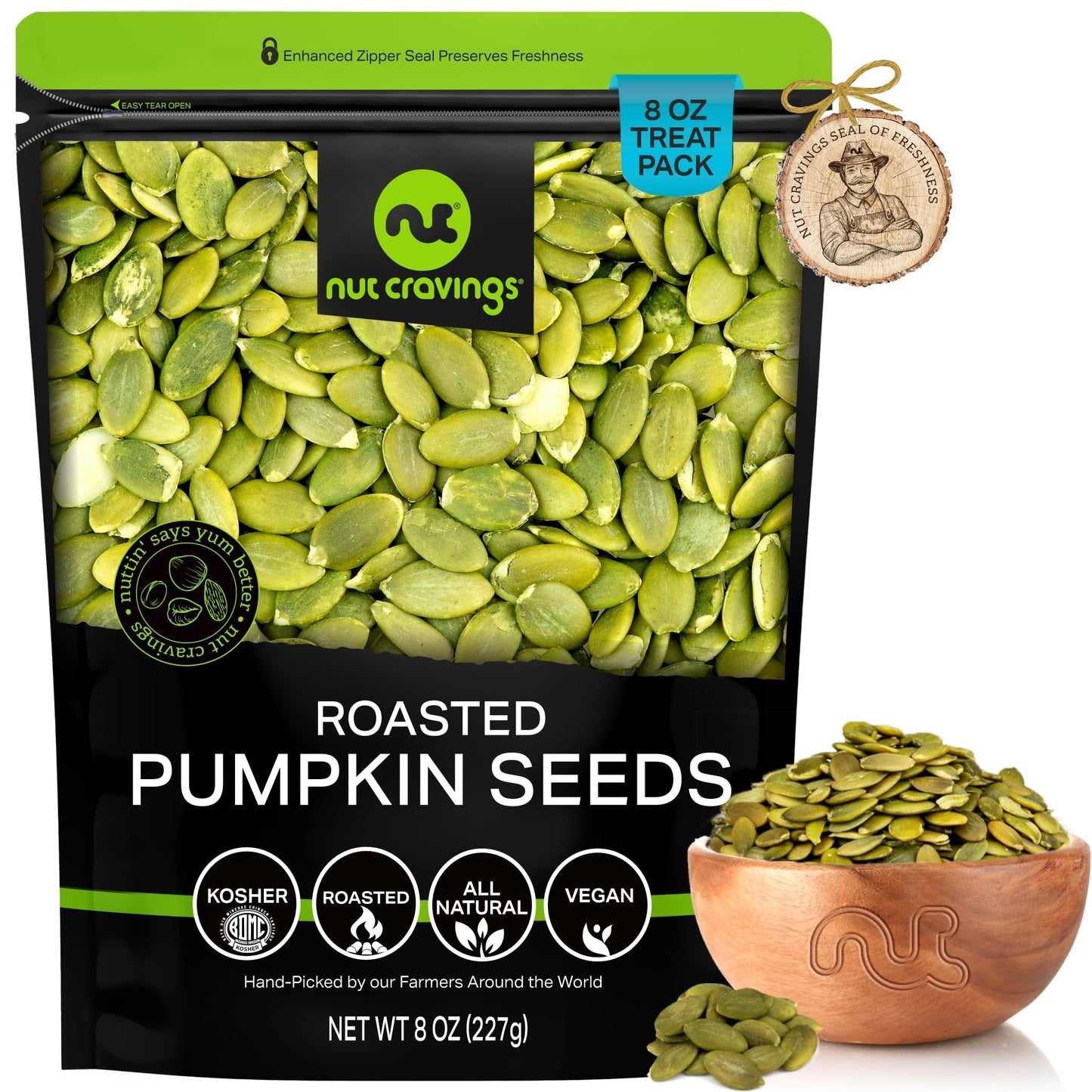
Roasted pumpkin seed kernels with the outer hull already removed, packed in resealable stand-up bags. Pepitas are the green interior kernel of the pumpkin seed, ready to eat without any cracking or shelling. The roasted format works straight from the bag as a snack, as a salad topping, stirred into granola, blended into pesto, or sprinkled over soups and baked goods. The unsalted version gives you full control over sodium when layering pepitas into recipes that already carry their own salt. Browse the full Nuts & Seeds collection for all nut and seed varieties from Nut Cravings.
What You're Buying
Roasted shelled pumpkin seed kernels (pepitas), outer hull removed, packed in a resealable food-safe stand-up bag.
Available in six sizes: 0.25 lb (4 oz), 0.5 lb (8 oz), 1 lb (16 oz), 2 lb (32 oz), 3 lb (48 oz), and 5 lb (80 oz). Pepitas are different from the white-shelled pumpkin seeds sold for Halloween snacking. The hull is already off, the green kernel is exposed, and the texture is soft-crunchy rather than fibrous. That makes them practical in recipes where whole-shell pumpkin seeds would not work.
Nutrition Facts Per One Ounce (28g, About 1/4 Cup)
- Calories: 130*
- Total Fat: 11g (14% DV)
- Saturated Fat: 2g (10% DV)
- Trans Fat: 0g
- Cholesterol: 0mg (0% DV)
- Sodium: 10mg (0% DV)
- Total Carbohydrate: 2g (1% DV)
- Dietary Fiber: 3g (11% DV)
- Total Sugars: less than 1g
- Includes Added Sugars: 0g (0% DV)
- Protein: 7g
- Vitamin D: 0mcg (0% DV)
- Calcium: 0mg (0% DV)
- Iron: 0mg (0% DV)
- Potassium: 0mg (0% DV)
*Note: The product image label shows 130 calories per 1 oz serving. The product page nutrition section lists 163 calories per oz. These two figures conflict. Please check the bag label upon arrival for the current and verified calorie count. All other nutrition values above are from the product image label.
One ounce is approximately 1/4 cup of pepitas. At 7g of protein per ounce, pumpkin seeds are one of the higher-protein seeds by weight. The 3g of dietary fiber per ounce comes from the natural fiber in the seed kernel. Sodium is 10mg per serving, coming from the natural content of the seeds and peanut oil rather than added salt.
Good Source of 8 Key Nutrients
As labeled on the product packaging, roasted pumpkin seeds are a good source of the following:
Protein at 7g per ounce, making pepitas one of the higher-protein snack seeds available by serving weight.
Omega-3 fatty acids in the form of alpha-linolenic acid (ALA), a plant-sourced omega-3 present in pumpkin seed oil.
Heart-Healthy Fats from the predominantly unsaturated fat profile of pumpkin seeds. Total fat is 11g per ounce with 2g saturated.
Antioxidant compounds naturally present in pumpkin seeds, as labeled on the product packaging.
Dietary Fiber at 3g per ounce (11% Daily Value), from the natural fiber in the pumpkin seed kernel.
Zinc as labeled on the product packaging. Pumpkin seeds are one of the more concentrated whole-food sources of zinc. Check the bag label for the specific percentage value per serving.
Magnesium as labeled on the product packaging. Check the bag label for the specific percentage value per serving.
Phosphorus as labeled on the product packaging. Check the bag label for the specific percentage value per serving.
How to Use Roasted Pumpkin Seeds (Pepitas)
Salads
Sprinkle 2 tablespoons over any green salad for crunch and added protein. Pairs especially well with roasted squash, goat cheese, and balsamic-based dressings. The soft-crunchy texture adds contrast without the hardness of croutons. Combine with Dried Fruits for a homemade salad topping that covers both crunch and sweetness in one scatter.
Granola
Stir into the oat mix before baking and toast together. Pepitas stay soft-crunchy rather than becoming rock-hard the way some nuts do during granola baking, which makes them a better textural fit in the finished product than many nut alternatives.
Pesto and Sauces
Blend in place of pine nuts for pumpkin seed pesto. Comparable texture when blended, a slightly nuttier and earthier flavor, and a practical cost difference for anyone making pesto regularly. Also traditional in mole sauces and pipián in Mexican and Central American cooking, where pepitas are the authentic ingredient rather than a substitute.
Pumpkin Seed Butter
Blend 2 cups of roasted pepitas in a food processor for 10 to 15 minutes. The result is creamy, spreadable, and similar in texture to peanut butter with a distinct earthy flavor. A practical alternative for households managing peanut allergy concerns.
Straight Snacking and Trail Mix
A handful between meals delivers protein and key minerals without added sugar. In trail mix, pepitas add a texture variety that pure nut-based mixes often lack. Combine with dried cranberries, raw almonds, and your preferred additions for a complete mix. Browse Mixed Nuts & Bar Mix for pre-blended snacking options.
Fall Baking and Seasonal Cooking
Sprinkle over pumpkin bread, butternut squash soup, autumn muffins, or roasted vegetable dishes before serving. The seasonal visual and flavor fit is natural. Pepitas stay intact through most baking temperatures without burning when added as a topping in the last few minutes of baking.
Choosing the Right Size
Six sizes are available. The 0.25 lb (4 oz) and 0.5 lb (8 oz) bags suit first-time buyers or those using pepitas as an occasional salad topping. The 1 lb (16 oz) bag is the standard size for regular snacking and weekly recipe use. The 2 lb (32 oz) bag fits households using pepitas across multiple recipes throughout the week. The 3 lb (48 oz) and 5 lb (80 oz) bags are bulk formats for frequent bakers, granola makers, and households going through seeds quickly. For the 3 lb or 5 lb sizes, move half to the freezer on arrival to extend shelf life to 2 years without changing texture or flavor.
Storage
Keep the bag sealed between uses and store in a cool, dry place away from heat and direct light. Pantry shelf life is 6 to 9 months sealed. Refrigeration extends this to up to 12 months. Pepitas carry a high fat content that can oxidize if the bag is left open in a warm kitchen, so resealing firmly after every use is important for maintaining freshness. For summer storage in warm climates, refrigeration is the better default.
Roasted Pumpkin Seeds Guarantee
Every Nut Cravings order is backed by a 100% satisfaction guarantee. If these pumpkin seeds arrive below the quality or freshness standard you expect, contact our team and we will make it right. Browse the full Nuts & Seeds range for all nut and seed varieties, or explore View All Gifts for gift formats featuring premium nuts and seeds from Nut Cravings.
Customer Reviews
Frequently Asked Questions
We’re More Than Just Snacks
Nuts

Dry Fruits
Everyday blends of nuts, seeds, and fruits simple, satisfying, and ready to enjoy anywhere.

Gifts
Beautiful assortments made to delight perfect for birthdays, holidays, & heartfelt thank yous.

Organic
Pure and certified organic — clean, natural ingredients for mindful snacking.

Seasonal Gifts
Limited-edition assortments inspired by every season and celebration.

Chocolate & Treats
Chocolates, brittles, and confections that turn any snack break into a special moment.

Mixed Nuts & Bar Mix
Protein-packed combinations of nuts, seeds, and fruits crafted for energy and wellness.

Care Packages
Thoughtful boxes filled with joy and flavor — send care to friends, family, or colleagues.

Corporate Gifting
Elegant, customizable boxes designed to impress teams, clients, and partners.