Everyday blends of nuts, seeds, and fruits simple, satisfying, and ready to enjoy anywhere.

Brazil nuts in the shell are one of the most distinctive nuts at any holiday table. The shells are three-sided, almost triangular, with a rough wood-grain texture that makes them instantly recognizable. The kernel inside is large, creamy, and rich enough that most people can only eat a few before feeling satisfied. Cracking them is a genuine effort, which is part of why they've stayed a coffee-table-bowl staple for generations rather than becoming an everyday snack.
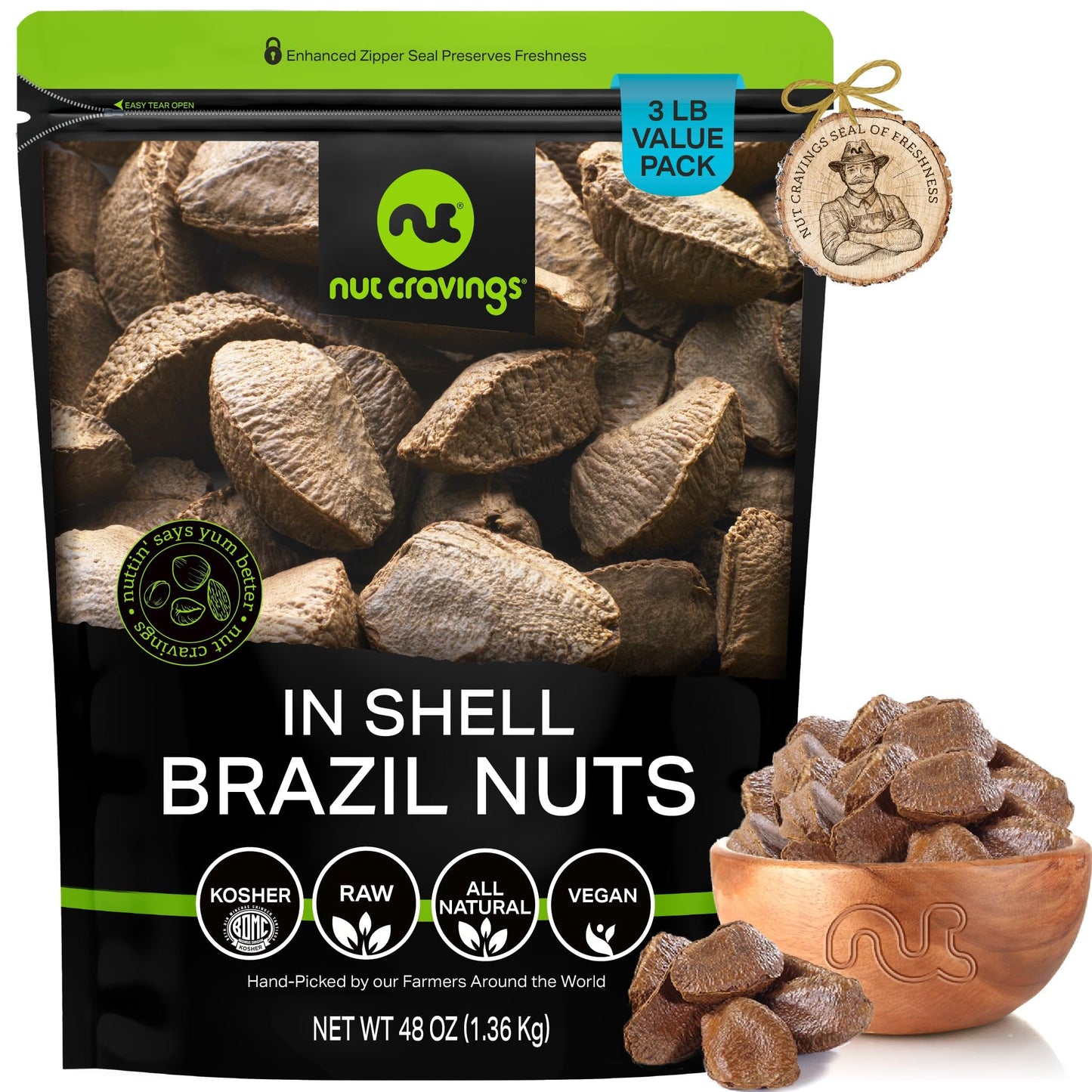
Ours are whole Brazil nuts still in the shell, sourced from South America and packed fresh in resealable bags at our Monroe, NY facility. Raw (not roasted), unsalted, no processing beyond sorting and packaging.
What You're Buying
-
Form: whole Brazil nuts still in the shell, unshelled
-
Processing: raw only, no roasting, no salt, no oil, no additives
-
Origin: South America (Brazil, Bolivia, Peru)
-
Packaging: resealable food-safe stand-up bag
-
Shelf life: 12 to 18 months in the shell
-
Nutcracker not included (these shells are hard, so use a heavy-duty nutcracker rather than a decorative one)
-
Allergen note: tree nuts, processed on shared equipment with other tree nuts and peanuts
Why In-Shell Brazil Nuts Specifically
Three reasons people still buy Brazil nuts with the shell on.
First, shelf life is dramatically longer. Shelled Brazil nuts oxidize fast because of the high fat content, going rancid within 3 to 6 months at room temperature. Brazil nuts in the shell stay fresh for 12 to 18 months because the hard shell does most of the preservation work. If you buy for a pantry or holiday season that's still months away, in-shell is the practical choice.
Second, the pacing matters. Brazil nuts are genuinely high in selenium, with one kernel providing more than the daily recommended amount. Eating handfuls of shelled Brazil nuts can push selenium intake higher than nutritionists recommend. In-shell Brazil nuts force pacing because cracking them slows you down, which keeps portion size naturally in check.
Third, they're traditional holiday-bowl nuts. Along with walnuts, pecans, and hazelnuts, Brazil nuts were staples of Thanksgiving and Christmas nut bowls for generations. The recognizable shell texture and distinctive triangular shape make them part of the visual tradition, not just the eating.
Nutrition per Brazil Nut Kernel (About 1/6 Oz)
-
33 calories
-
0.7g protein
-
3.3g fat (mostly unsaturated)
-
0.2g fiber
-
137 mcg selenium (almost 200% of daily recommended intake)
-
Solid source of magnesium, copper, and phosphorus
One Brazil nut kernel delivers more selenium than most people need for an entire day. The recommendation for most adults is to eat 1 to 3 kernels at a time, not handfuls. Selenium toxicity from eating too many Brazil nuts is a documented issue. Use portion control with these more than with any other nut in your pantry.
How People Use Them
Holiday and Thanksgiving tables are the heaviest single use. A bowl of mixed in-shell nuts with a nutcracker on a coffee table or sideboard is the traditional setup, and Brazil nuts are part of that mix. Guests crack them while conversation happens, which slows down dessert pacing naturally.
Solo snacking with pacing. A small bowl of 2 to 3 cracked kernels after a meal satisfies the "something rich and substantial" craving that sometimes follows a big dinner. The selenium pacing means you naturally stop at the right portion.
Baking with fresh kernels. Banana bread, brownies, fruitcakes, and holiday cookies with chopped Brazil nuts have a richer flavor when cracked fresh than when using pre-shelled nuts that have been sitting in a bag. Crack them right before chopping into batter for the best result.
Brazilian and South American cooking. Brazil nut pesto is a real thing, substituting Brazil nuts for pine nuts in the pesto formula. Brazil nut milk, Brazil nut flour for grain-free baking, and various traditional South American dishes all use the kernel in distinct ways.
Gifting with a nutcracker. A bag of in-shell Brazil nuts paired with a quality heavy-duty nutcracker is a thoughtful gift for cooks, bakers, or anyone who maintains a traditional holiday table.
Pantry staple for infrequent use. Brazil nuts are the kind of nut you use a few times a year (holiday baking, occasional snacking) rather than daily. In-shell shelf life means a 3 lb bag bought in October can last through Christmas baking and into Valentine's Day without going rancid.
Note on Shell Hardness
Brazil nut shells are harder than almost any other commercial nut shell. A standard decorative nutcracker won't get through them reliably. Use a heavy-duty metal nutcracker designed for Brazil nuts, or place the nuts on a solid surface and tap firmly with a small hammer. Some people freeze them briefly before cracking to make the shells more brittle.
How Freshness Holds Up
Seal the bag after opening and store in a cool, dry place. In-shell Brazil nuts last 12 to 18 months at room temperature, up to 2 years refrigerated. The shell does most of the preservation work on its own.
Once cracked, treat the loose kernel like shelled Brazil nuts: 3 to 4 months at room temperature, up to 6 months refrigerated. Only crack what you plan to eat or cook with in the short term.
Health Benefits of Raw In-Shell Brazil Nuts
Selenium: The Most Concentrated Single-Food Source Available and Why It Matters ▾
- One Brazil nut kernel provides approximately 68 to 137 mcg of selenium depending on the soil selenium content of the growing region, with values from Bolivian and Brazilian rainforest soils typically running at the higher end of this range. The recommended daily intake for selenium is 55 mcg for adults. One kernel from these South American-sourced nuts covers the full daily requirement. This is not a rounding claim or a marketing approximation: it is a documented nutritional fact about the selenium density of Brazil nuts from high-selenium soils, confirmed by USDA FoodData Central data and independent laboratory analysis across multiple studies.
- Selenium is required for the synthesis of over 25 selenoproteins in the human body. The most clinically important are glutathione peroxidase (GPx), which neutralizes hydrogen peroxide and lipid peroxides at the cellular level; thioredoxin reductase, which regenerates thioredoxin and maintains the cellular redox state; and selenoprotein P, which is the primary selenium transport protein in the bloodstream and the primary antioxidant defense in vascular tissue. A 2016 meta-analysis published in Nutrition and Cancer, covering 20 prospective studies, found that higher selenium status was significantly associated with lower cancer risk across multiple cancer types. The immune modulation, thyroid hormone metabolism, and antioxidant defense functions of selenium are all dependent on selenoprotein synthesis, which requires dietary selenium as the direct precursor.
The In-Shell Format as a Selenium Safety Mechanism ▾
- The tolerable upper intake level (UL) for selenium is 400 mcg per day for adults, set by the National Institutes of Health based on the lowest dose at which selenosis symptoms were observed in clinical studies. At 137 mcg per kernel, three Brazil nut kernels approach this limit from a single food. Consuming 5 or more Brazil nut kernels daily over weeks to months pushes selenium intake into the range where chronic selenosis becomes a genuine risk. Selenosis symptoms include a garlic-like odor on the breath from dimethyl selenide exhalation, brittle and discolored nails, hair loss, nausea and gastrointestinal distress, fatigue, and peripheral neurological irritability. These symptoms are reversible with cessation of excess intake but require sustained overconsumption to develop.
- In-shell Brazil nuts require cracking each kernel individually before eating, which introduces a natural behavioral slow-down that pre-shelled Brazil nuts do not provide. Pre-shelled Brazil nuts can be eaten continuously from a bag without any pause between kernels, making it easy to consume 8 to 10 kernels in a single snacking session without noticing. In-shell Brazil nuts make consuming more than 3 to 4 kernels in one sitting an effortful and time-consuming act rather than an unconscious one. For a food where the difference between a beneficial daily dose (1 to 2 kernels) and a concerning chronic dose (5 or more per day) is just a handful, the behavioral friction of cracking is a meaningful safety feature. This is the specific practical advantage of the in-shell format for Brazil nuts that does not apply to most other in-shell nut varieties.
Thyroid Health: Selenium's Role in Thyroid Hormone Metabolism ▾
- Thyroid hormone metabolism is one of the most selenium-dependent biological systems in the body. Three selenium-dependent enzymes (iodothyronine deiodinases 1, 2, and 3) are responsible for converting the storage hormone T4 (thyroxine) to its biologically active form T3 (triiodothyronine) and regulating T3 inactivation across different tissue types. Without adequate selenium, this conversion is impaired and metabolic function, body temperature regulation, heart rate, and cellular energy production are all affected because T3 is the metabolically active thyroid hormone that drives these processes at the cellular level.
- Selenium deficiency is also associated with thyroid autoimmune disease, specifically Hashimoto's thyroiditis and Graves' disease, through a separate mechanism: selenoprotein glutathione peroxidase protects the thyroid gland from the hydrogen peroxide generated during thyroid hormone synthesis. Without adequate GPx activity, excess hydrogen peroxide accumulates in the thyroid gland and induces inflammatory damage that triggers autoimmune thyroid disease in genetically susceptible individuals. A 2003 randomized controlled trial published in the Journal of Clinical Endocrinology and Metabolism found that selenium supplementation (200 mcg per day for 3 months) significantly reduced anti-thyroid peroxidase antibody levels and improved thyroid gland ultrasound appearance in patients with Hashimoto's thyroiditis. One Brazil nut per day covers the selenium dose used in that study.
Heart Health: Selenium-GPx LDL Protection and Magnesium Cardiovascular Support ▾
- Glutathione peroxidase (GPx), the selenium-dependent enzyme, prevents the oxidation of LDL cholesterol by neutralizing the lipid peroxides that convert LDL into oxLDL, the oxidized form directly responsible for triggering the inflammatory response in arterial walls that leads to atherosclerotic plaque formation. Selenium adequacy maintains GPx activity and thereby reduces the rate of LDL oxidation. A 2014 meta-analysis in Atherosclerosis found that higher serum selenium levels were significantly inversely associated with coronary heart disease risk across multiple prospective cohort studies. Brazil nut consumption specifically (rather than selenium supplementation) was studied in a 2011 trial in Nutrition that found a single serving of Brazil nuts significantly increased serum selenium and GPx activity within hours of consumption, with effects lasting up to 30 days after a single dose.
- Brazil nuts also provide approximately 26% of the daily value for magnesium per ounce (107mg), the highest magnesium content of any common tree nut. Magnesium is required for over 300 enzymatic reactions including ATP synthesis, insulin receptor activation, and normal ion channel function in cardiac muscle cells. Low magnesium is the most common electrolyte abnormality associated with cardiac arrhythmia in clinical medicine, and magnesium adequacy specifically supports the electrical stability of heart rhythm. The 26% DV magnesium from one ounce of Brazil nut kernels makes a meaningful contribution to cardiac rhythm support alongside the selenium-driven LDL oxidation protection.
Immune Function: Selenium, Zinc, and Copper Working Across Three Systems ▾
- Selenium activates natural killer cell cytotoxicity, enhances T-cell proliferation in response to antigens, and regulates the inflammatory cytokine response through its role in selenoprotein thioredoxin reductase. Selenium deficiency specifically impairs the ability of immune cells to mount an effective response to viral infections, which is the mechanism behind the documented association between selenium-deficient soil regions and higher rates of viral disease severity. A 2000 study published in Free Radical Biology and Medicine found that selenium supplementation in selenium-deficient adults significantly enhanced vaccine immune response, demonstrating a direct link between selenium status and adaptive immune function.
- Brazil nuts also provide zinc at approximately 11% DV per ounce (1.2mg) and copper at approximately 54% DV per ounce (0.49mg). Zinc supports T-cell activation, antibody production, and wound healing. Copper is required for immune cell maturation and the ceruloplasmin-mediated iron transport that delivers oxygen to rapidly dividing immune cells during infection. The three-mineral combination of selenium, zinc, and copper from a small serving of Brazil nut kernels covers the adaptive immune activation (zinc), the innate antioxidant immune defense (selenium-GPx), and the immune cell maturation and iron delivery (copper) as three distinct but complementary immune support mechanisms from a single food.
Brain and Neurological Health: Selenium's Neuroprotective Role ▾
- The brain is one of the highest-priority tissues for selenium delivery and the last tissue to be depleted when dietary selenium is inadequate. Selenoprotein P, the primary selenium transport protein, delivers selenium to the brain preferentially over other tissues during periods of dietary selenium limitation. This evolutionary prioritization of brain selenium reflects the critical importance of selenoproteins in neurological function: GPx and thioredoxin reductase in neurons protect against the oxidative stress that is particularly high in metabolically active brain tissue, and selenoprotein M specifically expressed in neurons has a documented role in calcium homeostasis and neuroprotection.
- Selenium deficiency in population studies is consistently associated with higher rates of cognitive decline, depression, and anxiety, while adequate selenium status is associated with better mood and cognitive performance in aging populations. A 2014 meta-analysis in Nutrients found that higher selenium intake was significantly associated with better cognitive function in older adults across multiple epidemiological studies. A 2015 randomized trial in Aging found that Brazil nut consumption (one nut per day for 6 months) significantly improved cognitive performance in older adults with mild cognitive impairment compared to a control group. The in-shell format delivers these neuroprotective benefits at the 1-per-day dose used in the clinical trial.
Copper: 54% DV Per Ounce and Four Distinct Physiological Systems ▾
- Brazil nuts provide approximately 54% of the daily value for copper per ounce (0.49mg), one of the highest copper values of any common tree nut alongside cashews. Copper is required for lysyl oxidase, the enzyme that crosslinks collagen and elastin fibers in bone matrix, skin, and blood vessel walls. Without adequate copper, collagen crosslinking is impaired and structural tissues become weaker regardless of calcium or protein intake. Copper is also required for dopamine-beta-hydroxylase (the enzyme converting dopamine to norepinephrine), cytochrome c oxidase (the terminal enzyme in the mitochondrial electron transport chain that produces most cellular ATP), and ceruloplasmin (iron metabolism and transport throughout the bloodstream).
- Getting 54% of daily copper from 1 oz of Brazil nut kernels addresses a mineral that most people chronically under-consume without knowing it. Copper deficiency presents as fatigue (from impaired mitochondrial ATP production), neurological symptoms (from dopamine-norepinephrine dysregulation), poor wound healing (from collagen crosslinking failure), and iron-deficiency-like anemia despite adequate iron intake (from ceruloplasmin insufficiency that prevents iron loading onto transferrin). All four of these clinical presentations share an underlying copper deficiency that is easy to miss because copper is rarely measured in routine blood work. Brazil nuts at 54% DV copper per ounce are one of the most efficient whole-food copper corrections available.
Anti-Cancer Research: Selenium's Documented Protective Associations ▾
- Selenium's relationship with cancer prevention is the most extensively researched aspect of Brazil nut nutrition. Selenium activates p53 tumor suppressor function through selenoprotein-mediated DNA repair pathways and induces apoptosis in cancer cells through glutathione peroxidase activity that is selectively toxic to cells with elevated oxidative stress, a characteristic of rapidly dividing cancer cells. A 2016 meta-analysis in Nutrition and Cancer reviewing 20 prospective cohort studies found that higher selenium status was significantly associated with lower cancer incidence, with the most consistent protective associations seen for prostate, colorectal, lung, and gastric cancers.
- The Nutritional Prevention of Cancer (NPC) Trial, a landmark randomized double-blind placebo-controlled trial published in JAMA in 1996, found that selenium supplementation (200 mcg per day) significantly reduced total cancer mortality by 50%, prostate cancer incidence by 63%, colorectal cancer incidence by 58%, and lung cancer incidence by 46% compared to placebo over 10 years. The dose used in that trial (200 mcg per day) is approximately equivalent to the selenium in 1 to 2 Brazil nut kernels per day from high-selenium South American soils. These findings from one of the most rigorous selenium studies ever conducted represent the clinical basis for Brazil nut recommendations as a whole-food selenium intervention. Subsequent trials with synthetic selenomethionine at higher doses did not replicate all of the NPC findings, suggesting that the food matrix and the specific selenium form in Brazil nuts may be relevant to the protective effect.
Monounsaturated Fat, Phosphorus, and Satiety at a Small Serving Size ▾
- Brazil nuts provide approximately 19 grams of fat per ounce, with the fat profile split between saturated fat (4.3g), monounsaturated fat (7g), and polyunsaturated fat (5.8g). The monounsaturated fat from Brazil nut oleic acid supports LDL reduction and endothelial health through the same mechanism as olive oil and other MUFA-rich nuts. Unlike most other high-MUFA nuts where the fat profile is dominated by oleic acid, Brazil nut fat contains a notable saturated fat fraction from stearic acid (22% of total fat). Stearic acid does not raise LDL cholesterol the way palmitic or myristic acids do, making Brazil nut saturated fat cardiovascularly neutral despite the percentage.
- Brazil nuts provide approximately 16% of the daily value for phosphorus per ounce (206mg), one of the highest phosphorus values of any tree nut. Phosphorus is required for ATP structure (the phosphate groups in adenosine triphosphate), bone mineral crystal formation as hydroxyapatite, DNA and RNA backbone structure, and phospholipid bilayer composition in every cell membrane in the body. Getting 16% of daily phosphorus from a small serving of Brazil nut kernels is a meaningful contribution to a mineral that most people consume adequate amounts of through varied diets but rarely think about specifically. The fat and protein in Brazil nuts produce a satiety response that makes 2 to 3 kernels more filling than their small size suggests.
Nutrition Facts and What They Actually Mean
Two tables below: per kernel (the practical serving unit for Brazil nuts because of the selenium content) and per 1 oz (the standard nutrition label serving). All values from USDA FoodData Central for raw Brazil nut kernels. The dominant number is selenium at 988% DV per ounce or approximately 249% DV per single kernel. Read both tables and the explanations below before establishing a daily serving size.
| Nutrient | Per 1 oz | %DV |
|---|---|---|
| Calories | 187 | -- |
| Total Fat | 19g | 24% |
| Saturated Fat | 4.3g | 22% |
| Polyunsaturated Fat | 5.8g | -- |
| Trans Fat | 0g | 0% |
| Cholesterol | 0mg | 0% |
| Sodium | 1mg | 0% |
| Total Carbohydrate | 3.5g | 1% |
| Dietary Fiber | 2.1g | 8% |
| Total Sugars | 0.7g | -- |
| Added Sugars | 0g | 0% |
| Protein | 4.1g | 8% |
| Magnesium | 107mg | 26% |
| Copper | 0.49mg | 54% |
| Phosphorus | 206mg | 16% |
| Zinc | 1.2mg | 11% |
Frequently Asked Questions
We’re More Than Just Snacks
Everyday blends of nuts, seeds, and fruits simple, satisfying, and ready to enjoy anywhere.
Beautiful assortments made to delight perfect for birthdays, holidays, & heartfelt thank yous.
Pure and certified organic — clean, natural ingredients for mindful snacking.
Limited-edition assortments inspired by every season and celebration.
Chocolates, brittles, and confections that turn any snack break into a special moment.
Protein-packed combinations of nuts, seeds, and fruits crafted for energy and wellness.
Thoughtful boxes filled with joy and flavor — send care to friends, family, or colleagues.
Elegant, customizable boxes designed to impress teams, clients, and partners.