


Everyday blends of nuts, seeds, and fruits simple, satisfying, and ready to enjoy anywhere.
Raw Hazelnuts (Filberts), With Skin — Unsalted - 0.25 lb (4 oz)
Regular price
$7.97
Sale price
$7.97
Regular price
List Price:
Quantity
Couldn't load pickup availability
Free Shipping Over $25
Packed Fresh USA
100% Satisfaction Guarantee


You may also like
-
Mixed Nuts Gift Basket (13 Assortments) in Reusable Diamond Wooden Tray + Green Ribbon
Regular price $39.88Sale price $39.88 Regular price List Price: -
Happy Birthday Treats, Nuts Gift Basket with Bday Ribbon in Reusable Wooden Tray (12 Assortments)
Regular price $39.88Sale price $39.88 Regular price List Price: -
Roasted Brazil Nuts — Salted
Regular price From $8.97Sale price From $8.97 Regular price List Price: -
Mixed Candy Heart Shaped Gift Basket, Love in A Box (6 Assortments)
Regular price $29.99Sale price $29.99 Regular price List Price: -
Roasted Cashews — Lightly Salted
Regular price From $17.97Sale price From $17.97 Regular price List Price: -
Candies & Mixed Nuts Gift Basket in Red & Gold Box (7 Assortments, 1 LB)
Regular price $32.88Sale price $32.88 Regular price List Price:
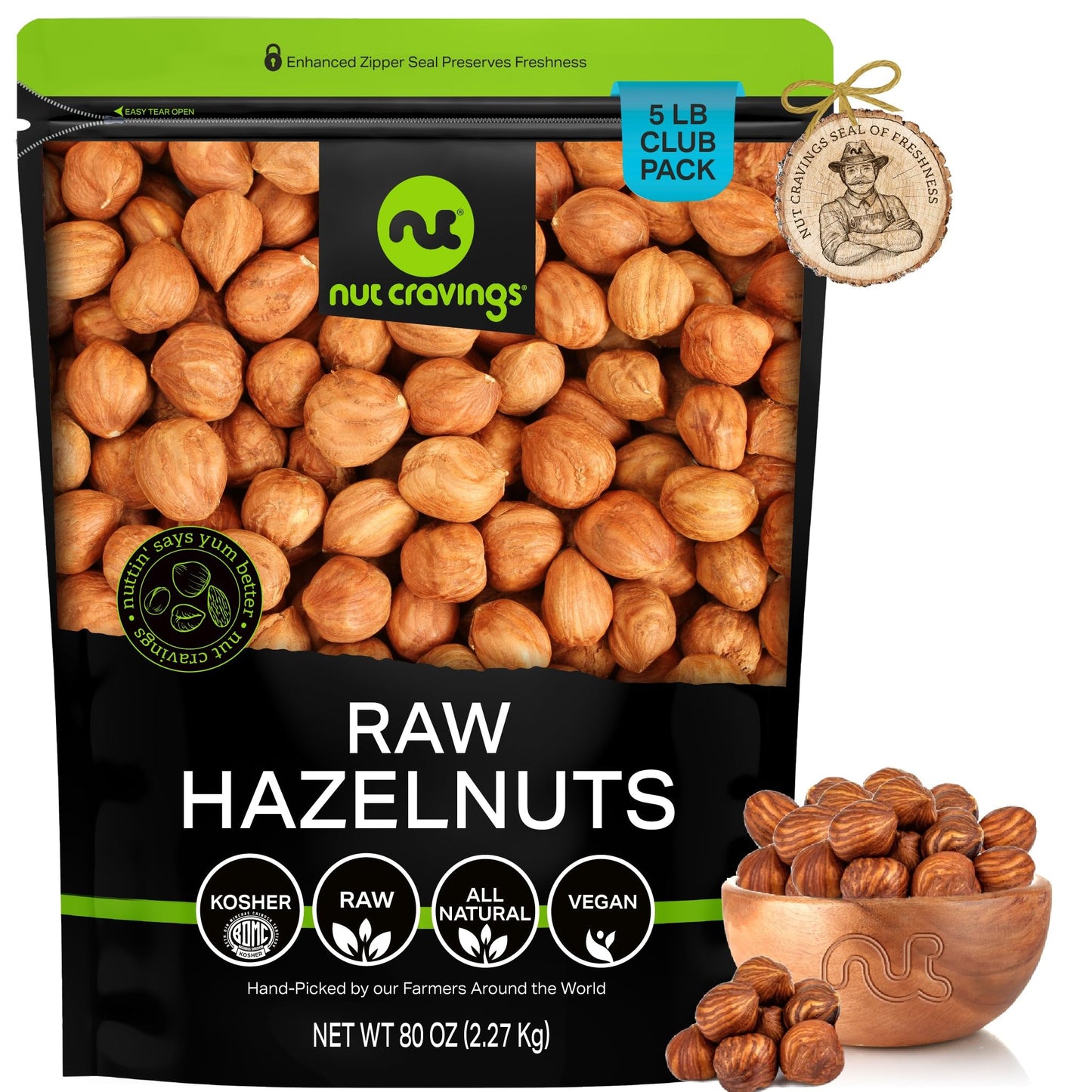
Raw Hazelnuts (Filberts), With Skin bring you whole shelled hazelnut kernels in their natural state, with the brown skin intact and nothing added. Hazelnuts and filberts are the same nut sold under two names: "filbert" is the older American term still used in certain farming and baking traditions, while "hazelnut" is the more common modern name. Either way, you are getting the same small, round nut with a sweet, earthy flavor that works across an unusually wide range of culinary uses, from homemade chocolate-hazelnut spreads to toasted salad toppings, hazelnut flour for grain-free baking, and traditional Italian confections. Browse the full Nuts collection to explore other raw and roasted options.
What You're Buying
- Form: Shelled raw hazelnut kernels with the natural brown skin on
- Processing: Raw only, skin intact
- Packaging: Resealable food-safe stand-up bag
- Sizes available: 0.25 lb (4 oz), 0.5 lb (8 oz), 1 lb (16 oz), 2 lb (32 oz), 3 lb (48 oz), 5 lb (80 oz)
- Allergen note: Contains tree nuts. Manufactured in a facility that also processes tree nuts, wheat, peanuts, and soy.
The skin on these hazelnuts is edible but carries a mild bitterness from natural tannins. For most uses, including trail mix, toasting, hazelnut flour, pesto, and most baking applications, no skin removal is needed. For recipes that call for smooth, clean hazelnut flavor such as chocolate-hazelnut spread or fine confections, the skin can be removed at home by toasting the kernels and rolling them in a clean kitchen towel while still warm.
Good Source of 8 Key Nutrients
Raw hazelnuts carry a strong nutritional profile across a wide range of essential nutrients. Per one-ounce serving, they are a good source of:
- Protein
- Dietary Fiber
- Vitamin B
- Antioxidants
- Iron
- Calcium
- Zinc
- Magnesium
How to Use Raw Hazelnuts
Chocolate-Hazelnut Spread
Homemade chocolate-hazelnut spread starts with these raw kernels. Toast, remove the skins, then process in a food processor until the nuts release their oils and form a smooth butter. Add melted dark chocolate, a small amount of cocoa powder, powdered sugar, and vanilla extract to complete the spread. The home version allows you to control the chocolate-to-nut ratio and skips the palm oil and emulsifiers found in commercial versions.
Hazelnut Flour for Grain-Free Baking
Pulse raw hazelnuts in a food processor until they reach a coarse meal or fine flour texture. Hazelnut flour substitutes for almond flour at a 1-to-1 ratio in most keto, paleo, and gluten-free recipes. The skin-on flour has a richer, more distinct flavor than blanched hazelnut flour, making it especially useful in chocolate cakes, brownies, and tortes where a deeper flavor and darker color are assets.
Italian Baking
Hazelnuts are central to several traditional Italian dessert recipes: torta caprese (a flourless chocolate-hazelnut cake), gianduja (Italian chocolate-hazelnut confection), and brutti ma buoni cookies. These recipes rely on hazelnut flavor in a way that does not translate well with substitutions.
Toasted Salad and Grain Bowl Topping
Toast in a 350°F oven for 8 to 12 minutes until the skins darken slightly and the kitchen smells nutty. Cool, chop roughly, and scatter over salads with goat cheese, roasted beets, or grilled stone fruit. Toasting transforms the flavor from mild and earthy to richer and more aromatic.
Pesto, Romesco, and Sauces
Toasted hazelnuts replace pine nuts in pesto at a lower cost with a slightly sweeter flavor, working well with arugula or basil pestos served alongside poultry. For romesco, a Catalan red pepper sauce, toasted hazelnuts (or a hazelnut-almond mix) combine with roasted red peppers, garlic, and olive oil for a sauce that pairs with grilled vegetables, fish, and sandwiches.
Praline, Brittle, and Confections
Caramelized sugar combined with toasted hazelnuts produces praline or brittle used as a topping for ice cream, mixed into chocolate ganache, or dusted over cakes. Hazelnuts are one of the traditional nuts for this application, producing a clean snap texture and distinct caramel-nut flavor.
Trail Mix and Snacking
Raw hazelnuts add an earthy, slightly sweet note to trail mix that other nuts do not replicate. Combine with Raw Brazil Nuts — In Shell, dried cranberries, and dark chocolate for a flavor profile distinct from standard nut mixes. For a ready-made gifting option, the Mixed Nuts Gift Basket (1 LB) + Green Ribbon (7 Assortments) combines premium nut varieties in a presentation-ready gift format.
Choosing the Right Size
The 0.25 lb and 0.5 lb bags work well for first-time buyers or for a single recipe batch. The 1 lb size suits regular snacking or home baking at a moderate pace. The 2 lb size is appropriate for households that bake frequently or use hazelnuts across multiple applications. The 3 lb and 5 lb bulk sizes offer the best value per ounce and are a good choice for high-volume baking, hazelnut flour production, or anyone making large batches of homemade chocolate-hazelnut spread. For bulk sizes, move a portion to the freezer on arrival to extend shelf life.
Storage
Seal the bag after each use and store in a cool, dry location away from direct light. Pantry shelf life is 6 to 9 months. Refrigeration extends shelf life to up to 12 months. Freezing extends shelf life to up to 2 years without changing texture or flavor, making it the best option for bulk sizes. Raw hazelnuts are generally more shelf-stable than walnuts or pecans because the natural skin acts as a barrier against oxidation. Once a batch tastes distinctly bitter or off, trust the taste rather than the calendar date.
Raw Hazelnuts Guarantee
Every bag of Raw Hazelnuts (Filberts), With Skin is backed by our 100% Satisfaction Guarantee. If your order arrives damaged or does not meet your expectations, contact us and we will make it right.
Customer Reviews
Frequently Asked Questions
We’re More Than Just Snacks
Nuts

Dry Fruits
Everyday blends of nuts, seeds, and fruits simple, satisfying, and ready to enjoy anywhere.

Gifts
Beautiful assortments made to delight perfect for birthdays, holidays, & heartfelt thank yous.

Organic
Pure and certified organic — clean, natural ingredients for mindful snacking.

Seasonal Gifts
Limited-edition assortments inspired by every season and celebration.

Chocolate & Treats
Chocolates, brittles, and confections that turn any snack break into a special moment.

Mixed Nuts & Bar Mix
Protein-packed combinations of nuts, seeds, and fruits crafted for energy and wellness.

Care Packages
Thoughtful boxes filled with joy and flavor — send care to friends, family, or colleagues.

Corporate Gifting
Elegant, customizable boxes designed to impress teams, clients, and partners.