Everyday blends of nuts, seeds, and fruits simple, satisfying, and ready to enjoy anywhere.

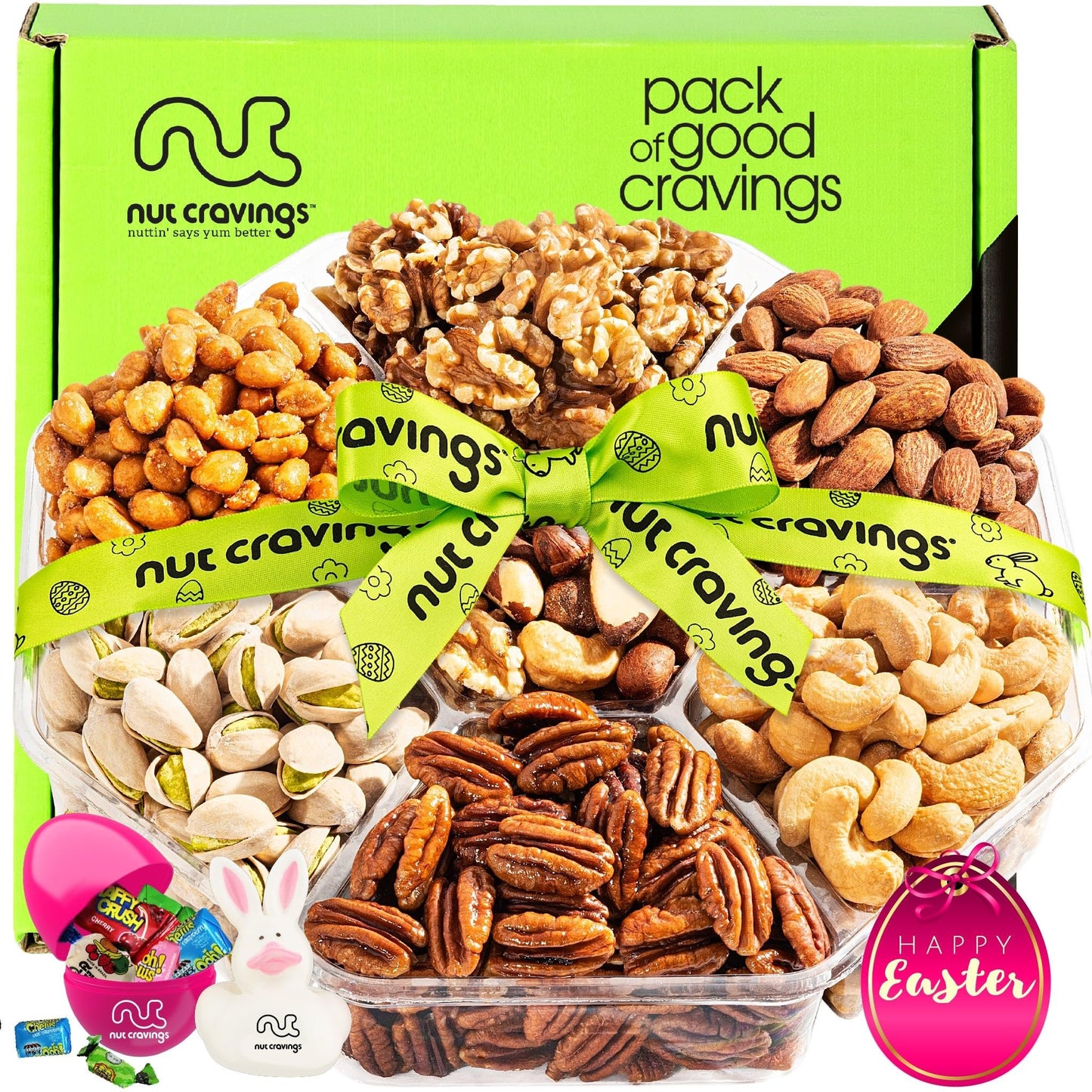
Easter gift baskets occupy a strange spot in the gifting calendar. Too secular to feel like a Christmas gift, too religiously specific to feel like a generic spring present, and constrained by the fact that the holiday shifts its date by weeks every year. What actually works for Easter is a basket that splits the difference: mixed nuts for the adults who appreciate something substantial, candy for the kids (or the adults who won't admit they want candy too), and a presentation format that reads distinctly springtime without being over-the-top. This one is a 7-section gift basket with that split, wrapped in a Happy Easter ribbon, shelf-stable enough to ship a few weeks before Easter Sunday without arrival-timing drama. Packed fresh in Monroe, NY. kosher certified across the core assortment.
Product Specs
Format: 7-section gift basket with Easter ribbon
Contents: mixed nuts, candies, dried fruit, and spring-themed sweets across the sections
Weight: check product page for total weight
Packaging: gift-ready presentation, ships in a protective outer carton
Certifications: kosher certified on core components
Shelf life: 3 to 4 months sealed, recipients should refrigerate opened portions after a couple of months
Allergens: tree nuts, possible dairy in candy components, check product page for SKU-specific statements
What's In the 7 Sections
Exact content varies by SKU and seasonal availability. A typical Easter 7-piece lineup runs something like this:
Premium mixed nuts (cashews, almonds, pistachios) for the savory sections. Chocolate-covered almonds or chocolate malt balls for the candy-nut bridge. Jelly beans or Easter-colored candy in at least one section. A dried fruit option (usually cranberries or apricots). A candy egg or bunny stuffer as the visual Easter anchor. Something for variety (could be candied pecans, yogurt-covered fruits, or a honey-glazed nut depending on the season).
Specific contents listed on the product page.
Why This Format Works for Easter Specifically
Easter is tricky to gift. The recipient mix usually includes kids who want candy, adults who'd prefer something more substantial, and possibly elderly family members who need something soft enough to eat comfortably. A single-category gift (just chocolate, just nuts, just candy) fails at least one of those audiences. A mixed 7-section basket lets everyone find something they actually want in the same package.
The Happy Easter ribbon does real work here. Generic gift baskets delivered for Easter feel like last-minute gestures. A basket that's explicitly branded for the holiday reads as intentional. It's also the signal that tells recipients "this arrived on time for the actual occasion" rather than "this is a Thursday delivery that happens to contain nuts."
The shelf-stable format matters more than most gift categories because Easter shipping windows are compressed. Depending on the year, Easter Sunday can land anywhere from late March to late April. Ordering for Easter without knowing your exact delivery window is a gamble with a perishable gift. This basket ships 1-2 business days from order and holds fresh for months in sealed packaging, which means you can order early without worrying about it going stale.
Who This Works For
Families with kids where the adults also want something to snack on. Grandparents sending something to their grandchildren. Adult children sending to parents. Godparents sending godchildren for Easter. Long-distance family who won't be at the Easter gathering in person. Corporate programs that want a spring gift option without committing to a full-on religious theme.
It doesn't work as well for tight professional client gifting, where the Easter branding reads too personal. For that context, the non-seasonal wooden tray gift basket or the 12-assortment gift box formats are more appropriate.
Kosher Certification
kosher certification on the core assortment matters for Easter gifting in a few specific scenarios. Interfaith families where one side is Jewish and the other celebrates Easter. Catholic families with Jewish in-laws. Corporate programs that gift across mixed-faith employee bases during spring holidays. Jewish households that participate in spring gift exchanges without observing Easter religiously. The certification removes guessing from the gift.
Most mainstream Easter gift basket retailers (Harry & David, 1-800-Baskets, mass-market supermarket Easter baskets) don't carry kosher certification on their Easter lines.
Health Benefits of the Nut Components in This Easter Gift Basket
The FDA Qualified Health Claim: All Five Nut Varieties Are Covered ▾
- The FDA qualified health claim for nuts specifically names almonds, cashews, pistachios, pecans, and walnuts all five nut varieties visible in the product photos for this basket. The claim reads: "Scientific evidence suggests but does not prove that eating 1.5 ounces per day of most nuts, such as almonds, Brazil nuts, cashews, hazelnuts, pecans, pistachio nuts, and walnuts, as part of a diet low in saturated fat and cholesterol may reduce the risk of heart disease." Every nut section in this Easter basket is individually covered by this FDA cardiovascular qualified health claim.
- Mayo Clinic confirms research has found that frequently eating nuts lowers levels of inflammation related to heart disease and diabetes, and regularly eating a healthy diet that includes nuts may improve artery health, lessen inflammation, and lower the risk of blood clots that can lead to heart attacks and strokes. Almonds, hazelnuts, and pecans are specifically confirmed heart-healthy by Mayo Clinic alongside walnuts, which are specifically noted for high omega-3 content.
- A controlled trial published in Nutrients found that eating 42.5 grams per day of mixed nuts for eight weeks reduced body weight, insulin, and blood glucose in overweight adults. A 2024 study showed that older adults consuming a daily mix of nuts saw improved lipoprotein profiles compared to control groups. The cardiovascular mechanisms across the five nut varieties are complementary rather than redundant, covering LDL reduction, CRP suppression, LDL oxidation protection, and endothelial function simultaneously from the same serving.
Cashews: Copper, Magnesium, and 27% Lower Cardiovascular Mortality ▾
- WebMD (January 2025) confirms research shows people who consume tree nuts such as cashews have up to a 27 percent lower risk of dying from cardiovascular disease. Cashews provide approximately 69 percent of daily copper per ounce, the highest copper density of any commonly eaten tree nut. Copper is required for ceruloplasmin (iron mobilization), lysyl oxidase (collagen and elastin cross-linking in arterial walls), and CuZnSOD (cytoplasmic antioxidant enzyme).
- Cashews also provide approximately 20 percent of daily magnesium per ounce. Magnesium is required for over 300 enzymatic reactions including ATP synthesis, insulin receptor signaling, and cardiac muscle function. Cymbiotika (May 2025) confirms adequate magnesium intake can reduce the risk of ischemic heart disease and that magnesium in cashews plays a vital role in maintaining normal heart rhythm and regulating blood pressure.
Almonds: Vitamin E, LDL Reduction, and the Most-Studied Heart Nut ▾
- Almonds provide approximately 37 percent of daily vitamin E per ounce, the highest vitamin E of any nut variety. A 2021 study of 219 young adults found those who ate 56 grams of almonds daily had significant reductions in LDL cholesterol, inflammatory markers, and hemoglobin A1c compared with a control group. Vitamin E is a fat-soluble antioxidant that specifically protects against the LDL oxidation mechanism that drives atherosclerotic plaque formation.
- Almonds provide approximately 6 grams of protein and 3.5 grams of fiber per ounce, the highest protein and fiber of any nut in this assortment alongside walnuts. This protein-fiber combination creates a sustained satiety response that distinguishes the nut sections of this basket from the candy sections: the nut sections satisfy, while the candy sections celebrate. Both have a place in an Easter gathering.
Walnuts: ALA Omega-3, FDA Specific Qualified Claim, and Heart-Check Certified ▾
- Walnuts are the only tree nut significantly rich in ALA omega-3, providing 2.5 grams per ounce. The FDA granted walnuts their own specific qualified health claim in 2004 for coronary heart disease risk reduction, separate from the general nuts claim. Walnuts are also certified by the American Heart Association with the Heart-Check mark. Cleveland Clinic confirms for each gram of ALA omega-3 per day, you lower your risk of dying from heart disease by 10 percent.
- The WAHA trial (Circulation, Rajaram et al., 2021) enrolled 708 cognitively healthy older adults over two years and found daily walnut consumption reduced total LDL particles by 4.3 percent, small LDL particles (the most atherogenic form) by 6.1 percent, and IDL cholesterol by 16.9 percent. The EU allows the health claim "Walnuts contribute to the improvement of the elasticity of the blood vessels" based on the ALA content of walnuts.
Pistachios: Phytosterols, Complete Protein Profile, and Eye Health Carotenoids ▾
- Pistachios are the highest phytosterol-containing nut at approximately 61 milligrams per ounce, making them particularly effective for cholesterol reduction through intestinal absorption inhibition. Pistachios also have the highest protein content of any common tree nut at approximately 6 grams per ounce and provide all nine essential amino acids, making them one of the most complete plant protein sources in the nut category.
- Pistachios are the only tree nut containing lutein and zeaxanthin, the carotenoid antioxidants that accumulate in macular tissue and protect against age-related macular degeneration. They also provide the highest potassium of any common tree nut at approximately 290 milligrams per ounce (6 percent DV), the highest vitamin B6 of any nut at approximately 28 percent DV per ounce, and are among the lower-calorie tree nuts at approximately 159 calories per ounce.
Pecans: Highest Antioxidant ORAC Score and MUFA-Dominant Fat Profile ▾
- Pecans hold the highest antioxidant ranking of any tree nut on the USDA ORAC scale, reflecting exceptional concentration of flavonoid antioxidants including ellagic acid, catechins, and epicatechins. The fat profile of pecans is predominantly monounsaturated (approximately 11.6 grams MUFA per ounce, similar to olive oil), making them among the most heart-favorable nuts in this assortment from a saturated fat standpoint. Mayo Clinic confirms pecans are heart-healthy and notes they can get you almost 60 percent of daily recommended manganese per serving.
- The FDA qualified health claim specifically names pecans as a covered variety. Pecans are native to North America and the US produces over 80 percent of global supply. In this Easter basket, pecans provide the distinctive sweet, rich, buttery flavor that is the most recognizable to American palates and the most likely to convert a first-time nut basket recipient into a regular nut buyer.
The Honest Case for Including Candy in an Easter Nut Basket ▾
- Easter is one of the few gifting occasions where a purely health-focused nut basket misses the cultural context of the holiday. Easter candy jelly beans, chocolate eggs, bunny shapes is as central to the American Easter tradition as turkey is to Thanksgiving. A gift basket for Easter that contains only nuts reads as someone who forgot what holiday they were gifting for.
- The 7-section format of this basket treats candy as one component of a broader assortment rather than the centerpiece of the gift. This is the correct proportion: enough candy to signal "this is an Easter gift" and honor the holiday tradition, balanced against enough premium nuts to give the gift substance and satisfy adult recipients who want more than a sugar delivery. The gift works for the whole table precisely because it does not try to be all candy or all nuts.
- The Kosher Certified status on the core assortment extends specifically to the nut and dried fruit components. For Kosher-observant recipients, the Kosher certification on those sections matters; the candy sections should be confirmed against the specific product label for Kosher status. For interfaith families and corporate spring gifting programs, the Kosher certification on the core nut assortment is the differentiating feature that most mainstream Easter basket retailers cannot match.
Nutritional Complementarity Across the Five Nut Varieties ▾
- The five nut varieties in this basket cover different nutritional specialties in a way that no single nut can match. Cashews cover copper (69 percent DV per oz) and magnesium (20 percent DV per oz). Almonds cover vitamin E (37 percent DV per oz) and protein (6 grams per oz). Walnuts cover ALA omega-3 (2.5 grams per oz, the only tree nut significantly rich in plant omega-3). Pistachios cover phytosterols, eye health carotenoids, and B6 (28 percent DV per oz). Pecans cover antioxidant flavonoids (highest ORAC score of any tree nut) and MUFA-dominant fat.
- A controlled trial published in Nutrients found that eating 42.5 grams per day of mixed nuts for eight weeks reduced body weight, insulin, and blood glucose in overweight adults. DrAxe (November 2025) confirms studies suggest mixed nut consumption supports cardiovascular health, lipid profiles, weight management, and satiety more robustly than single-nut consumption in some cases, because mixing improves the chances of getting the full spectrum of cardiovascular and metabolic nutrients from a single snack.
The Shelf-Stable Format: Why It Matters for Easter Gifting ▾
- Easter Sunday moves by up to four to five weeks between years, ranging from late March to late April depending on the ecclesiastical calendar. This variability creates a shipping window problem that does not exist for fixed-date holidays like Christmas (December 25) or Valentine's Day (February 14). A perishable Easter gift ordered from a food retailer carries date-precision risk that a shelf-stable basket does not.
- This basket holds fresh for 3 to 4 months sealed, which means ordering two to three weeks before Easter Sunday carries zero freshness risk regardless of exactly when the carrier delivers. Recipients who receive the basket a few days early can leave it sealed on the kitchen counter until Easter Sunday. This practical advantage over fresh-food Easter gifts (chocolate Easter baskets, fresh baked goods, perishable confections) is not trivial for anyone shipping a long-distance Easter gift with standard delivery windows.
Kosher Certification: The Differentiator for Interfaith and Corporate Easter Gifting ▾
- The Kosher Certified status on the core nut and dried fruit assortment in this basket addresses a specific gap in the Easter gifting market. Most mainstream Easter gift basket retailers (Harry and David, 1-800-Baskets, mass-market supermarket Easter baskets) do not carry Kosher Certified Easter lines. This matters for interfaith families where one side of the family is Jewish and the other celebrates Easter, Catholic families with Jewish in-laws, and corporate programs that gift across mixed-faith employee bases during spring holidays.
- The Kosher certification removes guesswork from the gift for Kosher-observant recipients in a mixed-faith gifting context. For a corporate HR team sending Easter baskets to a multi-faith workforce, a Kosher Certified Easter basket can be sent to every employee without a separate accommodation for Jewish staff -- one gift, one purchasing decision, universal dietary appropriateness across the nut and dried fruit components. The certification also signals quality and compliance in a way that non-certified gifting cannot.
- Kosher Certified by the Beth Din Minchas Chinuch Tartikov (BDMC / TBD). The certification covers the core nut and dried fruit assortment. For the candy and confection sections, review the specific product label Kosher status. For corporate or institutional gifting requiring Kosher certification documentation for compliance purposes, documentation is available on request at 877-471-4870.
Nutrition Facts and What They Actually Mean
This is a 7-section gift basket containing both premium nuts AND Easter candy and confections. A single Nutrient/Per 1 oz/%DV table cannot accurately represent the full basket because the nut sections and the candy sections have entirely different nutritional profiles. The table below shows what each section category contributes per approximate one-ounce serving. Cross-reference the specific product label for the current SKU's exact components and allergen statements.
| Nutrient | Per 1 oz | %DV |
|---|---|---|
| Calories | ~155 | 8% |
| Total Fat | ~9g | 12% |
| Saturated Fat | ~1.5g | 8% |
| Trans Fat | 0g | 0% |
| 0mg | 0mg | 0% |
| Sodium | 30mg | 1% |
| Total Carbohydrate | ~15g | 5% |
| Dietary Fiber | ~1.2g | 4% |
| Total Sugars | ~9g | -- |
| Added Sugars | ~6g | 12% |
| Protein | ~4g | 8% |
| Copper | Copper | 28% |
| Magnesium | ~25mg | 6% |
| Manganese | ~0.4mg< | 17% |
Frequently Asked Questions
We’re More Than Just Snacks
Everyday blends of nuts, seeds, and fruits simple, satisfying, and ready to enjoy anywhere.
Beautiful assortments made to delight perfect for birthdays, holidays, & heartfelt thank yous.
Pure and certified organic — clean, natural ingredients for mindful snacking.
Limited-edition assortments inspired by every season and celebration.
Chocolates, brittles, and confections that turn any snack break into a special moment.
Protein-packed combinations of nuts, seeds, and fruits crafted for energy and wellness.
Thoughtful boxes filled with joy and flavor — send care to friends, family, or colleagues.
Elegant, customizable boxes designed to impress teams, clients, and partners.