Everyday blends of nuts, seeds, and fruits simple, satisfying, and ready to enjoy anywhere.

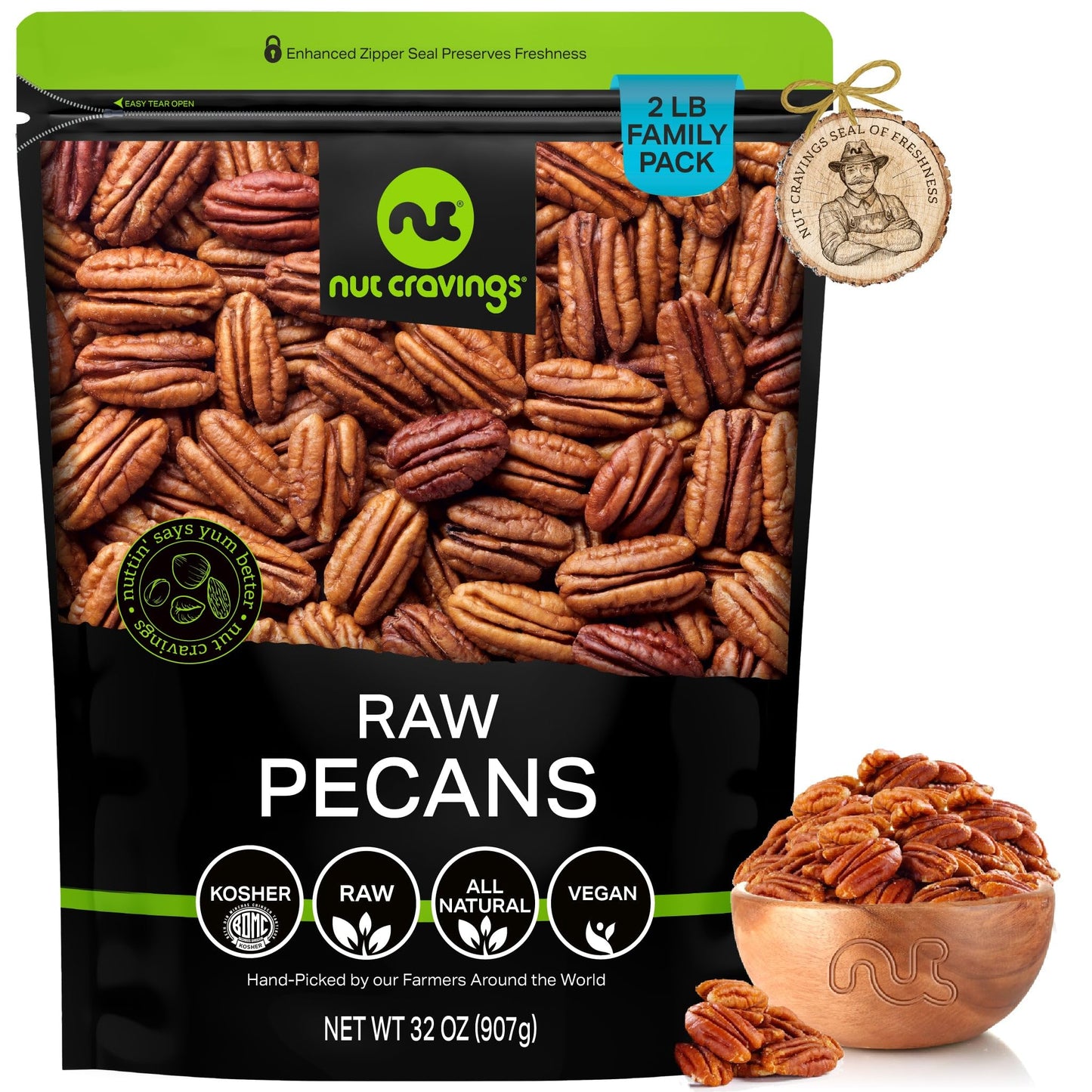
Raw pecans are what every pecan recipe actually starts from. Pecan pie, pralines, candied pecans, butter pecan cookies, pecan brittle, sweet potato casserole, and most granola recipes all call for raw unshelled or shelled pecans as the base. Buying pre-roasted or pre-candied pecans for these recipes throws off the final seasoning and adds unnecessary steps. Raw is the flexible starting point.
Ours are Georgia-grown pecan halves and pieces, shelled, unsalted, and packed fresh in resealable bags at our Monroe, NY facility. No roast, no salt, no oil, no additives. kosher certified. You get a mix of whole halves and smaller broken pieces in the same bag, which is exactly what most recipes calling for "chopped pecans" need.
What You're Buying
-
Form: raw pecan halves and pieces, mix of large halves and smaller broken kernels
-
Processing: raw only, no roast, no salt, no oil, no additives
-
Origin: Georgia-grown US pecans
-
Packaging: resealable food-safe stand-up bag
-
Shelf life: 6 to 9 months pantry, up to 12 months refrigerated, 2 years frozen
-
Kosher: certified
-
Allergen note: tree nuts, processed on shared equipment with other tree nuts and peanuts
Why Raw (and Why Halves & Pieces)
Raw pecans are the version recipes expect. Pecan pie filling relies on the raw pecans toasting in the oven during baking, which develops the flavor while the filling sets. If you start with pre-roasted pecans, they over-toast and go bitter. Pralines and candied pecans need to absorb the caramel coating, which pre-roasted pecans resist because their surface oils have already migrated outward during roasting. Butter pecan ice cream, granola, and most cookie recipes benefit from raw pecans that toast during the cooking or baking step to integrate with other flavors.
Halves and pieces is the practical buy if you're baking or cooking. Whole halves cost more per pound and aren't worth the premium when you're going to chop them anyway. The pieces in this bag range from large halves down to smaller broken kernels, which suits almost every recipe application. If you specifically need whole halves for pecan pie topping arrangement or decoration, buy those separately.
Nutrition per Ounce (About 19 Pecan Halves)
-
196 calories
-
3g protein
-
20g fat, mostly monounsaturated
-
3g fiber
-
1g net carbs
-
38% DV manganese (one of the best food sources)
-
13% DV copper
-
10% DV thiamine
-
Solid zinc, magnesium, phosphorus
-
0mg sodium
How People Use Them
Most of our orders fall head straight into pecan pie. Chopped raw pecans mixed into a corn syrup or maple filling, topped with whole halves if you have any, baked at 350°F for about an hour. It's the classic Thanksgiving and Christmas standard for a reason.
After the holidays, the next heaviest use is candied pecans and pralines. Toss raw pecans in brown sugar, cinnamon, and egg white and bake at 300°F for 20 minutes and you've got candied pecans that beat anything from the grocery store. Or simmer them with butter, sugar, and cream until the mixture sets if you want classic New Orleans-style pralines.
Butter pecan ice cream is another frequent use, whether you're starting from a commercial base or making the whole thing from scratch. Raw pecans let you control how deep the toast goes, which matters because the toasting step is where the "butter pecan" flavor actually develops.
Granola bakers pick these up regularly. Stir chopped raw pecans into the oat mix before the toast step, or combine with raw almonds, dried cranberries, and dark chocolate for a trail mix that holds its freshness longer than pre-roasted versions.
A lot of autumn baking runs through these: sweet potato casserole, pumpkin bread, banana bread, pecan-topped streusel. Chop into the batter or scatter on top, and the pecans toast during baking so the final dish gets the deeper flavor without you having to pre-toast separately.
For salads, we'd suggest toasting them right before serving. A quick 3 to 5 minutes in a dry pan until fragrant, cool for a minute, scatter over spinach with pears or a Waldorf with apples. The difference between a pre-toasted pecan and a just-toasted one on a salad is surprising.
If you've never made pecan butter, it's easier than people expect. Blend 2 cups of raw pecans in a food processor for 10 to 15 minutes until smooth. Richer and more complex than almond butter, naturally sweet, no sugar or oil needed. Keeps in the fridge for a couple weeks.
Straight snacking is always an option too. Raw pecans are milder than roasted but carry a buttery, slightly sweet flavor that some people actually prefer over the deeper roasted version.
How Freshness Holds Up
Seal the bag after each use and store in a cool, dry place. 6 to 9 months of pantry life is typical. For the 3 lb or 5 lb sizes, move half to the freezer on arrival. Freezing extends shelf life to 2 years without changing texture or flavor.
Raw pecans carry more healthy fats than roasted, which can oxidize if the bag stays open in a warm kitchen. Refrigeration is worth the fridge space if your kitchen runs warm in summer.
Health Benefits of Raw Pecans
Antioxidant Density: Why Pecans Lead All Tree Nuts in ORAC Testing ▾
- Pecans rank as the highest-antioxidant tree nut in USDA ORAC (Oxygen Radical Absorbance Capacity) testing, outperforming almonds, walnuts, cashews, and pistachios on this measure. The antioxidant compounds responsible for this ranking are primarily ellagic acid, a polyphenol with documented anti-inflammatory and potential anticarcinogenic properties in cell and animal studies; gamma-tocopherol, a form of vitamin E more effective against nitrogen radicals than the alpha-tocopherol found in almonds; catechins, the same polyphenol class found in green tea; and various flavonoid compounds.
- The raw format specifically preserves the higher polyphenol content that moderate-to-high-temperature roasting partially degrades. A 2016 study in the journal Food Chemistry found that roasting pecans at 150°C (302°F) for 40 minutes significantly reduced ellagic acid and total polyphenol content compared to raw pecans. If the primary motivation for purchasing pecans is their antioxidant profile, raw is the format that delivers it most completely. For culinary applications where toasting is part of the recipe, the trade-off is the flavor development of toasting versus the full polyphenol retention of raw.
Manganese: 38% DV Per Ounce and Why It Matters for Bone, Mitochondria, and Cartilage ▾
- Pecans provide approximately 38% of the daily value for manganese per ounce (1.3mg), the highest manganese content of any common tree nut. Manganese is a cofactor in manganese superoxide dismutase (MnSOD), the primary antioxidant enzyme inside mitochondria. MnSOD is the cell's first-line defense against mitochondrial oxidative stress, and its activity is directly dependent on adequate dietary manganese. Inadequate manganese means inadequate MnSOD activity, which means elevated mitochondrial oxidative damage, which is specifically linked to accelerated cellular aging and metabolic dysfunction.
- Manganese is also required for the synthesis of glycosaminoglycans, the structural polysaccharides in cartilage matrix. Glucosamine and chondroitin sulfate, which are found in cartilage and commonly taken as supplements for joint health, both require manganese-dependent enzymes for their biosynthesis. A 2013 review in the journal Nutrients confirmed that manganese deficiency is associated with impaired bone and cartilage development and that adequate dietary manganese through whole foods is the preferred delivery method for this mineral. One ounce of raw pecans covering 38% of the daily manganese requirement from a snack-sized serving makes pecans one of the most practical whole-food manganese sources available.
Heart Health: Monounsaturated Fat, Phytosterols, and LDL Reduction ▾
- Pecans provide approximately 20 grams of fat per ounce, with oleic acid (monounsaturated) as the dominant fat type at approximately 11g per ounce. Oleic acid reduces LDL cholesterol and improves endothelial function through well-documented mechanisms. A 2001 study published in the Journal of Nutrition, a 12-week controlled feeding trial, found that incorporating pecans into the diet significantly lowered total cholesterol, LDL cholesterol, and triglycerides compared to the control diet. The effect was attributed to the combination of monounsaturated fat and the phytosterol content in pecans.
- Pecans also contain phytosterols, plant compounds that compete with dietary cholesterol for absorption sites in the gut. A 2007 randomized controlled trial in the Journal of the American College of Nutrition found that pecan consumption significantly reduced oxidized LDL (oxLDL), the form of LDL most directly associated with arterial plaque formation, by 33% compared to the control group. oxLDL reduction is specifically more clinically meaningful than total LDL reduction because it is the oxidized form that triggers the inflammatory response in arterial walls that leads to atherosclerosis. The gamma-tocopherol vitamin E in pecans is the specific antioxidant that prevents LDL oxidation by protecting the polyunsaturated fatty acids in LDL particles from free radical attack.
Blood Sugar Stability and Insulin Sensitivity ▾
- Raw pecans have a glycemic index near zero. With 1g net carbohydrates per ounce (5g total carbohydrate minus 4g fiber), 3g protein, and 20g primarily monounsaturated fat, they produce no meaningful post-meal blood glucose response. A 2011 study in Nutrition found that adding pecans to the diet of people with type 2 diabetes improved fasting blood glucose and insulin levels compared to control, attributing the effect to the oleic acid-driven improvement in insulin receptor function and the fiber-mediated slowing of carbohydrate absorption from foods eaten alongside the pecans.
- The fiber and fat in raw pecans also slow gastric emptying when they are eaten alongside higher-glycemic foods, effectively lowering the overall glycemic index of a mixed meal. For baking applications specifically, adding raw pecans to a cookie, pie, or granola recipe that would otherwise spike blood glucose from its sugar content reduces the overall post-meal blood glucose rise from the finished dish compared to the same recipe without pecans. The pecan nutrition participates in the dish, not just the eating moment.
Gut Health and Prebiotic Fiber ▾
- Raw pecans provide approximately 2.7 grams of dietary fiber per ounce, of which a significant portion is insoluble fiber from intact cell walls that functions as a prebiotic substrate for beneficial gut bacteria. A 2022 randomized controlled trial published in the American Journal of Clinical Nutrition found that consuming 68 grams of pecans daily for 8 weeks significantly increased populations of Bifidobacterium and Ruminococcaceae, two microbial families associated with anti-inflammatory gut health outcomes, compared to a calorie-matched low-fiber control snack.
- The ellagitannins in pecans provide a second, independent gut health mechanism: they are converted by gut bacteria to urolithins, bioactive compounds with anti-inflammatory activity in the colon that also have emerging evidence for muscle health and mitochondrial biogenesis. The conversion of ellagitannins to urolithins depends on specific gut bacteria, and the prebiotic fiber from pecan cell walls supports the growth of exactly those bacteria. This creates a self-reinforcing nutritional benefit where the pecan fiber feeds the bacteria responsible for converting the pecan polyphenols into their most bioactive form.
Brain Health and Neuroprotection ▾
- Raw pecans contain gamma-tocopherol vitamin E, ellagic acid, and oleic acid, all three of which have documented neuroprotective properties. Gamma-tocopherol is specifically effective against reactive nitrogen species (RNS), the oxidative compounds that are particularly damaging in neuronal tissue and that alpha-tocopherol (the form of vitamin E in most nuts and supplements) is less effective against. Neuronal membranes are especially vulnerable to lipid peroxidation from RNS, and gamma-tocopherol's specific effectiveness against this oxidant type makes pecans particularly relevant for brain health among tree nuts.
- A 2014 study published in the journal Nutrients found that a diet supplemented with pecans significantly slowed motor neuron degeneration in an ALS (amyotrophic lateral sclerosis) mouse model compared to a control diet, attributing the effect to the antioxidant compounds in pecans reducing oxidative stress in motor neurons. While animal studies do not translate directly to human clinical outcomes, the neuroprotective mechanism in the study is consistent with the antioxidant profile of pecans and with the broader epidemiological evidence linking nut consumption to reduced cognitive decline in aging populations.
Zinc, Magnesium, and Immune Support ▾
- Raw pecans provide zinc at approximately 9% of the daily value per ounce (1.3mg) and magnesium at approximately 8% DV per ounce (34mg). Zinc is required for T-cell activation, natural killer cell function, and antibody production, and is the mineral most rapidly depleted during active infection. Magnesium supports immune function through its role in the complement system and in regulating the inflammatory response. Both minerals also contribute to the broader metabolic functions that maintain immune resilience: zinc for protein synthesis and DNA replication in immune cells, magnesium for ATP production to fuel the energy-intensive immune response.
- The combined zinc and magnesium contribution from raw pecans is modest relative to the very high manganese and copper values but is nutritionally meaningful as part of a daily snacking habit. The unique combination of high manganese, meaningful copper, solid zinc, and adequate magnesium in a single whole food makes pecans the most comprehensively mineral-dense tree nut for the bone-mineral and immune-mineral overlap, covering all four minerals through a single food rather than requiring four separate dietary interventions.
Why Raw Pecans Are the Better Buy for Both Cooking and Snacking ▾
- Raw pecans are more versatile than roasted pecans. They can be used directly in any recipe, roasted to any temperature and seasoning preference at home, candied, glazed, coated, or eaten raw as a snack. Roasted pecans can only be eaten roasted or used in applications where additional cooking does not push them past their already-toasted state. Buying raw and roasting at home when you want a roasted result gives you full control over roast level, oil or no oil, salt level, and timing. Buying pre-roasted removes all of those options.
- For snacking, raw pecans deliver the full antioxidant profile including the ellagic acid and gamma-tocopherol that are partially degraded by roasting. For baking, raw pecans integrate better with recipe applications because they are uncoated and have not yet released their surface oils through heat. For weight management, the incomplete calorie absorption effect is preserved in raw whole nuts in a way that may be modestly reduced when high heat processing alters the cell wall structure during roasting. The raw format is not a compromise: it is the format that delivers the most flexibility, the most complete nutritional profile, and the best recipe results.
Nutrition Facts and What They Actually Mean
Per 1 oz (approximately 19 pecan halves). All values from USDA FoodData Central for raw shelled pecans. The standout numbers are manganese (38% DV), copper (38% DV), and gamma-tocopherol vitamin E. The fat content is high by weight but almost entirely monounsaturated and polyunsaturated. Sodium is 0mg. Net carbs are 1g per ounce.
| Nutrient | Per 1 oz | %DV |
|---|---|---|
| Calories | 196 | -- |
| Total Fat | 20.4g | 26% |
| Saturated Fat | 1.8g | 9% |
| Polyunsaturated Fat | 6.1g | -- |
| Trans Fat | 0g | 0% |
| Cholesterol | 0mg | 0% |
| Sodium | 0mg | 0% |
| Potassium | 116mg | 2% |
| Total Carbohydrate | 3.9g | 1% |
| Dietary Fiber | 2.7g | 10% |
| Total Sugars | 1.1g | -- |
| Added Sugars | 0g | 0% |
| Protein | 2.6g | 0% |
| Manganese | 1.3mg | 57% |
| 0.34mg | 0.34mg | 38% |
| Zinc | 1.3mg | 12% |
| Magnesium | 34mg | 8% |
| Phosphorus | 78mg | 6% |
| Iron | 0.7mg | 4% |
| Vitamin E | 0.4mg | 3% |
Frequently Asked Questions
We’re More Than Just Snacks
Everyday blends of nuts, seeds, and fruits simple, satisfying, and ready to enjoy anywhere.
Beautiful assortments made to delight perfect for birthdays, holidays, & heartfelt thank yous.
Pure and certified organic — clean, natural ingredients for mindful snacking.
Limited-edition assortments inspired by every season and celebration.
Chocolates, brittles, and confections that turn any snack break into a special moment.
Protein-packed combinations of nuts, seeds, and fruits crafted for energy and wellness.
Thoughtful boxes filled with joy and flavor — send care to friends, family, or colleagues.
Elegant, customizable boxes designed to impress teams, clients, and partners.