Everyday blends of nuts, seeds, and fruits simple, satisfying, and ready to enjoy anywhere.

Pine nuts are the nut that doesn't behave like other nuts. They cost noticeably more than almonds or cashews, which makes sense once you know what's involved in producing them. The seeds come from pine cones, which take 18 months to mature, and each cone yields only a small handful of kernels. Commercial harvesting is labor-intensive, and most of the world's pine nut supply comes from a narrow belt of pine-producing regions in Italy, Spain, China, and Korea. The price reflects reality, not markup.
What you get for that price is worth it for certain uses. Real pesto is pine nuts. Classic Italian cookies and baked goods use pine nuts because nothing else delivers the same delicate sweet-resinous flavor. Salad toppers, pasta accents, and Middle Eastern rice dishes call for pine nuts specifically because a substitute just won't do.
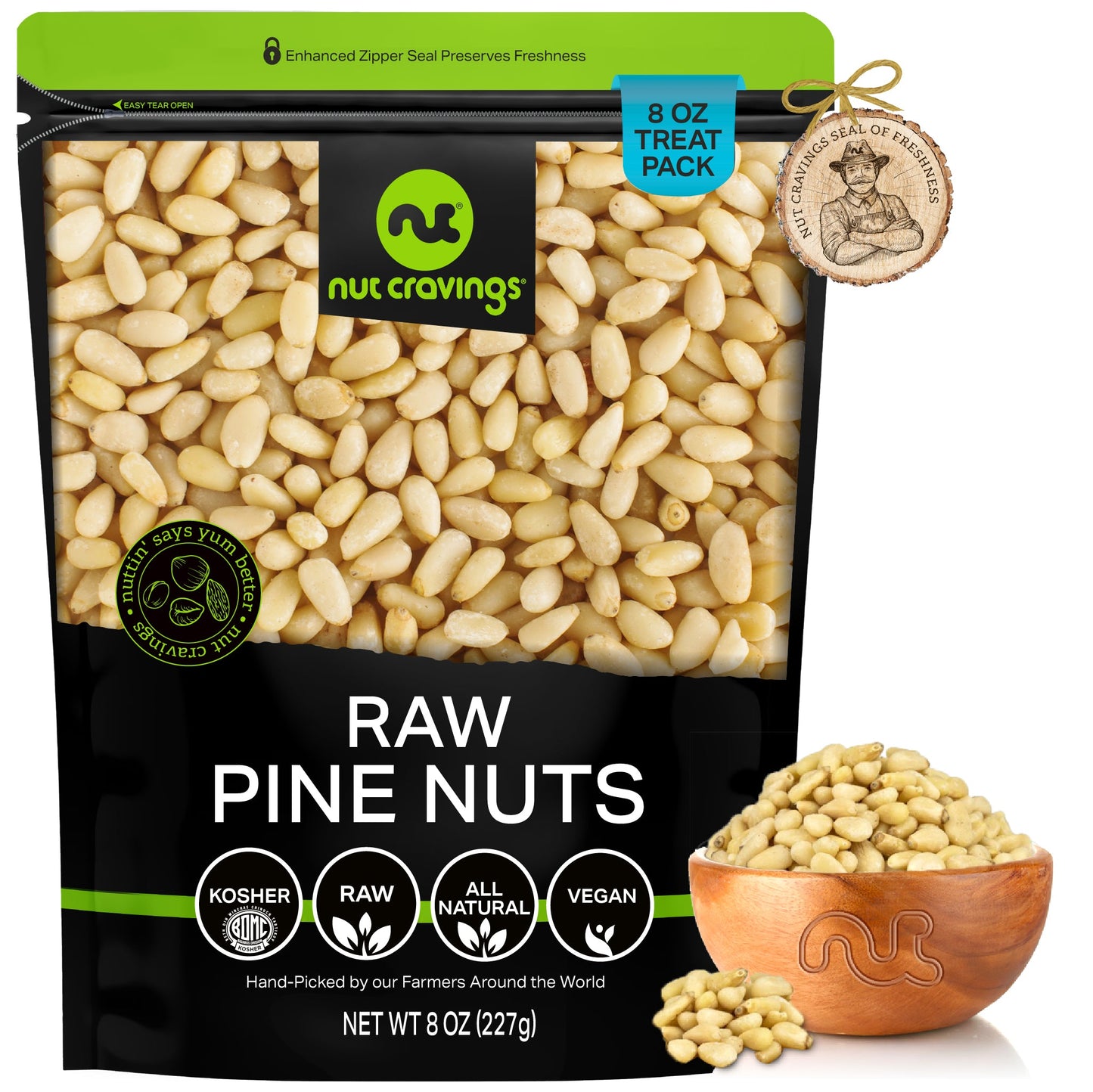
Ours are raw, unsalted, shelled pignolias packed fresh in resealable bags at our Monroe, NY facility. Sourced from pine-producing regions across Italy, Spain, and Asia. kosher certified. Available in 1 lb through 5 lb sizes for home cooks, restaurants, and anyone going through pine nuts faster than small grocery bags can sustain.
What You're Buying
-
Form: raw shelled pine nut kernels (pignolias)
-
Processing: raw only, no roasting, no salt, no oil, no additives
-
Origin: premium growing regions (Italy, Spain, Asia)
-
Packaging: resealable food-safe stand-up bag
-
Shelf life: 2 to 3 months pantry, 6 to 9 months refrigerated, 1 year frozen
-
Kosher: certified
-
Vegan
-
Allergen note: tree nuts, processed on shared equipment with other tree nuts and peanuts
Why Pine Nuts Are Worth the Price
Three reasons people who know pine nuts still pay what they pay.
First, real pesto requires them. Pesto made with walnuts, cashews, or pumpkin seeds is pesto-adjacent, but it doesn't taste like actual pesto. The delicate sweet-resinous flavor pine nuts bring is what makes basil pesto recognizably Italian. Bulk buying for home cooks who make pesto regularly or for small restaurants serving pesto dishes typically lands at 1-2 lb per month.
Second, the flavor doesn't have an equivalent. Most other nuts you can substitute with acceptable results -swap almonds for cashews, pecans for walnuts, and most recipes still work. Pine nuts don't have a substitute. The flavor is distinctive enough that every recipe calling for pine nuts specifically names them rather than generic "nuts."
Third, they toast quickly and carry flavor far. A small handful of toasted pine nuts on a salad, pasta, or roasted vegetable dish does more flavor work than a larger handful of most other nuts. So while the per-pound price is high, the per-use cost is reasonable because recipes call for smaller amounts.
Nutrition per Ounce (About 167 Kernels)
-
191 calories
-
4g protein
-
19g fat, mostly unsaturated (rich in linoleic acid)
-
1g fiber
-
4g net carbs
-
Solid source of manganese, magnesium, and vitamin E
-
Contains pinolenic acid, a fatty acid that's been studied for appetite-regulation effects
How People Use Them
Pesto is the heaviest single use for pine nuts worldwide. Classic basil pesto calls for pine nuts, parmesan, olive oil, garlic, and basil. Toasting the pine nuts for 3 to 4 minutes in a dry pan before blending brings out their flavor and gives the final pesto a deeper, more complex profile than using them raw. Home cooks who make pesto weekly tend to buy at the 2-lb or 3-lb tier.
Pasta dishes from Italian kitchens use pine nuts as an accent. Pasta with broccoli and pine nuts, pasta with raisins and pine nuts, pasta with arugula pesto. A tablespoon or two per serving is enough.
Salad toppings. A small handful of toasted pine nuts on a spinach, arugula, or mixed greens salad adds textural contrast and flavor depth that competes with candied pecans for the "premium salad topping" slot. Toast before use for better flavor.
Italian cookies and pastries. Pignoli cookies (traditional Italian almond and pine nut cookies) are the classic example. Panforte, amaretti variants, and many Christmas baking traditions in Italy involve pine nuts.
Middle Eastern rice dishes. Pilafs, meat kibbeh toppings, and stuffed vegetables across Lebanese, Syrian, and Turkish cooking all use pine nuts. The flavor is traditional and specific.
Roasted vegetables and grains. Scatter a small handful over roasted cauliflower, brussels sprouts, or a quinoa bowl for flavor without much effort.
Pine nut brittle and other confections for bakers who specialize in premium nut confections.
Pine Mouth Note
A small percentage of people experience a condition called "pine mouth" after eating pine nuts -a temporary metallic or bitter taste that lasts a few days. This is associated with certain species of pine (primarily Pinus armandii from China) rather than with quality or freshness. If you've experienced pine mouth before, check with pine nut suppliers about their specific source species. Most Italian and Spanish pine nuts (Pinus pinea, the stone pine) don't trigger it.
How Freshness Holds Up
Pine nuts are more fat-rich than most other nuts, which means they go rancid faster. Seal the bag after every use and refrigerate immediately if you won't use the bag within 4 to 6 weeks. For the 3 lb or 5 lb bulk sizes, move half to the freezer on arrival. Freezing extends shelf life to 12 months without changing texture or flavor.
Rancid pine nuts have a distinctly unpleasant metallic taste -if the batch tastes wrong, it probably is. Fresh pine nuts taste delicate, buttery, slightly resinous.
Health Benefits of Raw Pine Nuts
Pinolenic Acid: The Appetite-Regulating Fatty Acid Unique to Pine Nuts ▾
- Pine nuts are the only commercially available food source of pinolenic acid at a meaningful dietary level. Pinolenic acid is an 18-carbon polyunsaturated fatty acid (all-cis-delta-5,9,12-octadecatrienoic acid) found almost exclusively in pine seed oil. It makes up approximately 15 to 19% of total pine nut fat, which is substantial given that pine nuts are 66% fat by weight. No other common nut or seed provides pinolenic acid at a comparable level.
- Pinolenic acid specifically stimulates the release of two gut satiety hormones: cholecystokinin (CCK) and glucagon-like peptide-1 (GLP-1). A double-blind crossover study published in Lipids in Health and Disease in 2006 found that Korean pine nut oil (rich in pinolenic acid) significantly increased CCK secretion by 60% and reduced prospective food intake by approximately 36% in overweight women compared to olive oil. A 2009 follow-up study confirmed the appetite-suppressing effect and attributed it specifically to the pinolenic acid fraction. The CCK and GLP-1 response from pine nuts is more pronounced than from other nuts because pinolenic acid is a more potent CCK secretagogue than oleic or linoleic acid.
Heart Health: Linoleic Acid, Phytosterols, and Cardiovascular Risk Reduction ▾
- Pine nuts provide approximately 9.5g of linoleic acid (omega-6 polyunsaturated fat) per ounce, the highest linoleic acid content of any common tree nut. Linoleic acid is an essential fatty acid (the body cannot synthesize it and must obtain it from diet) that lowers LDL cholesterol and reduces cardiovascular disease risk when substituted for saturated fat in the diet. A meta-analysis of 13 cohort studies published in Circulation in 2009 found that replacing 5% of saturated fat calories with linoleic acid was associated with a 9% reduction in coronary heart disease risk and an 18% reduction in fatal coronary events.
- Pine nuts also contain phytosterols, plant compounds that compete with dietary cholesterol for absorption sites in the gut. Pine nut phytosterol content runs approximately 141mg per 100g of nuts, comparable to other high-phytosterol nuts. Phytosterols reduce total cholesterol and LDL cholesterol through the gut absorption competition mechanism that is documented across multiple nut varieties. Pine nuts provide both linoleic acid for LDL reduction and phytosterols for cholesterol absorption interference as two independent cardiovascular mechanisms in the same ounce serving.
Vitamin E: Meaningful Antioxidant Protection from a Small Serving ▾
- Pine nuts provide approximately 13% of the daily value for vitamin E per ounce (2mg). Vitamin E is a fat-soluble antioxidant that integrates into cell membrane phospholipid bilayers and protects against lipid peroxidation, the oxidative chain reaction that damages cardiovascular tissue, neurons, and skin cells. The vitamin E in pine nuts is particularly relevant given that their high polyunsaturated fat content (specifically linoleic acid) makes pine nut oil itself more susceptible to oxidation than more saturated fats. Vitamin E protects the linoleic acid in pine nuts from becoming a pro-oxidant inside cell membranes by scavenging free radicals before they can initiate the peroxidation chain.
- Pine nuts contain gamma-tocopherol as a component of their vitamin E profile alongside alpha-tocopherol. Gamma-tocopherol is specifically more effective against reactive nitrogen species (RNS) than alpha-tocopherol, and RNS are the oxidant class most damaging in vascular tissue and the class that most directly contributes to LDL oxidation and arterial plaque formation. The combination of vitamin E forms in pine nuts addresses oxidative stress from two chemical directions simultaneously.
Manganese: 109% DV Per Ounce and Mitochondrial Antioxidant Function ▾
- Pine nuts provide approximately 109% of the daily value for manganese per ounce (2.5mg), one of the highest manganese values available from any whole food. Manganese is an essential cofactor for manganese superoxide dismutase (MnSOD), the primary antioxidant enzyme inside mitochondria. MnSOD neutralizes the superoxide radicals produced as a normal byproduct of ATP synthesis, and its activity is directly and specifically dependent on dietary manganese. Insufficient manganese means reduced MnSOD activity, which means elevated mitochondrial oxidative damage and impaired cellular energy production efficiency.
- Manganese is also required for arginase (the enzyme that metabolizes arginine in the urea cycle), pyruvate carboxylase (which supports gluconeogenesis during fasting), and the enzymes involved in glycosaminoglycan synthesis for cartilage and bone matrix. Getting over 100% of the daily manganese requirement from a single ounce of pine nuts makes them one of the most manganese-efficient whole foods available. The only common nut that rivals pine nuts on manganese is macadamia (91% DV per oz), with pecans close at 57% DV. Pine nuts at 109% DV lead all common tree nuts on this mineral.
Magnesium: Stress Response, Sleep, and Energy Metabolism Support ▾
- Pine nuts provide approximately 43mg magnesium per ounce (10% DV). Magnesium is required for over 300 enzymatic reactions including ATP synthesis (cellular energy production), cortisol regulation through the HPA axis, serotonin synthesis from tryptophan, and insulin receptor activation. Most American adults consume less than 70% of the recommended daily magnesium intake, and magnesium is one of the minerals most reliably depleted by chronic stress. The 10% DV contribution from a single ounce of pine nuts is a meaningful dietary addition to a mineral most people are already under-consuming.
- Magnesium also directly supports sleep quality through GABA receptor activation. GABA is the primary inhibitory neurotransmitter in the brain, and its receptor activation is required for the nervous system to transition from waking to sleep. Low magnesium is consistently associated with sleep disruption and insomnia in population studies. For people managing stress-related sleep issues, adding dietary magnesium through whole foods such as pine nuts is a modest but evidence-consistent dietary support strategy.
Protein and Satiety: 4g Per Ounce and the Combined Fat-Protein Effect ▾
- Pine nuts provide 4 grams of protein per ounce. While this is lower than almonds (6g) or peanuts (7g) on a per-ounce basis, the combination of 4g protein and 19g predominantly unsaturated fat per ounce produces a powerful satiety response through both the protein-driven CCK release and the pinolenic-acid-specific CCK amplification discussed in the first accordion. A small serving of pine nuts, 0.5 to 1 oz, can suppress appetite for 2 to 3 hours through these combined mechanisms.
- Pine nuts are also among the highest-calorie-dense nuts at 191 calories per ounce, which means portion awareness is worth maintaining for anyone managing total caloric intake. However, the appetite regulation research on pinolenic acid suggests that a modest serving of pine nuts may reduce subsequent food intake sufficiently to offset the pine nut calories consumed. The 2006 Lipids in Health and Disease study found a 36% reduction in prospective food intake in the pine nut oil group, which represents a meaningful caloric deficit at subsequent meals compared to the calories in the pine nut serving itself.
Zinc, Iron, and Copper: The Immune and Energy Mineral Trio ▾
- Pine nuts provide zinc at approximately 12% of the daily value per ounce (1.8mg), iron at approximately 9% DV per ounce (1.6mg), and copper at approximately 16% DV per ounce (0.14mg). Zinc is required for T-cell activation, natural killer cell function, antibody production, and wound healing. It is the mineral most rapidly depleted during active infection, making adequate dietary zinc status before illness more protective than supplementing during it. Iron is required for hemoglobin synthesis and oxygen transport in red blood cells. Copper is required for cytochrome c oxidase in the mitochondrial electron transport chain and for ceruloplasmin-mediated iron metabolism and transport.
- The iron in pine nuts is non-heme (plant) iron, which absorbs at a lower rate than heme iron from meat but whose absorption is significantly enhanced by vitamin C consumed in the same meal. For vegetarians, vegans, and anyone managing iron through plant-based diet sources, adding pine nuts to dishes that include vitamin C-containing ingredients, such as tomatoes in pasta dishes, lemon juice in pesto, or bell peppers in grain bowls, naturally enhances the iron absorption from the pine nuts. Getting meaningful zinc, iron, and copper from a small ounce serving makes pine nuts nutritionally comprehensive beyond their fatty acid profile.
Brain Health and Cognitive Support from Linoleic Acid and Vitamin E ▾
- Linoleic acid is an essential fatty acid required for maintaining the phospholipid composition of neuronal cell membranes. The brain's gray matter is approximately 20% lipid by dry weight, and the phospholipid bilayers of neuronal membranes require ongoing dietary fatty acid supply for maintenance and repair. Linoleic acid (and its downstream metabolites including arachidonic acid) are structural components of neuronal membranes. Severe linoleic acid deficiency is associated with neurological dysfunction, though dietary deficiency is rare in most Western diets.
- The vitamin E in pine nuts addresses the oxidative threat to neuronal membranes specifically. Neuronal phospholipid bilayers are rich in polyunsaturated fatty acids, which are more susceptible to lipid peroxidation than saturated fats. The gamma-tocopherol component of pine nut vitamin E is the most effective antioxidant against the reactive nitrogen species that are the primary oxidant class in inflamed neuronal tissue. For a nut whose fat profile is itself high in polyunsaturated fatty acids, the accompanying vitamin E in pine nuts provides the antioxidant protection that those fatty acids require when incorporated into membrane lipid bilayers.
Blood Sugar: Low Net Carbs and the Pinolenic Acid Insulin Connection ▾
- Raw pine nuts contain approximately 4g net carbohydrates per ounce (5g total carbohydrate minus 1g fiber). At near-zero glycemic index, they produce no meaningful post-meal blood glucose response. The fat and protein combination slows gastric emptying and stabilizes blood sugar for 2 to 3 hours after eating. For people managing blood sugar through diet, pine nuts are fully compatible with low-carbohydrate, ketogenic, and diabetic dietary patterns without any portion modification.
- GLP-1 (glucagon-like peptide-1), one of the two satiety hormones that pinolenic acid specifically stimulates, also plays a direct role in insulin secretion and blood sugar regulation. GLP-1 is the hormone targeted by a class of type 2 diabetes medications (GLP-1 receptor agonists), which work by increasing insulin secretion and reducing glucagon production in response to blood glucose. The dietary stimulation of GLP-1 from pinolenic acid in pine nuts is a food-level version of the same signaling pathway, though at a modest and indirect level compared to pharmaceutical doses. Eating pine nuts as part of a mixed meal may modestly enhance the GLP-1 response and improve post-meal blood sugar regulation through this mechanism.
Why Raw Pine Nuts Deliver More Than Toasted for Nutritional Purposes ▾
- Toasting pine nuts in a dry pan for 3 to 4 minutes at medium heat develops significant flavor through Maillard reaction browning and enhances their appeal in pesto, salad toppings, and pasta dishes. For culinary applications where flavor development is the goal, toasting is recommended. Raw pine nuts are the correct starting point for toasting at home because the cook controls the degree of color and flavor development. Pre-toasted pine nuts cannot be un-toasted, and their continued exposure to heat in a subsequent cooking step risks over-toasting.
- For nutritional purposes specifically, raw pine nuts preserve the full pinolenic acid content and the complete vitamin E profile. Pinolenic acid is a polyunsaturated fatty acid that can oxidize under high heat and sustained cooking temperatures. The appetiteregulation research on pinolenic acid used pine nut oil at relatively low temperatures rather than heavily toasted pine nuts, suggesting the active compound is best preserved in raw or lightly handled form. Vitamin E, while more heat-stable than polyunsaturated fats, is also incrementally degraded by sustained high heat. For the specific nutritional benefits outlined above, raw is the format that delivers the full profile. Toast at home immediately before use for culinary applications where flavor matters most.
Nutrition Facts and What They Actually Mean
Per 1 oz (approximately 167 pine nut kernels). All values from USDA FoodData Central for raw pine nuts. The standout numbers are manganese (109% DV), the pinolenic acid content (not expressed on standard nutrition labels but approximately 15 to 19% of total fat), and the linoleic acid proportion (approximately 50% of total fat). Sodium is 0mg on the raw unsalted format.
| Nutrient | Per 1 oz | %DV |
|---|---|---|
| Calories | 191 | -- |
| Total Fat | 19.4g | 25% |
| Saturated Fat | 1.4g | 7% |
| Monounsaturated Fat | 5.3g | -- |
| Polyunsaturated Fat | 9.5g | -- |
| Pinolenic Acid | 0g | 0% |
| Cholesterol | 0mg | 0% |
| Sodium | 0mg | 0% |
| Potassium | 169mg | 4% |
| Total Carbohydrate | 3.7g | 1% |
| Dietary Fiber | 1g | 4% |
| Total Sugars | 1g | -- |
| Added Sugars | 0g | 0% |
| Protein | 3.9g | 8% |
| Manganese | 2.5mg | 109% |
| Vitamin E | 2mg | 13% |
| Magnesium | 43mg | 10% |
| Copper | 0.14mg | 16% |
| Zinc | 1.8mg | 16% |
| Iron | 1.6mg | 9% |
| Phosphorus | 163mg | 13% |
Frequently Asked Questions
We’re More Than Just Snacks
Everyday blends of nuts, seeds, and fruits simple, satisfying, and ready to enjoy anywhere.
Beautiful assortments made to delight perfect for birthdays, holidays, & heartfelt thank yous.
Pure and certified organic — clean, natural ingredients for mindful snacking.
Limited-edition assortments inspired by every season and celebration.
Chocolates, brittles, and confections that turn any snack break into a special moment.
Protein-packed combinations of nuts, seeds, and fruits crafted for energy and wellness.
Thoughtful boxes filled with joy and flavor — send care to friends, family, or colleagues.
Elegant, customizable boxes designed to impress teams, clients, and partners.