


Everyday blends of nuts, seeds, and fruits simple, satisfying, and ready to enjoy anywhere.
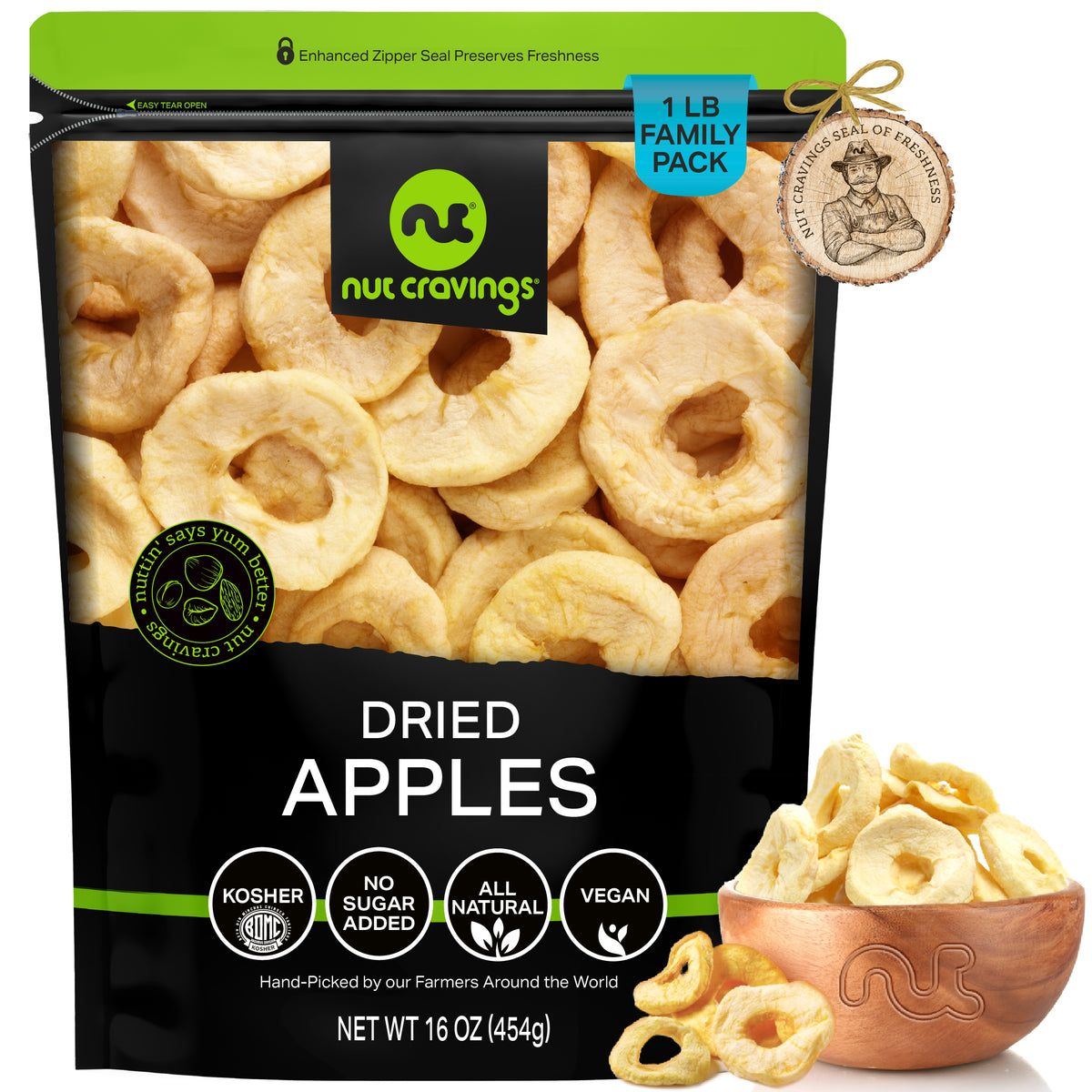
Dried Apple Rings — No Sugar Added - 1 lb (16 oz)
Regular price
$14.97
Sale price
$14.97
Regular price
List Price:
Quantity
Couldn't load pickup availability
Free Shipping Over $25
Packed Fresh USA
100% Satisfaction Guarantee


You may also like
-
Raw Almonds — In Shell
Regular price From $12.97Sale price From $12.97 Regular price List Price: -
Mixed Nuts Gift Basket in Reusable Wooden Tray + Green Ribbon (12 Assortments)
Regular price $39.88Sale price $39.88 Regular price List Price: -
Happy Birthday Treats, Nuts Gift Basket with Bday Ribbon in Reusable Wooden Tray (12 Assortments)
Regular price $39.88Sale price $39.88 Regular price List Price: -
Raw Brazil Nuts, Shelled
Regular price From $7.97Sale price From $7.97 Regular price List Price: -

Thank You Appreciation, Mixed Nuts Gift Basket with Thank You Ribbon + Greeting Card (7 Assortments)
Regular price $29.38Sale price $29.38 Regular price List Price: -
Mixed Nuts Gift Basket (2.2 LB) + Green Ribbon (7 Assortments)
Regular price $34.28Sale price $34.28 Regular price List Price:
Dried Apple Rings, No Sugar Added Naturally Grown, Vegan, Packed Fresh in the USA
Nut Cravings dried apple rings are naturally grown, no sugar added, and packed fresh at our Monroe, New York facility in a resealable bag. Every one-ounce serving delivers just 70 calories, 2 grams of dietary fiber, and 16 grams of natural fruit sugar with zero added sugars, making these one of the lower-calorie dried fruit options available. Soft, pliable, and chewy, these rings snack well straight from the bag and hold up in baking, rehydration, and cooking applications equally well. Fifteen verified buyer reviews. 4.87 stars. Four sizes from 1 lb to 5 lb. Free shipping on orders over $25. Browse the complete dried apple collection for all available sizes, and the full dried fruits collection for pears, peaches, mango, cranberries, and more alongside these dried apple rings.
No Sugar Added: What the Label Confirms
Every one-ounce serving of these dried apple rings contains 16 grams of natural fruit sugar and zero grams of added sugars. The sweetness in every ring comes entirely from the apple itself, concentrated as moisture is removed during drying. No refined sugar, glucose syrup, or sweetener of any kind is added at any stage of processing or packing. Naturally grown and vegan, with the Nut Cravings Seal of Freshness on every bag.
Nutrition Facts Per One Ounce (28g)
- Calories: 70
- Total Fat: 1g (1% DV)
- Saturated Fat: 0g
- Trans Fat: 0g
- Cholesterol: 0mg
- Sodium: 25mg (1% DV)
- Total Carbohydrate: 19g (7% DV)
- Dietary Fiber: 2g (7% DV)
- Total Sugars: 16g (includes 0g added sugars)
- Protein: 0g
- Calcium: 10mg
- Potassium: 150mg (4% DV)
Good For You
- No Sugar Added: zero grams of added sugars in every serving
- Naturally Grown: apples sourced from naturally grown orchards
- Vegan: no animal-derived ingredients in any size
At 70 calories per ounce, these dried apple rings are lower in calories than most common dried fruits including raisins, dried mango, and dried cranberries, because fresh apples have less concentrated natural sugar to begin with.
How to Use Dried Apple Rings
Direct Snacking
Dried apple rings eaten straight from the resealable bag deliver a soft, chewy, concentrated apple flavor that satisfies across any snacking occasion. The ring format makes each piece easy to pick up and portion without breaking the shape or creating mess.
In Baking
Chop the rings into quarter pieces and fold into muffin batter, spice cake, oatmeal cookies, and quick breads. Rehydrate in warm water for 10 minutes before adding to batters to prevent the dried fruit from pulling moisture from the surrounding bake. The concentrated apple flavor holds through oven heat and distributes evenly through the finished baked good.
As Apple Compote
Simmer dried apple rings with water, cinnamon, and cloves until softened. The result is a warm apple compote that serves over oatmeal, yogurt, or alongside savory dishes as a fruit accompaniment. The no-sugar-added rings produce a compote sweetened entirely by the fruit's own natural sugars.
On Cheese Boards
Dried apple rings pair naturally alongside sharp cheddar, aged gouda, and strong blue cheese on charcuterie and cheese boards. The natural fruit acidity in the apple ring balances the fat and salt of the cheese in the same way a fresh apple slice would, with the advantage of a longer shelf life and no browning at the table.
In Granola and Trail Mix
Chop dried apple rings and fold into granola after baking, or add whole rings to homemade trail mix for a chewy fruit element that pairs naturally with walnuts, pecans, and cinnamon-forward nut combinations.
Choosing the Right Size
- 1 lb: The practical everyday size at $0.94 per ounce for regular snacking and baking
- 2 lb: Regular bakers and multi-person households at $0.69 per ounce
- 3 lb: High-volume buyers at $0.60 per ounce
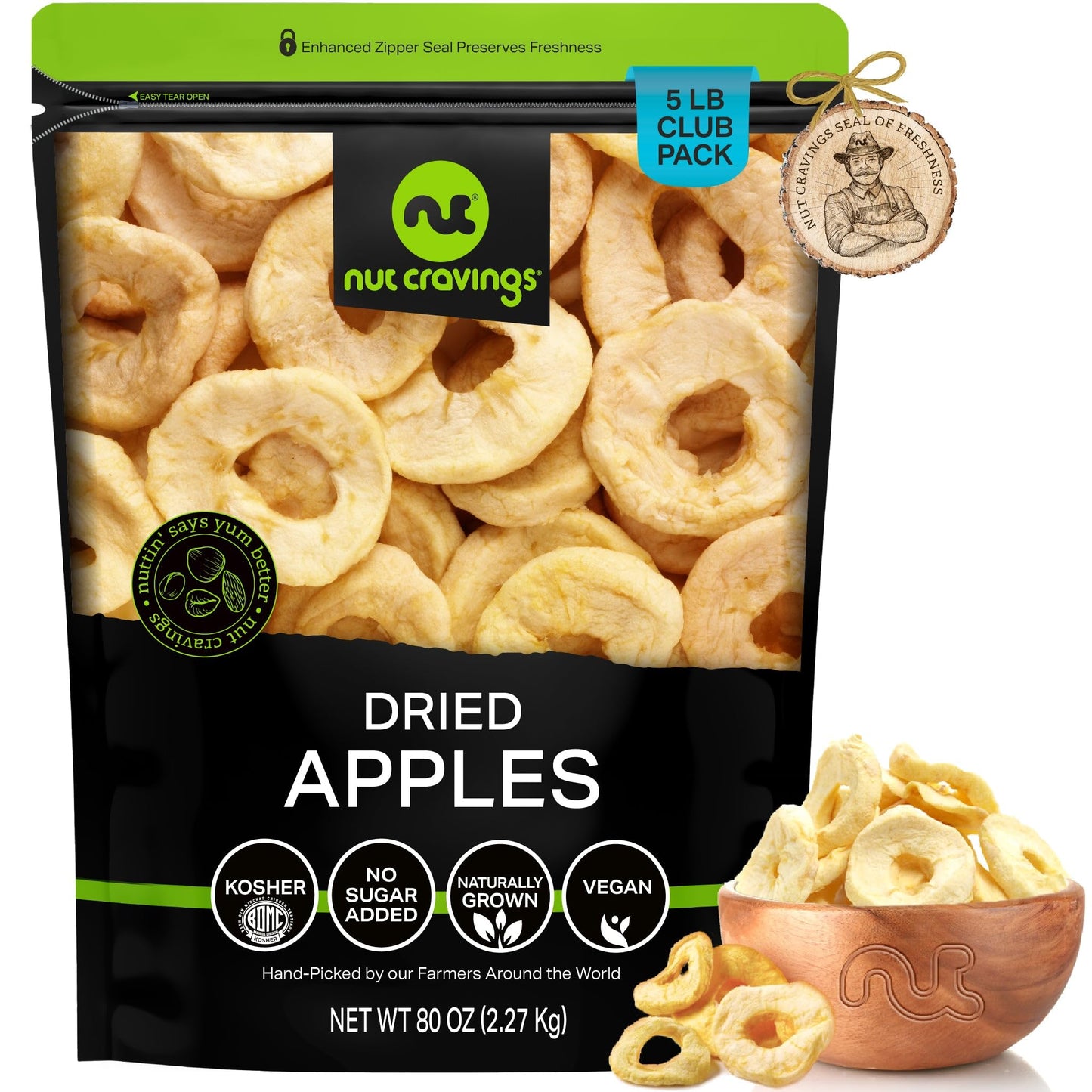
- 5 lb: Maximum per-ounce savings at $0.49 per ounce for established daily users
Storage
Seal the resealable bag firmly after every use to prevent moisture absorption.
- Room temperature, away from heat and light: up to 3 months of peak freshness after opening
- Refrigerated in the sealed bag: up to 6 months
- Frozen in an airtight container: up to 12 months
Dried Apple Rings Guarantee
4.87 stars from 15 verified buyers. Every Nut Cravings order is backed by a 100% satisfaction guarantee. If these dried apple rings arrive below the freshness standard you expect, contact our team at 877-471-4870 or care@nutcravings.com within seven days and we will resolve it promptly. Browse the complete dried apple collection for all available sizes, or explore the full dried fruits collection for pears, peaches, mango, cranberries, kiwi, and more from Nut Cravings.
Customer Reviews
We’re More Than Just Snacks
Nuts

Dry Fruits
Everyday blends of nuts, seeds, and fruits simple, satisfying, and ready to enjoy anywhere.

Gifts
Beautiful assortments made to delight perfect for birthdays, holidays, & heartfelt thank yous.

Organic
Pure and certified organic — clean, natural ingredients for mindful snacking.

Seasonal Gifts
Limited-edition assortments inspired by every season and celebration.

Chocolate & Treats
Chocolates, brittles, and confections that turn any snack break into a special moment.

Mixed Nuts & Bar Mix
Protein-packed combinations of nuts, seeds, and fruits crafted for energy and wellness.

Care Packages
Thoughtful boxes filled with joy and flavor — send care to friends, family, or colleagues.

Corporate Gifting
Elegant, customizable boxes designed to impress teams, clients, and partners.