


Backpacking Food Ideas: What to Pack and Why It Works
Most backpacking food lists tell you what other people pack. That only helps if your trip looks like theirs. The useful version starts one step earlier, with the number experienced hikers actually plan around, and then picks food that clears it.
Quick Summary
Budget between 1.5 and 2.5 pounds of food a day per hiker, holding 2,500 and 4,500 calories. To fit that many calories into that little weight, your food needs to average at least 100 calories per ounce, and 125 or more is better. Nuts and seeds clear that bar easily. Most dried fruit does not.
Key Points
- Weight target: between 1.5 and 2.5 pounds of food a day per hiker.
- Calorie target: 2,500 and 4,500 calories a day, set by terrain, pace and body size.
- The density rule: aim for 100 calories per ounce minimum, 125 or more if you are counting grams.
- Nuts and seeds run 162 to 204 calories per ounce. Every common variety clears the target.
- Dried fruit runs 68 to 90 calories per ounce. It fails the density test on its own, which is why it belongs in a mix rather than as a staple.
| Trip type | Food weight per day | Calories per day | Density you need |
|---|---|---|---|
| Easy terrain, short days | 1.5 lb | About 2,500 | Around 104 cal per oz |
| Typical multi day trip | 1.5 to 2 lb | 3,000 to 3,500 | Around 110 to 125 cal per oz |
| Long days, big climbs, cold | 2 to 2.5 lb | 4,000 to 4,500 | Around 112 to 125 cal per oz |
How much food do you need per day for backpacking?
Budget between 1.5 and 2.5 pounds of food a day per hiker, which lands you around 2,500 and 4,500 calories. The low end suits short days on flat ground in mild weather. The high end suits long days, heavy climbing, cold nights or a bigger body.
Those two numbers pull against each other. More calories means more weight, and weight is the thing you feel on day three. Every decision after this is about getting the calories without the ounces.
Where does the 100 calories per ounce rule come from?
It is not a nutrition rule. It is arithmetic. Divide your daily calorie target by your daily weight target and you get the density your food has to average.
Take a common setup: 3,000 calories a day, carried in 1.5 pounds of food. That is 24 ounces. Three thousand divided by 24 is exactly 125 calories per ounce.
Drop to 2,500 calories in the same weight and you need about 104. That is the whole basis of the guideline you see repeated on outdoor forums.
Once you know that, food selection stops being a taste question and becomes a sorting exercise. Anything well above 125 buys you room for things you enjoy that sit below it.
Which backpacking foods give you the most calories per ounce?
Nuts and seeds are the densest real food most people carry, running from 162 to 204 calories per ounce. Dried fruit sits far lower, between 68 and 90 for most varieties. The gap is bigger than almost anyone expects, and it changes how you build a pack.
How do nuts and seeds compare?
Every common nut and seed clears the 125 calorie per ounce target with room to spare. The spread between the lightest and densest is about 40 calories per ounce, which adds up over a week but matters less than simply choosing nuts at all.
| Food | Calories per ounce | Clears 125 target? |
|---|---|---|
| Macadamias | 204 | Yes |
| Pecans | 196 | Yes |
| Pine nuts | 190 | Yes |
| Brazil nuts | 187 | Yes |
| Walnuts | 184 | Yes |
| Hazelnuts | 179 | Yes |
| Peanuts | 166 | Yes |
| Sunflower seeds | 166 | Yes |
| Almonds | 164 | Yes |
| Pumpkin seeds | 163 | Yes |
| Cashews | 162 | Yes |
| Pistachios | 162 | Yes |
Converted to a one ounce serving from published United States Department of Agriculture values per 100 grams. Pistachio and cashew figures are for kernels, not in shell weight.
One practical note on pistachios. The figure above is for shelled kernels. Carrying them in shell means carrying weight you will throw away, and you still have to pack the shells out. For the trail, shelled wins.
If you would rather not assemble a blend yourself, a ready mixed bag solves it. The mixed nuts and bar mix range and the resealable nut bags are both built for exactly this.

Does dried fruit earn its place in the pack?
Not on calories alone. Most dried fruit lands between 68 and 90 calories per ounce, which is well under the 100 floor. Banana chips are the exception at 147, and that is because they are usually fried in oil rather than simply dried.
| Food | Calories per ounce | Clears 100 floor? |
|---|---|---|
| Banana chips | 147 | Yes, usually fried in oil |
| Dried mango | 90 | No |
| Dried pineapple | 89 | No |
| Dried cranberries | 87 | No |
| Raisins | 85 | No |
| Dried papaya | 84 | No |
| Dates | 80 | No |
| Dried figs | 79 | No |
| Dried apricots | 68 | No |
| Prunes | 68 | No |
Converted to a one ounce serving from published United States Department of Agriculture values per 100 grams.
So why does every experienced hiker still carry it? Because calories are not the only job. Dried fruit is fast sugar when you need it quickly, and it breaks up the fat heavy taste of a nut only diet.
It also keeps you eating when your appetite drops at altitude. Food you refuse to eat has an effective density of zero.
The sensible ratio is to let nuts carry the weight and let fruit carry the interest. The full dried fruit range covers the usual mix candidates.

What are the best no cook backpacking food ideas?
A no cook trip means leaving the stove, fuel canister and pot at home, which is often more weight than the food difference. It works well for trips up to about three nights, and in warm weather it is barely a sacrifice.
What can you eat for breakfast without a stove?
- Cold soaked oats. Add water to oats in a jar the night before, stir in nuts and dried fruit in the morning.
- Nut and fruit handful. The fastest option when you want to break camp and eat while walking.
- Tortilla with nut butter. Flat, crush resistant and dense.
- Granola with powdered milk. Add cold water and eat straight from the bag.
What works for lunch and trail snacks?
Lunch on the trail is rarely a sit down meal. Most people graze through the afternoon instead, which suits food you can eat one handed without stopping.
- Trail mix, eaten from a side pocket rather than unpacked.
- Hard cheese and crackers, which hold up for the first two days in cool weather.
- Jerky, for salt and protein when sweet food stops appealing.
- Dates or dried mango, when you want sugar to land quickly before a climb.
Can you do dinner without cooking?
Yes, though it takes more planning than breakfast. Couscous rehydrates in cold water given twenty minutes. Instant refried beans and instant mashed potato both work cold, if not pleasantly. A tortilla wrap with cheese, salami and a handful of nuts needs no water at all.
The honest limit is cold weather. On a cold night a hot meal does something for morale that no amount of planning replaces. Two nights out, skip the stove. Five nights in the shoulder season, take it.
How do you build a trail mix that actually works on the trail?
Aim for roughly two parts nuts and seeds to one part dried fruit by weight, add salt, and keep the pieces big enough to pick up with cold fingers. That ratio lands the mix around 140 calories per ounce, comfortably above the floor, while keeping it pleasant to eat.
- Two parts nuts and seeds. This is where the calories come from, so do not let it drop below half the mix.
- One part dried fruit. Enough for flavour and fast sugar without dragging the density down.
- Add salt. You lose it through sweat all day, and salted mixes keep tasting good when sweet ones stop.
- Keep pieces large. Small fragments sink to the bottom and become dust by day three.
- Add chocolate last. It melts above roughly 85 degrees, so save it for cooler trips or cooler months.
Two of our existing guides go deeper on the recipe side. The trail mix recipe walks through a base blend, and healthy trail mix covers lower sugar versions. For ready made bags, see the trail mix range.

Build your mix from these
Four of the items named in this guide. Each button adds the size shown, and every product page lists the other sizes and current stock.
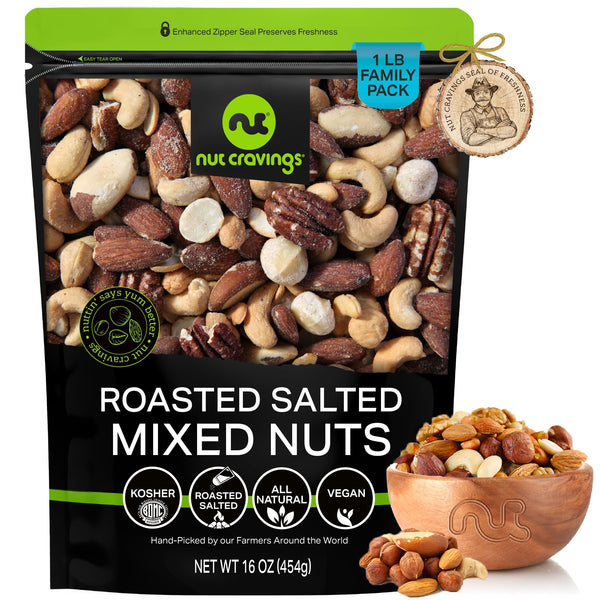
1 lb bag
Six varieties in one bag, the anchor of any trail mix.
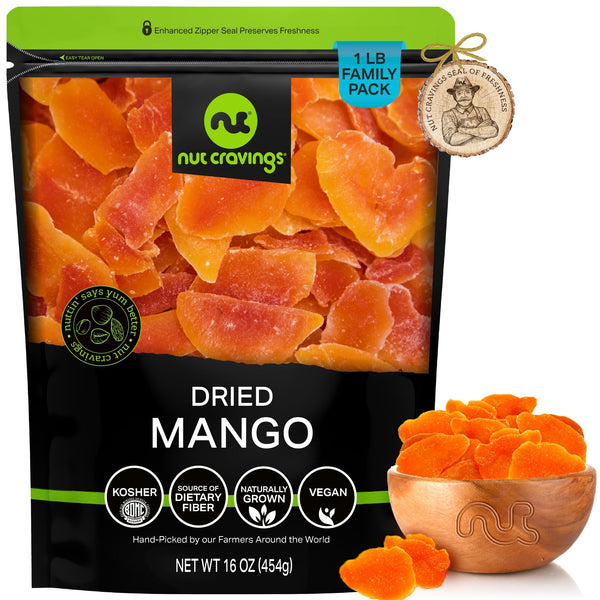
1 lb bag
Fast sugar before a climb, and it holds its shape in a pack.
How do you plan food for a three day trip?
Work in meals, not days, then check the total weight at the end. A three day trip usually means two breakfasts, three lunches, two dinners and snacks throughout, because you eat at home before you leave and after you finish.
| Meal | Day 1 | Day 2 | Day 3 |
|---|---|---|---|
| Breakfast | Eaten at home | Cold soaked oats with nuts | Granola with powdered milk |
| Morning snack | Trail mix | Trail mix | Trail mix |
| Lunch | Tortilla, cheese, salami | Tortilla with nut butter | Crackers and cheese |
| Afternoon snack | Dates and almonds | Jerky and cashews | Dried mango and walnuts |
| Dinner | Couscous with olive oil and nuts | Instant beans in a tortilla | Eaten at the trailhead |
Weigh the whole lot before you pack it. If it comes in over 2.5 pounds a day, the usual culprit is fruit, bars or anything still in its original packaging.

How should you pack and store backpacking food?
Repackage everything before you leave. Original boxes and bags carry air, cardboard and weight you have no use for, and they take up space in a bear canister that you will wish you had.
How do you stop food getting crushed?
- Move everything into resealable bags. Press the air out as you seal them.
- Pack by day, not by food type. You open one bag a day instead of rummaging through all of them.
- Put hard items at the bottom of the bag. Nuts take the pressure, crackers and bars sit on top.
- Keep one day in a side pocket. That stops you unpacking the whole bag at every break.
How long will nuts and dried fruit stay good on the trail?
For a trip of a week or less, neither is a concern if the bag stays sealed. Heat and air are what turn nuts, so the problem on a hot trip is a bag left open in the sun rather than the passage of time.
Raw nuts turn faster than roasted ones because nothing has driven off their surface moisture. If your trip is long and hot, roasted and salted holds up better. Our guide to storing nuts so they stay fresh covers timelines by variety, and whether nuts go bad explains what to smell for.
Building a pack list? Start with the full nuts range, add from seeds and dried fruit, and everything ships in resealable bags.
What mistakes do people make with backpacking food?
Most food problems on the trail are planning problems made at the kitchen table. These are the five that come up again and again.
- Packing by meal count instead of by weight. A full menu can still come in at four pounds a day if nothing gets weighed.
- Leaning on bars. Many sit only a little above the 100 calorie floor, so they cost you weight for less fuel than nuts, and they get boring faster than real food.
- Forgetting salt. Sweet food alone becomes hard to eat by day two, especially in heat.
- Carrying original packaging. Boxes and rigid bags waste space and weight for nothing.
- Packing only what you like at home. Appetite changes with altitude and effort, so bring at least one savoury option you can fall back on.
If you are flying to the trailhead, nuts and dried fruit travel well through security, which is covered in our guide to snacks to bring on a plane. For how different nuts perform during hard effort, see best nuts for energy.
What to take away from this
Start with the arithmetic, not the shopping list. Pick your daily calorie target, divide by the weight you are willing to carry, and you have the density every item has to beat.
From there it is simple. Nuts and seeds do the heavy lifting at 162 to 204 calories per ounce. Dried fruit comes along for flavour and fast sugar, not for weight efficiency.
Salt keeps you eating. Everything gets repackaged before it goes in the bag.
About the author
Written by the Nut Cravings team. Nut Cravings sells nuts, seeds, dried fruit and gift assortments, packed fresh, with the core catalog kosher certified. We pack the raw, roasted and mixed formats that go into trail food every week, and the packing and storage guidance here reflects how these products behave once a bag is opened.
Shop Best Sellers
See all-
Roasted Pumpkin Seeds (Pepitas) — Salted
Regular price From $6.97Sale price From $6.97 Regular price List Price: -
Mixed Nuts Gift Basket in Reusable Wooden Tray + Green Ribbon (12 Assortments)
Regular price $39.97SaleSale price $39.97 Regular price List Price:$54.98 -
Dried Kiwi Slices — Sweetened
Regular price From $11.97Sale price From $11.97 Regular price List Price: -
Roasted Cashews — Lightly Salted
Regular price From $18.97Sale price From $18.97 Regular price List Price:


