


Everyday blends of nuts, seeds, and fruits simple, satisfying, and ready to enjoy anywhere.
Roasted Sunflower Seeds (Kernels) — Unsalted - 0.25 lb (4 oz)
Regular price
$9.97
Sale price
$9.97
Regular price
List Price:
Quantity
Couldn't load pickup availability
Free Shipping Over $25
Packed Fresh USA
100% Satisfaction Guarantee


You may also like
-
Dried Kiwi Slices — Lightly Sweetened
Regular price From $10.97Sale price From $10.97 Regular price List Price: -
Happy Birthday Treats, Mixed Nuts Gift Basket with Bday Ribbon (7 Assortments)
Regular price $29.38Sale price $29.38 Regular price List Price: -
Birthday Snack Box — Care Package with 45 Sweet Treats + Happy Birthday Card
Regular price From $29.38Sale price From $29.38 Regular price List Price: -
Organic Raw Brazil Nuts
Regular price From $12.97Sale price From $12.97 Regular price List Price: -

Thank You Appreciation, Mixed Nuts Gift Basket with Thank You Ribbon + Greeting Card (7 Assortments)
Regular price $29.38Sale price $29.38 Regular price List Price: -
Raw Cashews, Whole — Unsalted
Regular price From $14.97Sale price From $14.97 Regular price List Price:
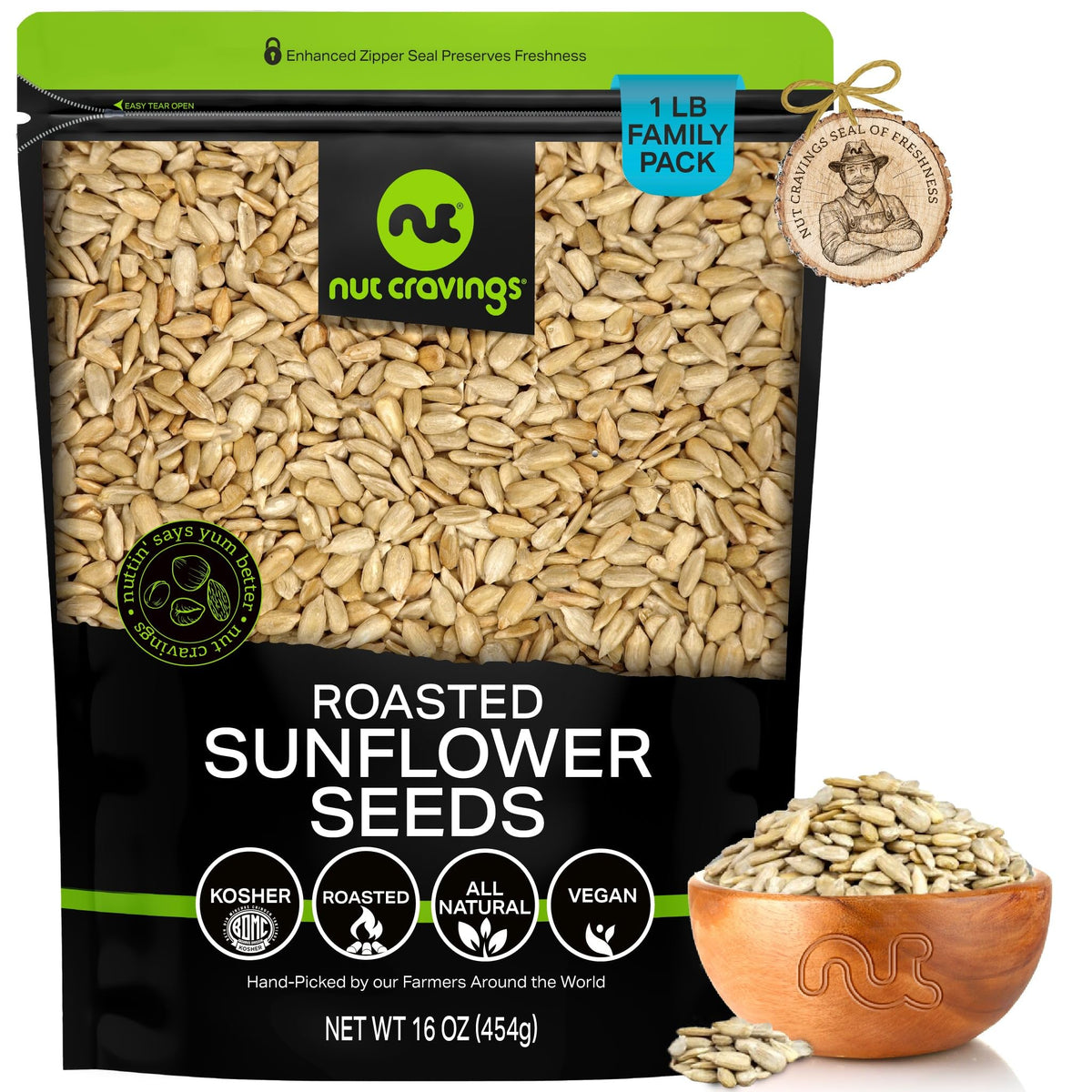
Roasted Sunflower Seeds, Unsalted , Zero Sodium, Packed Fresh in the USA
Nut Cravings roasted unsalted sunflower seeds are hulled kernels with the outer shell fully removed, roasted and packed fresh at our Monroe, New York facility in a resealable bag with zero added sodium. Every one-ounce serving delivers 180 calories and 6 grams of protein, making these a good source of protein, vitamin E, heart-healthy fats, dietary fiber, calcium, iron, antioxidants, and magnesium. Keto-compatible, vegan, and all natural. Two verified buyer reviews. 4.5 stars. Six sizes from 4 oz to 5 lb. Free shipping on orders over $25. Browse the complete sunflower seeds collection for salted formats alongside these unsalted kernels, and the full seeds collection for pumpkin seeds and additional seed varieties from Nut Cravings.
Why Zero Sodium Makes This the Right Format for Health-Focused Use
Roasted salted sunflower seeds run approximately 150 to 200mg of sodium per ounce. At multiple daily servings, that accumulates meaningfully against DASH diet sodium caps of 1,500mg total daily, school lunch sodium limits, and low-sodium cardiovascular dietary approaches. These roasted unsalted kernels deliver the same oven-roasted depth of flavor as the salted format at zero added sodium per ounce. The roasting develops the natural nutty character of the sunflower kernel into something genuinely satisfying without any salt needed. The zero sodium format is specifically right for DASH and low-sodium cardiovascular diets, baking and granola applications where salt comes from other ingredients, school lunches and nut-free snacking environments, and any recipe where sodium needs to be controlled independently at the point of use. Verified buyers confirm: "The sunflower kernels were fresh and perfectly roasted. They are delicious. A good price for them and a good taste."
Nutrition Facts Per One Ounce (28g)
- Calories: 180
- Total Fat: 15g (19% DV)
- Saturated Fat: 2g (10% DV)
- Trans Fat: 0g
- Cholesterol: 0mg
- Sodium: 0mg
- Total Carbohydrate: 5g (2% DV)
- Dietary Fiber: 3g (11% DV)
- Total Sugars: 1g (includes 0g added sugars)
- Protein: 6g
- Calcium: 20mg (2% DV)
- Iron: 1mg (6% DV)
- Potassium: 200mg (4% DV)
Good Source of Eight Key Nutrients
Every one-ounce serving of these roasted unsalted sunflower seeds is a verified good source of:
- Protein: 6g per serving supporting daily protein intake
- Vitamin E: one of the richest natural sources of vitamin E in the seed category per ounce
- Heart-Healthy Fats: 15g total fat per serving from primarily polyunsaturated and monounsaturated sources
- Dietary Fiber: 3g per serving, 11% of the daily value
- Calcium: 20mg per serving, 2% of the daily value
- Iron: 1mg per serving, 6% of the daily value
- Antioxidants: present in every roasted kernel
- Magnesium: 200mg potassium and supporting muscle function per serving
At just 5g total carbohydrate and 3g dietary fiber per ounce, these roasted unsalted sunflower seeds deliver approximately 2g net carbohydrates per serving, fully compatible with keto dietary approaches.
How to Use Roasted Unsalted Sunflower Seeds
Direct Snacking
Roasted unsalted hulled kernels eaten straight from the resealable bag deliver a clean, nutty, mildly savory crunch with zero sodium. The roasted depth of flavor makes them genuinely satisfying on their own for daily snacking without any salt needed.
In Granola and Trail Mix
Roasted unsalted sunflower kernels are the ideal granola and trail mix component for buyers who add salt from other ingredients in the mix. Starting with unsalted kernels prevents over-salting the finished blend when combined with pretzels, salted nuts, or other seasoned components. In granola, fold in after baking to preserve the roasted crunch.
In Baking
Fold roasted unsalted sunflower kernels into bread doughs, seeded crackers, muffins, and oat-based bars. Starting with unsalted kernels keeps total recipe sodium at exactly the level the recipe specifies, since most baking recipes add salt to the batter separately. The kernels hold up well through oven temperatures without turning bitter.
As Sunflower Seed Butter
Blend roasted unsalted kernels in a food processor for 6 to 8 minutes until smooth. The natural oils release and the texture becomes creamy without adding any oil. Season with salt at the end only if desired. Starting with unsalted kernels gives complete control over the sodium and flavor profile of the finished butter, which is specifically useful for school-safe and allergy-managed nut-free households.
As a Salad and Grain Bowl Topping
Scattered over green salads, quinoa bowls, and roasted vegetable dishes, roasted unsalted sunflower kernels add crunch and a light nutty character without contributing sodium to the dressed dish. A practical tree-nut-free alternative for shared table settings where nut policies apply.
In Pesto
Substitute roasted unsalted sunflower kernels for pine nuts in pesto at a 1:1 ratio. Starting with unsalted kernels prevents adding extra sodium alongside the already salted cheese, capers, and other pesto components. The result is a nut-free pesto with controlled sodium at every stage of preparation.
Choosing the Right Size
- 4 oz: First-time buyers and light regular use at $2.49 per ounce
- 8 oz: Moderate regular snacking at $1.25 per ounce
- 1 lb: The practical everyday size at $0.62 per ounce
- 2 lb: Regular bakers and multi-person households at $0.44 per ounce
- 3 lb: High-volume buyers at $0.42 per ounce
Storage
Seal the resealable bag firmly after every use. Sunflower seeds are high in polyunsaturated fat which oxidizes faster than monounsaturated or saturated fats when exposed to heat, light, and air.
- Room temperature, away from heat and light: 2 to 4 months of peak freshness after opening
- Refrigerated in the sealed bag: up to 12 months
- Frozen in an airtight container: up to 18 months
For 2 lb and 3 lb sizes, portion into smaller airtight containers on arrival and refrigerate or freeze what will not be used within two months.
Roasted Unsalted Sunflower Seeds Guarantee
4.5 stars from 2 verified buyers. Every Nut Cravings order is backed by a 100% satisfaction guarantee. If these roasted unsalted sunflower seeds arrive below the freshness standard you expect, contact our team at 877-471-4870 or care@nutcravings.com within seven days and we will resolve it promptly. Browse the complete sunflower seeds collection for all available formats, or explore the full seeds collection for pumpkin seeds and additional seed varieties from Nut Cravings.
Customer Reviews
Frequently Asked Questions
We’re More Than Just Snacks
Nuts

Dry Fruits
Everyday blends of nuts, seeds, and fruits simple, satisfying, and ready to enjoy anywhere.

Gifts
Beautiful assortments made to delight perfect for birthdays, holidays, & heartfelt thank yous.

Organic
Pure and certified organic — clean, natural ingredients for mindful snacking.

Seasonal Gifts
Limited-edition assortments inspired by every season and celebration.

Chocolate & Treats
Chocolates, brittles, and confections that turn any snack break into a special moment.

Mixed Nuts & Bar Mix
Protein-packed combinations of nuts, seeds, and fruits crafted for energy and wellness.

Care Packages
Thoughtful boxes filled with joy and flavor — send care to friends, family, or colleagues.

Corporate Gifting
Elegant, customizable boxes designed to impress teams, clients, and partners.