Skip to product information
1 of 5

Dried Mango Slices — Lightly Sweetened - 0.5 lb (8 oz)

Size
Regular price $13.97
-13%Sale price $13.97 Regular price List Price:  $16.07
Save 13%
Quantity
Free Shipping Over $25
Packed Fresh USA
100% Satisfaction Guarantee
View full details

Dried mango is a tropical-fruit snack that converts almost everyone who tries it. Most people grow up eating fresh mango from grocery store bins, where the fruit is hit-or-miss and usually under-ripe. Dried mango skips that lottery entirely. The drying process concentrates the natural mango flavor into something more intense than fresh fruit, and the chewy texture gives it staying power that fresh slices can't match. Open the bag, eat a strip, and the flavor fills your mouth in a way that's hard to put down.

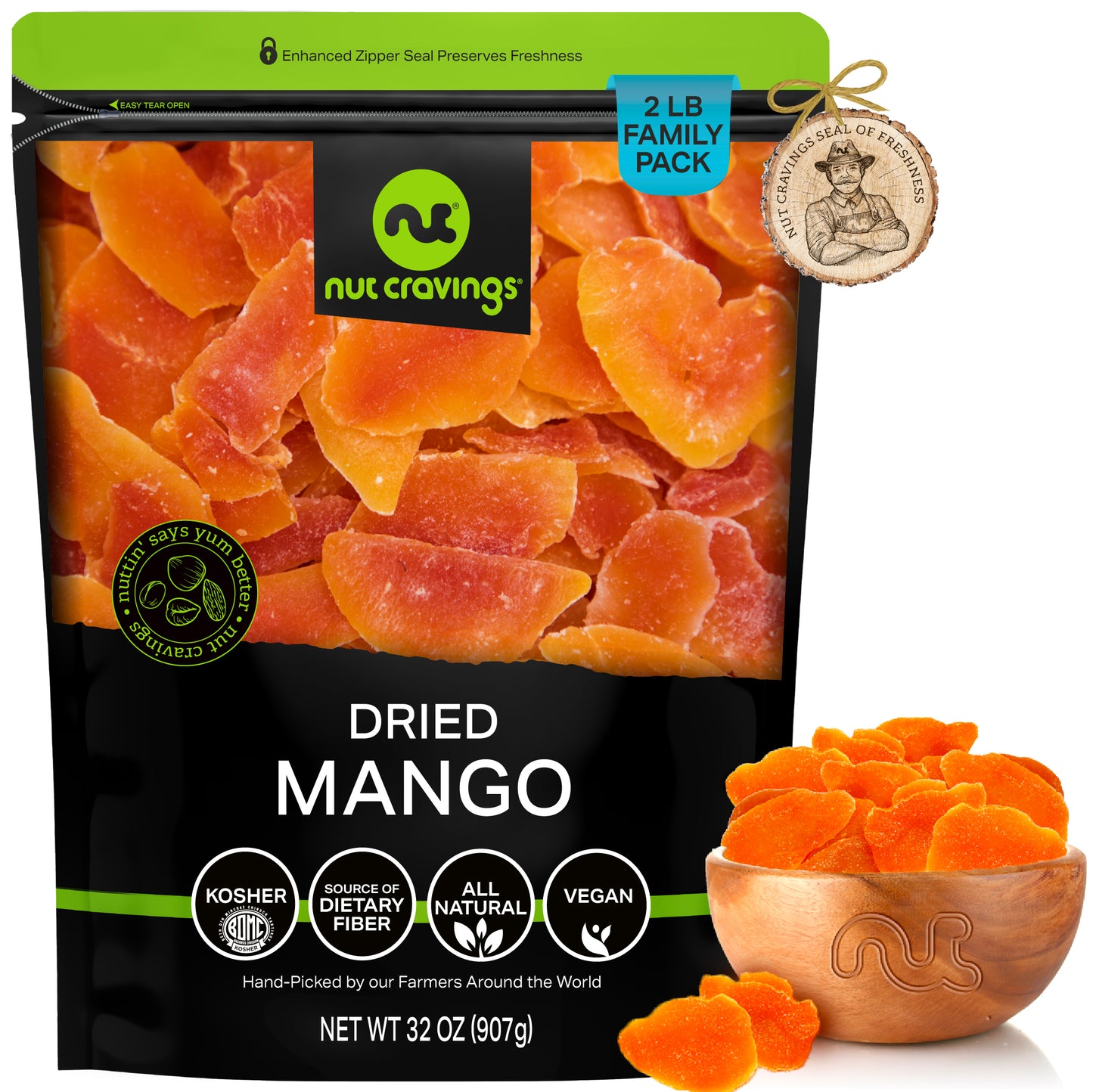
Ours are dried mango slices, lightly sweetened to round off the natural tartness of dried mango without masking the fruit flavor. Vibrant orange color, soft-chewy texture, no sulphur preservatives. Packed fresh in resealable bags at our Monroe, NY facility. kosher certified. Available in 1 lb through 5 lb sizes for snackers, families, and anyone who goes through dried mango faster than small grocery bags can sustain.

What You're Buying

  • Form: dried mango slices, soft-dried (chewy texture)

  • Processing: soft-dried, lightly sweetened

  • Sweetener: small amount of added sugar to balance natural tartness

  • Packaging: resealable food-safe stand-up bag

  • Shelf life: 6 to 9 months pantry, up to 12 months refrigerated

  • Kosher: certified

  • Vegan

  • Allergen note: processed in a facility that handles tree nuts and peanuts

Lightly Sweetened vs Unsweetened (And Why This Choice)

Pure unsweetened dried mango is genuinely tart, with a sharper bite than most people expect. The natural sugars in mango concentrate during drying, but so do the natural acids, which produces a flavor profile some people find too sour for daily snacking.

Lightly sweetened dried mango (this product) adds a small amount of sugar during the drying process to round out the tartness while keeping the natural mango flavor dominant. The sweetness brings the flavor forward without making the dried mango taste candy-like. This is the version most American buyers prefer, and it's the version that works best for casual snacking without becoming overwhelming.

If you specifically want unsweetened dried mango for low-sugar diets or specific recipes, that's a different product (we don't currently offer it in this catalog).

What Makes This Different from Grocery Store Dried Mango

Most mass-market dried mango uses sulphur dioxide as a preservative. It keeps color bright and extends shelf life, but some people react to sulphites with headaches, asthma symptoms, or digestive issues. Our dried mango is unsulphured, which is why the orange color is a deeper natural shade rather than the unnaturally bright orange of some commercial products.

The bulk-size packaging is the other distinction. Grocery store dried mango usually comes in 4 to 6 oz bags, which empties faster than most regular dried mango eaters expect. Our resealable bags from 1 lb to 5 lb match the consumption pace of households that actually go through dried mango regularly, and the resealable format keeps the strips fresh between uses.

Nutrition per Ounce (About 1/4 Cup)

  • 86 calories

  • 1g protein

  • 0g fat

  • 1g fiber

  • 22g carbs (includes natural and added sugars)

  • Solid source of vitamin A, vitamin C, and folate

  • Small amounts of iron, calcium, and potassium

The vitamin A content is one of the strengths of dried mango. A 1-ounce serving delivers a meaningful share of daily vitamin A, which matters for skin and eye health. The flip side is the carbohydrate content from the natural and added sugars, so this is a snack to portion rather than to graze through unlimited.

How People Use Them

Solo snacking is the heaviest use. A handful of dried mango strips delivers a tropical flavor that no other dried fruit replicates, with a chewy texture that's satisfying without being heavy. Particularly good as a 3pm snack to fight the late-afternoon energy slump.

Trail mix and granola. Combine with raw cashews, dried coconut flakes, dark chocolate, and macadamias for a tropical trail mix that distinguishes from standard nut-and-cranberry blends. Pairs especially well with savory-roasted nuts that contrast against the sweetness.

Yogurt and oatmeal toppings. Greek yogurt with diced dried mango, honey, and granola is a high-flavor breakfast that beats most cereal options. The chewy mango pieces add textural interest that other dried fruits don't quite match.

Salads. Mix into spinach or arugula salads with goat cheese, sliced almonds, and a citrus vinaigrette. The mango sweetness balances bitter greens and pairs naturally with creamy cheeses.

Cheese boards. A small dish of dried mango alongside aged cheddar, brie, or blue cheese. The acid in the mango cuts the richness of the cheese the way fig jam or quince paste would, with a more tropical flavor profile.

Smoothies. Soak diced dried mango in warm water for 10 minutes to rehydrate slightly, then blend into smoothies for concentrated mango flavor that fresh frozen mango doesn't quite deliver.

Mango chutney. Dice dried mango and simmer with onion, ginger, vinegar, and spices for a chutney that pairs with grilled meats, curry dishes, or as a sandwich spread. Particularly good with pork tenderloin or grilled chicken.

Tropical baking. Dice into muffins, scones, or coffee cake batter. The dried mango holds its shape and flavor through baking better than fresh mango, which tends to release water and turn dishes soggy.

School lunches and travel snacks. Dried mango doesn't need refrigeration, doesn't bruise like fresh fruit, and packs cleanly in lunch boxes or carry-on bags. Solid alternative to fruit snacks or candy for travel and back-to-school packing.

How Freshness Holds Up

Seal the bag after each use and store in a cool, dry place. 6 to 9 months pantry life is typical for soft-dried mango. For the 3 lb or 5 lb bulk sizes, move half to the freezer on arrival. Freezing extends shelf life to 12+ months without changing texture or flavor significantly.

Soft-dried mango will gradually lose moisture over time. If the bag sits open in a warm kitchen for months, the strips turn leathery but are still edible — they'll rehydrate slightly during cooking or soaking.

Customer Reviews

Frequently Asked Questions

Yes, lightly sweetened. A small amount of sugar is added during the drying process to offset the natural tartness that pure unsweetened dried mango carries from concentrated fruit acids. The total sugar per ounce is approximately 19 to 21g, of which the majority is natural fruit sugar and approximately 3 to 5g is added sugar from the light sweetening. For comparison: this is substantially less added sugar than fully sweetened commercial dried mango products, which can contain 10 to 15g of added sugar per ounce on top of the natural fruit sugar. This is also not a fully sweetened product: the light sweetening is specifically calibrated to make the natural mango flavor forward and accessible for daily snacking rather than to produce a candy-sweet profile. For buyers on strict added-sugar-restricted diets, the approximately 3 to 5g added sugar per ounce should be factored into daily sugar tracking. For general health-conscious buyers, the light sweetening at this level is a reasonable trade-off for making a nutritionally valuable fruit consistently palatable.

Sulphur dioxide (SO2) is a chemical preservative widely used in commercial dried fruit production to prevent color change, suppress oxidation, and extend shelf life. Our dried mango contains no sulphur dioxide or sulphite-based preservatives. This matters for three reasons. First, a minority of people are sulphite-sensitive: asthmatics are particularly susceptible, and headache, digestive discomfort, and asthma symptoms from sulphites are documented in sulphite-sensitive individuals. Second, SO2 can interact with polyphenol compounds including mangiferin and reduce their antioxidant activity, so unsulphured mango more fully preserves the nutritional integrity of the fruit's bioactive compounds. Third, the absence of SO2 means the deep orange color of our dried mango reflects actual natural carotenoid content rather than artificial color manipulation. The trade-off is natural color variation across pieces and gradual darkening during storage, which is normal oxidative browning and does not indicate spoilage.

It requires careful portioning and pairing. Dried mango provides approximately 19 to 21g total sugar per ounce, which is a significant carbohydrate load for blood sugar management. The glycemic index of dried mango is approximately 51 to 60, in the moderate range rather than the high range of refined sugar, partly because the retained fiber and fruit acids slow glucose absorption. For people with type 2 diabetes or insulin resistance, dried mango is manageable in small portions (half an ounce to one ounce per session) eaten alongside protein and fat (nuts, full-fat yogurt, cheese) to slow gastric emptying and buffer the glucose response. The mangiferin in mango also has documented antidiabetic activity through improved insulin sensitivity and reduced alpha-glucosidase activity, which provides some inherent glycemic modulation from the fruit itself. Review any dietary change with your healthcare provider if you have established diabetes and are managing blood sugar closely.

Most commercial dried mango is treated with sulphur dioxide (SO2), which bleaches the natural mango carotenoids and creates an unnaturally bright, uniform neon-orange color. Our dried mango contains no SO2. The deeper, more amber-orange color you see is the natural color of mango carotenoids (primarily beta-carotene) retained after drying without chemical color manipulation. Natural dried mango also shows color variation from piece to piece depending on the ripeness of each individual fruit at drying: this variation is normal and expected in unsulphured dried fruit. Additionally, the mango may darken slightly over storage time as natural carotenoid oxidation occurs in the absence of SO2 preservation. This darkening does not indicate spoilage or reduced quality: the flavor and nutritional value are unaffected by natural color change over storage.

Sealed bag at room temperature: 6 to 9 months. Refrigerated: up to 12 months. Frozen: up to 2 years. The primary freshness concern for dried mango is moisture absorption: a loosely sealed bag in a warm, humid kitchen allows the pieces to absorb ambient moisture, causing them to stick together and develop surface stickiness. Pieces that have stuck together are still edible: separate them and continue using. The product is spoiled if it smells fermented, sour, or distinctly off rather than sweet and tropical. For bulk sizes (3 lb, 5 lb), transfer approximately half to a sealed freezer bag on arrival. Frozen dried mango thaws within minutes at room temperature with no texture or flavor change.

Dice approximately one cup of dried mango slices into small pieces. In a medium saucepan combine the diced mango with one small diced yellow onion, a tablespoon of freshly grated ginger, two tablespoons of apple cider vinegar, a tablespoon of brown sugar, a pinch of red pepper flakes, a pinch of ground coriander, and half a cup of water. Bring to a simmer over medium heat and cook uncovered for 20 to 25 minutes, stirring occasionally, until the mixture has thickened to a jam-like consistency. Add water in tablespoon increments if the mixture begins sticking before the mango has softened fully. Cool completely before refrigerating. Keeps refrigerated for up to 3 weeks. Serve with grilled pork tenderloin, roast chicken, lamb chops, or as a condiment on sandwiches with aged cheddar and arugula. Dried mango produces a chutney with deeper, more concentrated flavor than fresh mango chutney because the fruit's flavor compounds are already concentrated through drying.

Yes. Dried mango slices are vegan: the ingredients are mango and a small amount of sugar for the light sweetening, with no animal products, animal-derived additives, gelatin, honey, or beeswax used at any stage. The product is also Kosher certified and gluten-free by ingredient composition. Processed in a facility that handles tree nuts and peanuts, creating cross-contamination risk for nut and peanut allergy sufferers; the mango itself contains no nut or gluten ingredients.

Yes, and dried mango performs better in baked goods than fresh mango for most applications. Fresh mango releases water during baking, which can make muffin and cake batters soggy or prevent proper crust formation. Dried mango holds its shape and flavor concentration through baking heat, delivering distinct mango pieces in the finished product rather than dissolving into the batter. Dice dried mango into small pieces (about the size of raisins) before folding into muffin batter, scone dough, or coffee cake. For mango-coconut muffins: add diced dried mango and shredded unsweetened coconut to a basic muffin batter with lime zest and cardamom. For mango-ginger scones: fold diced dried mango and freshly grated ginger into a standard scone dough with a honey and lime juice glaze on top. In both cases, the dried mango provides concentrated fruit flavor and holds texture through the bake in a way fresh fruit cannot.

Yes, specifically suited for it. Dried mango is fully shelf-stable with no refrigeration required, does not bruise or release moisture in a bag, and provides rapid-access carbohydrates for energy replenishment during hiking, cycling, travel, and outdoor activities. At 86 calories and approximately 20g total sugar per ounce, a two-ounce portion of dried mango in a trail mix with salted nuts provides quick carbohydrate energy, some electrolyte replenishment from the potassium (approximately 234mg from two ounces), and sustained energy from the nut fat and protein. For air travel, dried mango packs cleanly in a carry-on without the liquid restrictions of gel or drink-based snacks. For school lunches, it is a practical alternative to fresh fruit that requires no refrigeration, produces no juice in the lunch bag, and does not brown or bruise between packing and lunchtime.

We’re More Than Just Snacks

Nuts

Everyday blends of nuts, seeds, and fruits simple, satisfying, and ready to enjoy anywhere.

Nuts
Dry Fruits

Everyday blends of nuts, seeds, and fruits simple, satisfying, and ready to enjoy anywhere.

Dry Fruits
Gifts

Beautiful assortments made to delight perfect for birthdays, holidays, & heartfelt thank yous.

Gifts
Organic

Pure and certified organic — clean, natural ingredients for mindful snacking.

Organic
Seasonal Gifts

Limited-edition assortments inspired by every season and celebration.

Seasonal Gifts
Chocolate & Treats

Chocolates, brittles, and confections that turn any snack break into a special moment.

Chocolate & Treats
Mixed Nuts & Bar Mix

Protein-packed combinations of nuts, seeds, and fruits crafted for energy and wellness.

Mixed Nuts & Bar Mix
Care Packages

Thoughtful boxes filled with joy and flavor — send care to friends, family, or colleagues.

Care Packages
Corporate Gifting

Elegant, customizable boxes designed to impress teams, clients, and partners.

Corporate Gifting

Explore More

Corporate and

Snack Care Packages

Order Now
Christmas

Create a holiday wishlist

Order Now